PET heat shrink tubes versus other materials explained

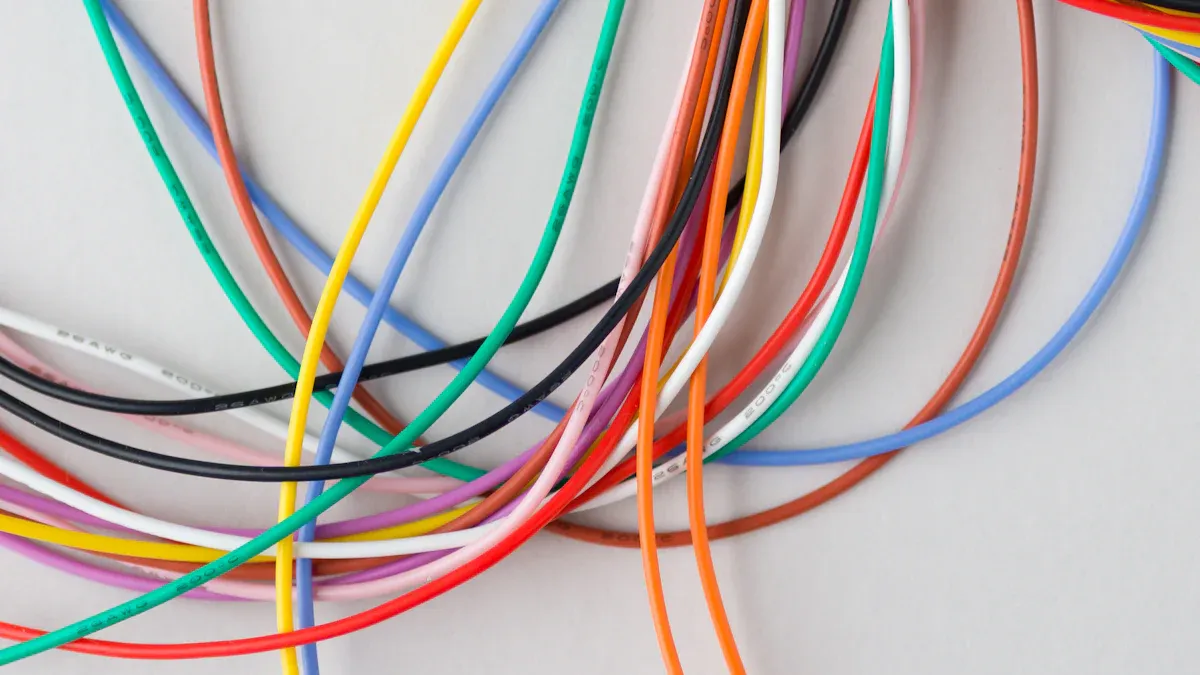
You demand uncompromising safety and performance in your applications. Heat shrink tubing plays a vital role in ensuring insulation, durability, and safety for both medical and industrial devices. When you select PET heat shrink tube, you choose a solution that delivers unmatched safety, clarity, and ultra-thin precision. AccuPath stands at the forefront of innovation, using advanced heat shrink tubing to support minimally invasive procedures and guarantee safety in even the most demanding environments. Trust heat shrink tubing that meets the highest safety standards.
Key Takeaways
Choose PET heat shrink tubing for its unmatched clarity, strength, and insulation, making it ideal for medical devices.
Understand shrink ratios to ensure optimal performance; use a 2:1 ratio for most wires and a 3:1 ratio for irregular shapes.
Select the right size of heat shrink tubing to ensure a snug fit, which enhances insulation and durability in your applications.
Consider the specific properties of PET compared to other materials like polyolefin and FEP to make informed decisions for your projects.
Utilize AccuPath’s custom solutions for tailored sizes and specifications to meet your unique medical or industrial needs.
Types of heat shrink tubing materials
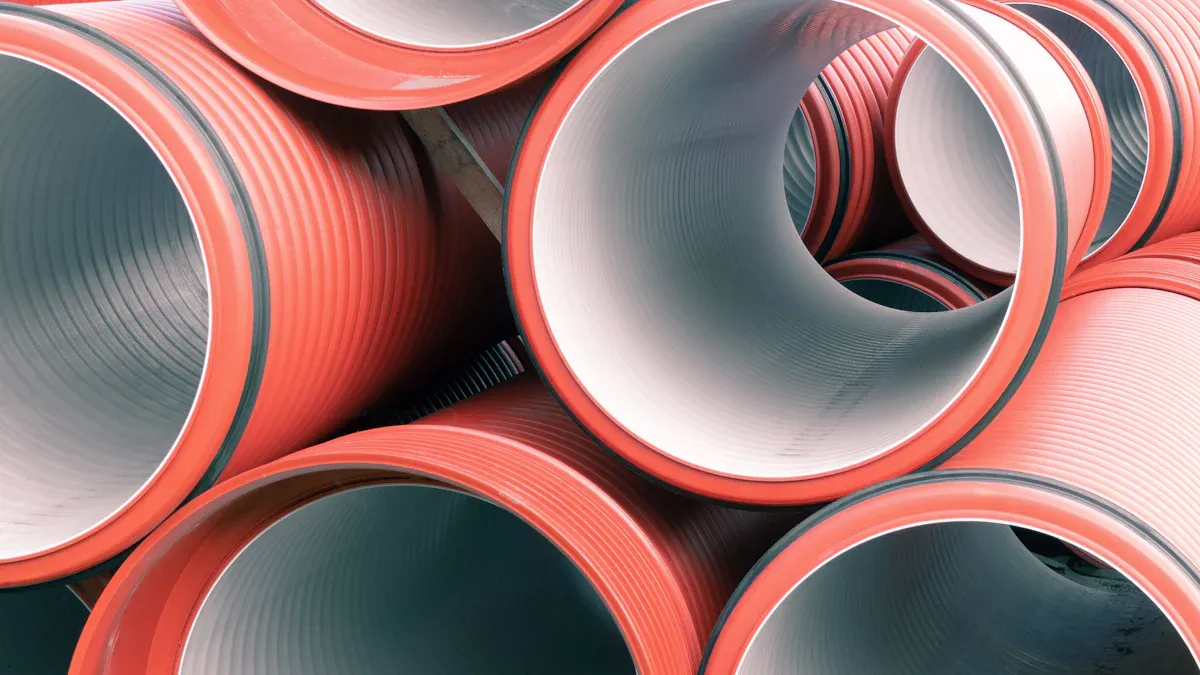
When you evaluate types of heat shrink tubing, you encounter a range of materials, each with unique strengths. Your choice impacts device safety, durability, and performance. AccuPath’s PET heat shrink tube stands out in advanced medical devices, especially for minimally invasive procedures. You benefit from ultra-thin walls, high insulation, and reliable protection for sensitive components.
PET heat shrink tube overview
You rely on PET heat shrink tube for applications where clarity, strength, and insulation matter most. This material offers tensile strength over 30,000 PSI and withstands temperatures up to 190°C. You see PET used in cardiac electrophysiology catheters, where it provides precise insulation and supports complex device designs. AccuPath delivers customized sizes and materials to meet your exact requirements, ensuring seamless integration into your medical or industrial projects.
Polyolefin tubing
You find polyolefin tubing as the most widely used type in the global market, holding over 56% market share. Polyolefin offers flexibility, high dielectric strength, and thermal stability. You can select from a wide range of shrink ratios, from 1.5:1 to over 10:1, making it ideal for covering components with varying diameters. Polyolefin’s low recovery temperature protects sensitive electronics and medical devices during installation.
PVC tubing
You may consider PVC tubing for cost-sensitive applications. However, when you compare it to PET, you notice differences in durability and insulation. The table below highlights key distinctions:
Property/Aspect | PET Heat Shrink Tubing | PVC Heat Shrink Tubing |
|---|---|---|
Tensile Strength | Over 30,000 PSI | Not as strong |
Thermal Stability | Up to 190°C | Lower temperature tolerance |
Wear Resistance | Very good | Less tough |
Environmental Protection | Excellent | Prone to breakdown |
Electrical Insulation | Superior | Moderate |
Specialty materials (PTFE, FEP, PO)
You encounter specialty materials like PTFE, FEP, and PO for demanding environments. These types offer unique properties for advanced applications:
FEP provides chemical stability, inertness, and non-stick surfaces. You use it in catheters, surgical tools, and aerospace systems.
PTFE withstands high temperatures and offers flexibility, making it suitable for catheter manufacturing and laboratory equipment.
You can select from a wide range of heat shrink tubing materials to match your application’s needs. Each type brings distinct advantages, so you should consider your performance requirements before making a decision.
Key factors in choosing PET heat shrink tubing
Material properties and durability
You need heat shrink tubing that delivers consistent performance in demanding environments. AccuPath’s PET heat shrink tubing stands out because of its ultra-thin walls and high insulation. You benefit from a lightweight yet robust material that protects sensitive components without adding bulk. The tubing withstands high temperatures and repeated sterilization, making it ideal for medical and industrial use. You can rely on its durability and clarity for applications where visual inspection is critical.
Property | Specification Requirement | Test Method |
|---|---|---|
Tensile strength | ≥107 N/m² | ASTM D2671 |
Dielectric Strength | > 4,000 V/mil | N/A |
Long-term Temperature | -196°C to 135°C | N/A |
Short-term Temperature | Up to 200°C | N/A |
Shrink ratio | 2:1 | N/A |
You see PET heat shrink tubing engineered for tight tolerances, with wall thickness as low as ±0.01 mm. This precision ensures reliable insulation and protection for catheter tips and other medical devices. You also benefit from exceptional transparency, which allows you to inspect components easily during manufacturing.
Size options and applications
You have access to a wide range of sizes for heat shrink tubing, allowing you to match the tubing to your specific application. AccuPath offers custom sizes to fit everything from microelectronic wires to large industrial bundles. You select the right size to ensure a snug fit and optimal performance. The tubing adapts to complex shapes and provides consistent coverage, supporting both medical and industrial devices.
You choose ultra-thin PET heat shrink tubing for catheter production, where space is limited.
You select larger sizes for industrial wiring and electronic assemblies.
You rely on precise sizing to maintain insulation and durability across all applications.
You find that the manufacturing process, including extrusion and post-processing, ensures dimensional consistency and reliable performance. You can trust AccuPath’s tubing to meet strict requirements for medical devices.
Shrink ratios explained
You must understand shrink ratios to achieve the best performance from heat shrink tubing. PET heat shrink tubing typically offers a 2:1 shrink ratio, meaning it shrinks to half its original diameter when heated. You use 2:1 ratios for most wires and 3:1 ratios for odd shapes or bundles. You select the shrink ratio based on the shape and size of your components.
Shrink Ratio | Best Use |
|---|---|
2:1 | Most wires |
3:1 | Odd shapes, bundles |
You apply heat shrink tubing at temperatures between 70°C and 190°C, with optimal shrinking at 150°C. This range ensures a secure fit and reliable insulation. You achieve consistent performance characteristics by choosing the right shrink ratio and size for your application.
Tip: Always verify the tubing’s shrink ratio and size before installation to ensure maximum performance and safety.
PET heat shrink tube vs. other materials
PET vs. polyolefin
You face a critical decision when selecting heat shrink tubing for medical and industrial devices. Polyolefin and PET heat shrink tube both offer unique advantages. Polyolefin heat shrink tubing provides flexibility and a wide range of shrink ratios, from 1.5:1 to 10:1. You can use polyolefin for applications that require coverage over varying diameters. PET heat shrink tube delivers a lower shrink ratio, typically from 1.1:1 to 3:1, which suits applications demanding precision and tight tolerances.
You notice that polyolefin heat shrink tubing adapts well to complex shapes and offers high dielectric strength. However, PET heat shrink tube stands out for its clarity, mechanical strength, and consistent insulation. You benefit from PET’s ultra-thin walls, which enable you to inspect components visually and maintain quality during manufacturing. AccuPath’s PET heat shrink tube ensures reliable performance in cardiac electrophysiology and PFA catheter solutions, where insulation and structural integrity are essential.
Polyolefin heat shrink tubing offers greater flexibility for various medical applications.
PET heat shrink tube provides superior clarity and mechanical strength for high-end devices.
You achieve consistent quality and performance with PET heat shrink tube in demanding healthcare environments.
PET vs. FEP
You encounter FEP and PET heat shrink tubing when working with advanced medical devices. FEP excels in high-temperature and chemically aggressive environments. You use FEP for reusable equipment that must withstand extreme conditions. PET heat shrink tube offers mechanical strength and stability at a lower cost, making it ideal for disposable or single-use devices.
Material | Cost | Performance Characteristics |
|---|---|---|
PET | Lower | Economical, suitable for mechanical strength and stability |
FEP | Higher | Superior high-temperature and chemical resistance, justified for reusable equipment |
You select PET heat shrink tube for applications where you need economical solutions and reliable quality. PET’s durability reduces maintenance costs over time. You also benefit from PET’s recyclability, which aligns with sustainability goals and saves costs associated with waste management. FEP minimizes the risk of failure in extreme conditions, which can lead to costly repairs or downtime. You choose FEP for specialized applications that demand advanced performance.
PET heat shrink tube is more economical for general-purpose applications.
FEP commands a higher price due to its advanced properties.
PET’s production process requires less energy and fewer specialized materials, resulting in a lower price point.
PET vs. specialty materials
You evaluate specialty materials like PTFE, FEP, and PO when you need heat shrink tubing for unique environments. PTFE offers flexibility and high-temperature resistance. You use PTFE in catheter manufacturing and laboratory equipment. FEP provides chemical stability and non-stick surfaces, which you find valuable in surgical tools and aerospace systems. PO delivers flexibility and thermal stability for electronics and medical devices.
You rely on PET heat shrink tube for applications that require clarity, mechanical strength, and consistent insulation. PET’s ultra-thin walls and high insulation make it the preferred choice for PFA catheter solutions and minimally invasive medical devices. AccuPath’s PET heat shrink tube ensures you achieve the highest quality and performance standards in healthcare and industrial settings.
PET heat shrink tube delivers unmatched clarity and mechanical strength.
Specialty materials offer unique properties for advanced applications.
You select PET heat shrink tube for demanding environments where quality and performance matter most.
Note: AccuPath’s PET heat shrink tube supports your need for precision, durability, and safety in cardiac electrophysiology and PFA catheter manufacturing. You achieve superior quality and performance with solutions designed for high-end medical devices.
Applications and selection guide

Medical device applications
You see heat shrink tubing play a vital role in advanced medical device applications. In cardiac electrophysiology, PET heat shrink tubing supports catheter tip forming, balloon catheter fabrication, and braided sheath assembly. You benefit from adhesive bonding performance, predictable burst pressure, and kink resistance. These features ensure safety and reliability in minimally invasive procedures. Manufacturers rely on PET heat shrink tubing for guidewire and stylet coating, endoscope channel lining, and implantable lead insulation. You achieve precise dimensional control, often with wall thickness tolerances as tight as ±0.01 mm. This level of customization directly impacts patient safety and device performance. Regulatory standards such as ISO 10993 and USP Class VI confirm the suitability of PET heat shrink tubing for medical use.
Functional Property | Description |
|---|---|
Adhesive Bonding Performance | Reliable bonding in medical applications |
Predictable Burst Pressure | Safety under pressure conditions |
Kink Resistance | Maintains integrity along bend radii |
Lubricious Inner Surface | Reduces friction for balloon catheters |
Recovery Force and Temperature Profile | Prevents delamination in balloon manufacturing |
Recovery Temperature Range | 130°C to 160°C for consistent results |
Industrial and electronics uses
You apply heat shrink tubing in a wide range of industrial and electronics applications. Manufacturers use it for wire harnessing, cable insulation, and protection of sensitive components. You find 3:1 ratio adhesive marine grade heat shrink tubing ideal for sealing cables in harsh environments. Industrial suppliers offer customization for unique shapes and sizes, supporting everything from automotive wiring to aerospace assemblies. You select customizable colors and sizes to match your project needs. Reliable suppliers provide heat shrink tubing that meets strict industrial standards, ensuring durability and long-term performance.
Decision checklist for choosing heat shrink tubing
You need a practical checklist to select the right heat shrink tubing for your applications:
Define your application requirements: medical, industrial, or electronics.
Identify the importance of customization for size, color, and wall thickness.
Choose the correct shrink ratio, such as 3:1 ratio adhesive marine grade heat shrink tubing for cables exposed to moisture.
Evaluate suppliers and manufacturers for quality, regulatory compliance, and customization options.
Confirm that your suppliers offer insights on suppliers and manufacturers, including technical support and documentation.
Ensure your heat shrink tubing meets industry standards and certifications.
Consider the need for custom solutions for specialized applications.
Tip: Always work with manufacturers and suppliers who understand the importance of customization and can provide insights on suppliers and manufacturers for your specific applications.
You gain clear advantages when you choose PET heat shrink tubing for demanding medical and industrial applications. PET offers mechanical strength, dimensional stability, cost-effectiveness, chemical resistance, and optical clarity. You see AccuPath lead the industry with precision manufacturing and a commitment to patient outcomes.
AccuPath’s Leadership in Advanced Materials | Key Points |
|---|---|
Drives innovation and precision | Improves patient quality of life |
Focuses on regulatory compliance | Reduces production delays |
Use the checklist above to select the best tubing for your needs. For high-performance and reliability, PET heat shrink tubing from AccuPath stands as your trusted choice.
FAQ
What makes PET heat shrink tubing ideal for medical devices?
You benefit from PET heat shrink tubing because it offers ultra-thin walls, high insulation, and clarity. These features support precise manufacturing and reliable performance in minimally invasive medical devices.
How do you select the right shrink ratio for your application?
You determine the shrink ratio by measuring the diameter of your components. Choose a 2:1 ratio for most wires. Select a 3:1 ratio for irregular shapes or bundles.
Can you customize PET heat shrink tubing for unique projects?
You request custom sizes, colors, and wall thicknesses from AccuPath. The company provides tailored solutions to match your specific medical or industrial requirements.
What certifications does AccuPath’s PET heat shrink tubing meet?
You rely on AccuPath’s PET heat shrink tubing because it meets ISO 10993 and USP Class VI standards. These certifications confirm suitability for medical and healthcare applications.
See Also
Understanding The Differences Between Medical And Industrial Heat Shrink Tubing
Evaluating FEP Heat Shrink Tubing Against Other Radiation Therapy Materials
A Simple Guide To FEP Autoclavable Heat Shrink Tubing
Essential Information On PET Heat Shrink Tubing For Electronics
Exploring The Role Of Heat Shrink Tubing In Electrical Insulation

© Copyright 2024 My First Blog - All Rights Reserved.