What Makes Ultra Thin Heat Shrink Tubing Unique and How It Is Used

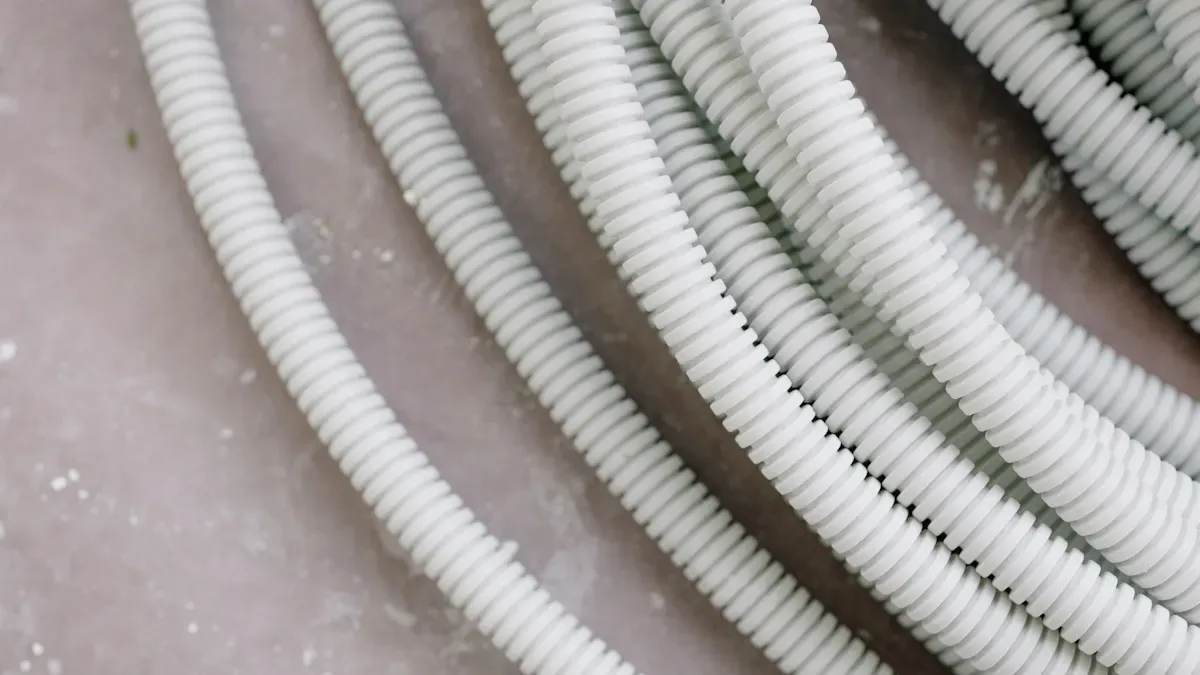
Ultra thin heat shrink tubing is strong and bends easily. It helps protect wires and other parts. This tubing is special because it has high dielectric strength. It also fits parts very well. You can use it when there is not much space. It is good when parts need extra protection. It works great for sensitive electronics. It is also used in medical devices. Many people use ultra thin heat shrink tubing for electrical insulation. They also use it for protection.
The global heat shrink tubing market was USD 2,852.4 million in 2024.
Low voltage uses made USD 1,350.9 million that year.
Experts think the market will keep growing soon.
Key Takeaways
Ultra thin heat shrink tubing has strong dielectric strength. This keeps electricity from leaking out. It gives safe electrical insulation. The tubing is bendy and wraps tightly around small wires. It works well in small spaces and with delicate electronics. Ultra thin heat shrink tubing is much thinner than regular tubing. It is also stronger and can change shape more easily. This gives better protection for medical devices and electronics. Materials like polyolefin and fluoropolymer make the tubing stronger. They also help it resist chemicals and work safely with the body. This makes the tubing good for many uses. Using ultra thin heat shrink tubing can make your projects safer. It can also help them last longer, especially in electronics and medical work.
Unique Features of Ultra Thin Heat Shrink Tubing
High Dielectric Strength
You need good insulation when working with electricity. Ultra thin heat shrink tubing gives high dielectric strength. This stops electricity from leaking out. It keeps wires and parts safe, even with high voltage.
Dielectric strength is important for safe electrical insulation in high-voltage jobs.
Materials with high dielectric strength resist electrical stress. This helps your devices work well.
If insulation is weak, accidents can happen. Using heat shrink tubing with high dielectric strength keeps you and your equipment safe.
Heat shrink tubing helps make things safer in many ways. It keeps dangerous currents away from your hands and other parts. You can use it where safety matters most, like hospitals and labs.
Flexibility and Precision Fit
Ultra thin heat shrink tubing bends easily. You can wrap it around small wires or odd shapes. It fits tightly and does not add much bulk. This makes it perfect for tiny spaces or sensitive devices.
Tip: You can use ultra thin heat shrink tubing in electronics and medical devices. It protects parts without making them bigger or heavier.
Here is a table showing how different materials compare in flexibility:
Feature | PVC (Polyvinyl Chloride) | Polyolefin (Cross-linked) | EVA (EVA) |
|---|---|---|---|
Flexibility | Very Good | Excellent | Exceptional |
Ultra thin PET heat shrink tubing is light and flexible. You can use it in small spaces. It fits many shapes and does not get in the way. This helps protect sensitive electronics and medical tools from dust, moisture, and other dangers. You can trust it for safety in tight spots.
Comparison with Standard Tubing
You may wonder how ultra thin heat shrink tubing is different from standard tubing. The main differences are wall thickness, insulation, and fit.
Feature | Ultra-Thin Heat Shrink Tubing | Standard Tubing |
|---|---|---|
Wall Thickness | 10 to 100 times thinner than standard tubing | Thicker and more rigid |
Insulation Properties | 10 times stronger, very flexible | Varies, generally less flexible |
Fit | Widely used in medical and fine electronics | Standard applications |
Ultra thin tubing is 10 to 100 times thinner than standard tubing.
It is also 10 times stronger and very flexible.
When you use heat shrink tubing, you get a snug fit. A 2:1 ratio tube doubles its wall thickness after shrinking. A 3:1 ratio tube triples its thickness. You can pick the right size for your project.
You get many advantages when you use ultra thin heat shrink tubing, especially in electrical and medical work. Here is a table that shows how it compares to standard tubing:
Advantage | Ultra Thin Heat Shrink Tubing | Standard Tubing |
|---|---|---|
Biocompatibility | High | Varies |
Flexibility | Excellent | Moderate |
Optical Clarity | High | Low |
Chemical Resistance | High | Moderate |
Thermal Stability | Up to 450°F | Lower |
Durability | High | Varies |
Sterilization Compatibility | Excellent | Limited |
You can see that ultra thin heat shrink tubing offers high biocompatibility and flexibility. It also has great chemical resistance and can handle high heat. These features make it safe for medical devices and electronics. You can use it for insulation, protection, and even skin safety in medical tools.
When you choose ultra thin heat shrink tubing, you get the benefits of heat shrink tubing and extra safety for your projects.
Heat Shrink Tubing Materials and Manufacturing
Common Materials Used
There are many materials used in heat shrink tubing. Each one has its own benefits. Polyolefin is very thin and also strong. Fluoropolymer gives high dielectric strength. It is good for electrical insulation. Look at the table below to see the main materials and their properties:
Material | Key Properties |
|---|---|
Polyolefin | 10 to 100 times thinner than other heat shrink tubes, up to 10 times stronger. |
Fluoropolymer | High dielectric strength, effective electrical insulation, biocompatibility. |
Pick the right material for your project. Polyolefin is best when you need something thin and strong. Fluoropolymer is better for safety and insulation.
Ultra-Thin Wall PET Shrink Tubing
Ultra-thin wall pet shrink tubing is special for many reasons. You can use it when you need high strength and a tight fit. It shrinks closely around wires and parts. The smooth surface helps with jobs that need precision. It works well in high heat and with chemicals. This tubing is safe and reliable for medical devices.
Here is a table that shows what makes ultra-thin wall pet shrink tubing special:
Characteristic | Description |
|---|---|
Strength | Ultra-thin wall pet shrink tubing is known for its high strength, making it reliable for various applications. |
Tight Shrinkage | It can shrink tightly around objects, ensuring a secure fit, especially in complex shapes. |
Smooth Surface | The tubing has a smooth surface, which is beneficial for applications requiring precision. |
Heat Resistance | It exhibits resistance to heat, making it suitable for high-temperature environments. |
Chemical Resistance | The material is resistant to chemicals, enhancing its durability in various settings. |
Medical Device Suitability | Its properties make it ideal for use in medical devices, where precision and reliability are critical. |
You can use ultra-thin wall pet shrink tubing in tough places. It keeps its shape after cleaning and sterilizing. It meets safety rules for medical tools. You can trust it to protect for a long time.
Manufacturing Process Overview
You might wonder how ultra-thin wall pet shrink tubing is made. First, machines melt plastic and shape it into a tube. Cross-linking makes the tubing strong and helps it keep its shape. Expansion stretches the tubing and locks in its memory. This means it will shrink tightly when heated. Some tubing uses co-extrusion to add a sticky layer for sealing. The last steps are cutting and packaging.
Step | Description | Influence on Properties |
|---|---|---|
Extrusion | Thermoplastic resins are melted and formed into a tube. | Establishes base structure and uniformity in diameter. |
Cross-linking | Enhances thermal and mechanical stability through molecular bonding. | Improves durability and shape memory. |
Expansion | Tubing is radially stretched and cooled to set its shape. | Locks in elastic memory for shrinkage capabilities. |
Co-extrusion | For dual-wall tubing, an adhesive layer is added during extrusion. | Provides sealing properties for specific applications. |
Cutting and Packaging | Tubing is cut to standard lengths and packaged for distribution. | Ensures uniformity and readiness for diverse applications. |
This careful process makes ultra-thin wall pet shrink tubing work well. The tubing stays strong, flexible, and safe for many uses.
Common Uses for Heat Shrink Tubing
Ultra thin heat shrink tubing is used in many industries. You can find it in electronics, medical devices, airplanes, and cars. Each industry uses this tubing for different reasons. Let’s see how it helps protect and keep things safe.
Electronics and Electrical Insulation
People use heat shrink tubing in electronics to keep wires safe. It helps organize cables and stops them from getting damaged. The tubing also keeps electricity from leaking out. This is important for safety.
Some ways you use heat shrink tubing in electronics are:
Extra protection for cables
Covers for temperature probes
Roll covers for moving parts
Sleeves to stop wires from rubbing
Light bearing surfaces
Insulation for wire bundles
Heat shrink tubing keeps wires together and shields them from heat, dust, and water. In 2024, North America has about 35% of the world’s ultra-thin PET heat shrink tubing market. The market was worth $0.5 billion in 2024. It may grow to $1.2 billion by 2034. This means more people want better materials for electronics. As technology grows, more people will use these solutions.
Tip: Use heat shrink tubing to keep wires neat and safe from short circuits. This helps your devices last longer and work better.
Medical Device Applications
You can find heat shrink tubing in many medical tools. It is important in making medical devices. The tubing covers needles and protects skin from burns during electrical treatments. It also insulates electrosurgical tools and wires on catheters.
Here are ways you use heat shrink tubing in medical devices:
Covering needles to keep skin safe
Insulating electrosurgical tools
Protecting wires on catheters and other tools
Giving good insulation in high-voltage places
Catheters need special care. Ultra thin heat shrink tubing covers and protects them. It gives catheters a smooth surface and keeps germs and chemicals away. Delivery assist catheters use this tubing for extra strength and flexibility. You can trust it to keep catheters safe during use and cleaning.
Medical tubing must follow strict safety rules. Here is a table with two important standards:
Regulatory Standard | Description |
|---|---|
ISO 10993 | Sets safety rules for materials in medical devices based on body contact and time. |
USP Class VI | Checks material safety with tests for toxicity and implants. |
You can feel sure using heat shrink tubing in medical devices. It meets high standards and keeps patients safe.
Aerospace and Automotive Uses
Airplanes and cars need strong protection for wires and parts. Heat shrink tubing keeps everything safe in tough places. It protects against rubbing, heat, and chemicals.
Here is a table that shows how you use heat shrink tubing in these industries:
Industry | Applications | Benefits |
|---|---|---|
Aerospace | Controls, communication, structures, instrument panels, fiber optic cables | Light, flame resistant, handles high heat and radiation, protects parts |
Automotive | Wire harnesses, cable assemblies, fuel lines, electrical connectors | Resists chemicals, heat, and flames, handles water and damage, lowers stress |
You use heat shrink tubing for many reasons in airplanes and cars:
High-temperature insulation keeps wires from melting
Protection from rubbing stops wires from wearing out
Sealing connectors keeps out water, dust, and chemicals
Strain relief stops damage from pulling or bending
Wire harnessing keeps cables neat and safe
Sensor protection keeps readings correct
Circuit board protection covers important parts
Heat shrink tubing helps keep wires and parts safe in airplanes and cars. It makes sure systems work well, even in hard places.
Note: When you use heat shrink tubing, you get strong protection and long life. That is why many industries use it so much.
Specialized and Niche Applications
Precision Instrumentation
Ultra thin heat shrink tubing is used in precision tools. These tools need to be small, strong, and safe. The tubing covers wires and sensors in medical devices. It helps make tools less invasive for patients. The tubing also keeps sensitive electronics safe from harm. Here are some reasons to use ultra thin heat shrink tubing for careful work:
This tubing is thinner and stronger than regular types, so it fits in tiny spaces.
It has high dielectric strength, so it keeps electricity inside.
It is safe for the human body because it is biocompatible.
Its flexibility and strong pull strength help you make small tools that work well.
If you need to fix a delicate tool, this tubing helps without making it bigger. You can use it to fix sensors or wires in small devices. After fixing, the tubing keeps everything safe and working right.
Custom Solutions
Sometimes you need special answers for unique jobs. Ultra thin heat shrink tubing can be used in many custom ways. It is not just for covering wires. Here are some ways you might use it:
Variable-stiffness catheters
Endoscopic and laparoscopic procedures
Cauterization instruments
Tube joining
Catheter tip formation
Masking for coatings
Micro hose clamps
Bundling components
Encapsulating and protecting coverings
Electrical insulation
If you work in a lab or hospital, you might need to fix a catheter or join two tubes. This tubing helps you finish repairs quickly and safely. You can also use it to fix small clamps or protect tiny parts. When you need to repair something special, ultra thin heat shrink tubing gives you a flexible and reliable solution.
Tip: Keep some ultra thin heat shrink tubing in your toolkit. It makes fixing and protecting small parts much easier.
Ultra thin heat shrink tubing keeps things safe and insulated. It works well in small spaces. PET tubing stops chemicals, water, and dust from getting in. This makes it good for electronics, cars, and medical tools. New designs are stronger and better for the environment. If you want your project to last, pick the right tubing. Make sure you install it the right way. You can use this tubing for special jobs or simple fixes.
FAQ
What is the main use of ultra thin heat shrink tubing?
You use ultra thin heat shrink tubing to protect wires and small parts. It gives insulation and keeps out dust, water, and chemicals. You see it in electronics, medical devices, and cars.
How do you shrink ultra thin heat shrink tubing?
You use a heat gun or a hair dryer. Hold the tubing over the part. Apply heat evenly. The tubing shrinks and fits tightly. Always follow safety tips when using heat.
Can you use ultra thin heat shrink tubing for medical devices?
Yes, you can. Many medical tools use this tubing. It covers needles, catheters, and wires. It meets safety rules like ISO 10993 and USP Class VI.
What materials are common in ultra thin heat shrink tubing?
Material | Key Feature |
|---|---|
Polyolefin | Flexible and strong |
High clarity | |
Fluoropolymer | Chemical resistant |
You pick the material based on your project needs.
See Also
The Importance of Ultra-Thin PET Tubing in Healthcare Devices
Selecting the Ideal Ultra-Thin PET Tubing for Your Needs
Applications of Heat Shrink Tubing for Electrical Wire Insulation
Essential Insights on PET Heat Shrink Tubing for Electronics

© Copyright 2024 My First Blog - All Rights Reserved.