How Hypo Tubing Manufacturing Transforms Raw Materials Into Medical Tubing

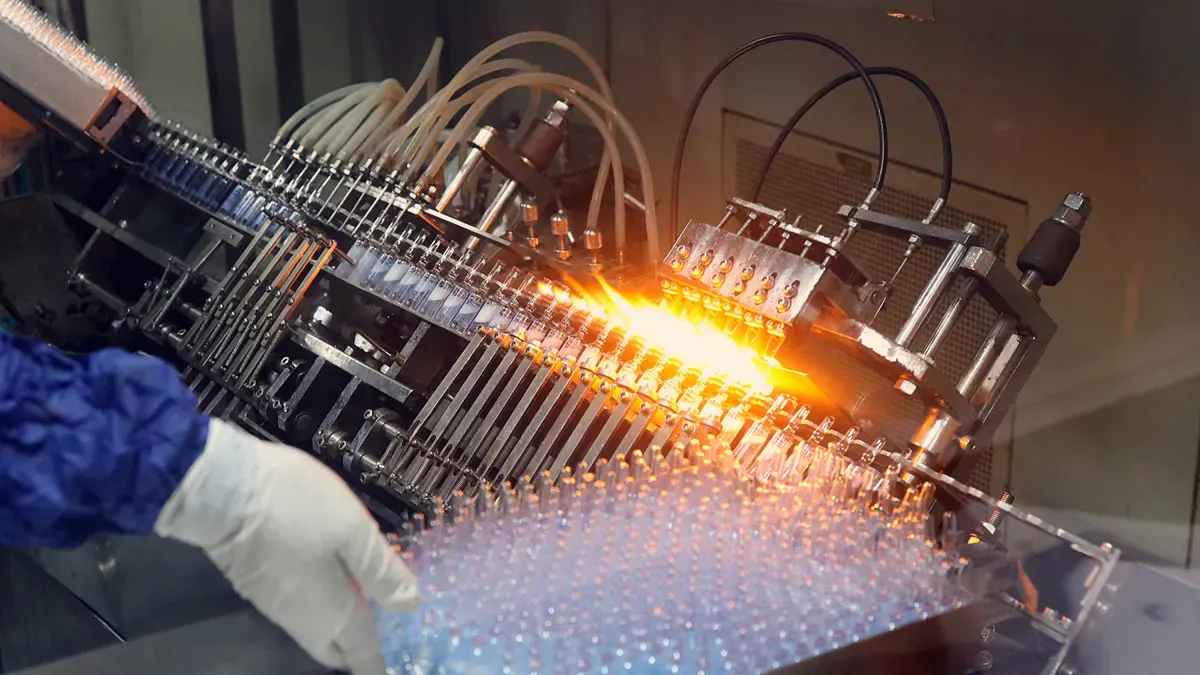
Hypo tubing manufacturing turns raw stainless steel 304 or 316 and polymers into precision tubing for medical devices. The process welds flat strip into a tube, cold draws it to smaller sizes, and anneals it to bring back ductility. Material choice and process control directly affect device safety and performance. A tiny flaw in hypodermic stainless steel tubing can block fluid flow or cause failure in critical medical uses.
Global shipment volume reached about 171.7 million meters in 2025.
Engineers who understand this change sequence can better specify hypodermic stainless steel tubing for hypodermic needles and other medical parts. Good design and design-for-manufacturing practices start with this knowledge.
Key Takeaways
Pick the correct material for safety and how well it works.
Use welding and drawing, or extrusion, to form tubing.
Manage size and features using cold drawing and annealing.
Finish the tubing with cleaning, coating, and exact cutting.
Check the quality to make sure every tube meets strict standards.
Raw Materials for Hypodermic Stainless Steel Tubing
Material choice is the base for safe hypodermic stainless steel tubing. Engineers pick from two groups of materials: stainless steel alloys and engineering polymers. Picking the wrong one can cause device failure or harm to patients. Good design starts with knowing these material properties.
Stainless Steel Alloys for Medical Devices
For 304 stainless steel, normal mechanical properties in the annealed state include tensile strength of 75,000 psi minimum, yield strength of 30,000 psi minimum, and elongation of 40% minimum. The table below sums up these values.
Mechanical Property | Typical Value (Annealed Condition) |
|---|---|
Tensile Strength | 75,000 psi (515 MPa) minimum |
Yield Strength (0.2% offset) | 30,000 psi (205 MPa) minimum |
Elongation (2-inch gauge) | 40% minimum |
Hardness (Rockwell B) | 92 maximum |
Modulus of Elasticity | 28 × 10⁶ psi (193 GPa) |
Cold working can easily raise tensile strength on tubing. This makes 304 a good fit for non-implant uses like needle cannulas and guidewires.
316 stainless steel gives clear benefits for medical devices. Its molybdenum addition offers better resistance to chlorides in body fluids. The low carbon version (316L) reduces carbide precipitation during welding, which keeps corrosion resistance at weld seams. 316L stays basically non-magnetic, which is key for MRI compatibility. The benefits include:
Non-magnetic property critical for MRI and sensitive diagnostic equipment.
Resistance to pitting and cracking in aggressive environments far superior to 304.
Proven for implants per ISO 5832 for orthopaedic and cardiovascular implants.
Long-term body contact compatibility for implants.
Performance under repeated sterilization ensures reliability over time.
These traits make 316L the standard for stents, bone screws, and heart valves. The alloy you choose directly affects how hypodermic stainless steel tubing performs.
Polymer Options
Polymers widen the range of possible tubing functions. The table below lists common polymers for drug delivery systems.
Polymer | Key Properties | Common Use in Drug Delivery Tubing |
|---|---|---|
Pebax® | Combines rigid and flexible segments; resists kinking | Steerable catheters requiring smooth stiffness transitions |
PTFE | Extremely low friction; chemically inert | Liners in drug-coated catheters |
Polyurethanes (TPU) | Strength plus stretchability; tunable hardness | Urological catheters and implantable tubing |
PEEK | High-temperature; biocompatible; stable through sterilization | Structural components and high-stress tubing |
Conductive & Smart Polymers | Integrate sensors and drug delivery mechanisms | Catheters that monitor temperature, pH, pressure |
Medical-grade TPUs offer a rare mix of tunable mechanics and proven biocompatibility. Their architecture can be engineered by changing polyol type and segment distribution, which allows control over mechanical, swelling, and pharmacological performance. TPUs are used in extended-release and implantable combination devices such as intravaginal rings and drug-coated stents.
Tube Forming in Hypo Tubing Manufacturing
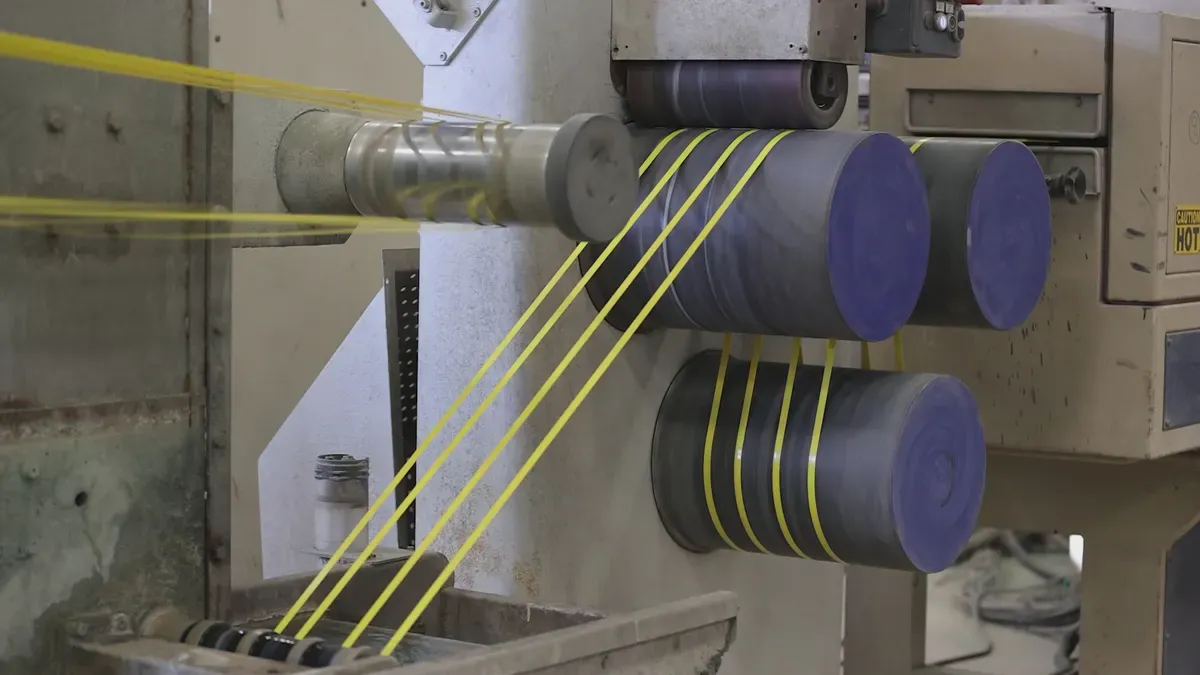
Hypo tubing manufacturing uses two main forming methods: welded and drawn for metal tubing, and extrusion for polymer tubing. Each method turns raw materials into exact shapes for medical uses.
Welded and Drawn Tubing
The welded and drawn process makes hypodermic stainless steel tubing from flat strip. A set of rollers shapes the strip into a round form. Then the long seam is joined using either high-frequency induction welding (HFIW) or TIG welding. Which method is used depends on what the application needs. This welded tube becomes the starting point for drawing.
Cold drawing makes the outer diameter and wall thickness smaller. An outer die controls the outer diameter, while an inner plug controls the inner diameter. For smaller sizes, the maker uses plug drawing. This method gives tighter tolerances and a less visible weld seam on both the outside diameter and the inside diameter. The table below shows how different parts of plug drawing affect inner diameter tolerance and quality.
Aspect | Effect on ID Tolerance / Quality |
|---|---|
Drawing over a floating plug | Tighter tolerances and less noticeable weld seam on OD and ID |
Insufficient cold work | Non-uniform hardness; rough ID surface and incomplete weld homogenization |
Weld seam sagging (no plug drawing) | Poor concentricity; plug drawing improves concentricity |
Double or triple plug draws | Premium ID finishes for lab sampling and blood analyzers |
The drawing process also makes the tubing's tensile strength higher. Welded and drawn stainless steel tubing reaches a minimum tensile strength of 515 MPa and a minimum yield strength of 205 MPa. These mechanical properties make sure the tubing can handle what medical device use demands, including sterilization cycles. The small diameter and thin walls of hypodermic needles need this exact forming method. A smooth inner surface from plug drawing allows steady fluid flow during injection. This process is different from seamless tube forming, which starts from a solid rod and needs drilling or piercing. Welded and drawn tubing gives better dimensional control and lower cost for small diameters.
Extrusion Processes
While hypodermic stainless steel tubing uses welded and drawn forming, polymer tubing depends on extrusion. The extrusion process pushes raw thermoplastic materials through a precision die. Materials such as PE, PVC, EVA, TPE, or polyurethane form continuous tubing. Manufacturers use this method to make IV lines, drainage systems, and flexible films for medical solution bags.
Several extrusion techniques exist. Single-layer extrusion makes uniform tubing for general fluid transfer. Coextrusion builds multi-layer structures that combine lubricity, strength, and radiopacity in one shaft. Multi-lumen tubing allows at the same time pathways within a single profile. Multi-durometer stacks balance stiffness and flexibility along the length of a catheter. Profile extrusions create custom geometries for seals and housings. Heat shrink and reflow techniques often bond extruded liners to create smooth catheter shafts.
Process parameter control is critical in extrusion. The table below outlines key parameters and their associated risks.
Parameter | Role in Extrusion | Risk if Improperly Controlled |
|---|---|---|
Drying | Removes moisture before extrusion | Under-drying causes hydrolysis; over-drying degrades |
Material temperature | Controls polymer viscosity | Overheating degrades polymer; too-low temperature forces excessive temperature changes |
Screw speed & design | Achieves uniform melting | High speed or wrong design causes degradation |
Residence time | Limits thermal exposure | Long molten time causes degradation |
Die/mandrel size & stretch | Determines finished tube size | Small thin-wall tubing is hard to extrude; high viscosity and small clearance require temperature changes |
Cooling variables | Controls solidification | All variables affect physical characteristics; water temperature control is critical |
These parameters directly affect final tubing properties such as burst strength, flexibility, and biocompatibility. Engineers include these factors during the design phase and design-for-manufacturing planning. The tubing must also support fluid flow and gas transfer for respiratory devices. Manufacturing process settings adjust for material properties.
Sizing and Reduction
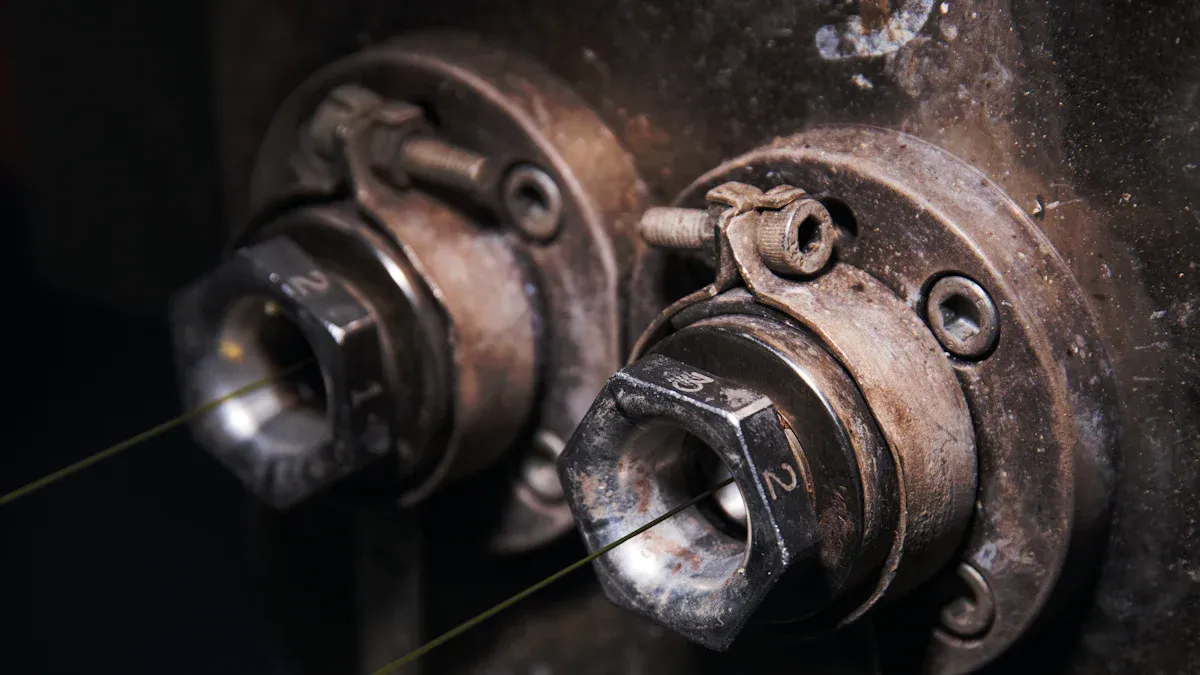
Sizing and reduction turn a formed tube into a finished part with exact measurements. This step sets the final inner diameter, outer diameter, and wall thickness of hypodermic stainless steel tubing. Two connected operations drive this change: cold drawing and annealing. Each pass through the draw bench makes the tube smaller. Each anneal restores the material so it can handle the next pass.
Cold Drawing
Cold drawing pulls a tube through a die at room temperature. The die makes the outer diameter smaller. A mandrel or plug controls the inner diameter. This step is at the heart of hypo tubing manufacturing because it gives high precision without melting the metal.
Repeated passes work-harden the material. Tensile strength and hardness go up. Circularity and surface finish get better. These gains let manufacturers hold tight tolerances on small diameter tubing for needles and catheters. A design-for-manufacturing review often sets the number of passes before production begins.
Annealing
Cold drawing leaves the metal hard and stressed. Annealing reverses that condition. The tube goes through a controlled heat cycle. Internal stresses relax. Ductility returns. The material can then take another draw without cracking.
Annealing also helps maintain corrosion resistance for medical use.
These precision manufacturing processes repeat in sequence until the tube reaches its target size. The final anneal leaves the tubing soft, clean, and ready for finishing.
Finishing Hypodermic Tubing for Medical Devices
Finishing changes a sized tube into a safe, working part. This stage includes cleaning, coating, and cutting. Each step keeps the final device safe for the body and working well.
Cleaning and Coating
Drawing leaves lubricants, oils, and metal bits on the tube. Manufacturers remove these unwanted materials in order. First, ultrasonic cleaning baths lift oils and metal bits off the tubing. Second, special cleaning agents work with the baths to remove drawing lubricants and other leftovers. Third, passivation with an acid solution removes free iron from the surface and boosts corrosion resistance. This order gets the tube ready for sterilization and direct contact with patients.
Coatings then lower friction during insertion. Silicone fluid lubricant is often put on most medical needles. Its effectiveness decreases with use.
A thin film metallic glass coating (Zr-based) can reduce insertion forces by about 66% and retraction forces by about 72%.
Coating | Reported effect on insertion/retraction friction |
|---|---|
Silicone fluid lubricant | Reduces friction and insertion force; effectiveness decreases with use |
Thin film metallic glass (TFMG), Zr-based | Reduced insertion forces by about 66% and retraction forces by about 72% |
Titanium nitride (TiN) | TFMG showed about one order of magnitude lower coefficient of friction than TiN |
Pure titanium (Ti) | TFMG showed about one order of magnitude lower coefficient of friction than pure Ti |
Precision Cutting for Hypodermic Needles
Hypodermic tube machining needs tight tolerances. Laser cutting is a non-contact process that achieves high accuracy without mechanical force, preventing deformation and eliminating tool wear for steady precision across thousands of parts. Femtosecond disk lasers use ultra-short pulses to sublimate material with no thermal input and no burrs, removing the need for post-processing on materials like nitinol. Pulsed Nd:YAG lasers are now outdated and often upgraded to fiber lasers.
Quality Assurance in Hypo Tubing Manufacturing
Quality assurance makes sure every foot of tubing meets the design spec before it gets to a medical device assembly line. Inspections catch problems early. They also confirm the tubing will work safely in critical applications.
Dimensional Inspection
Dimensional inspection measures outer diameter, inner diameter, and wall thickness against tight tolerances. Several standards govern dimensional tolerances for different tubing materials. These checks confirm that hypodermic stainless steel tubing fits mating components and allows proper fluid flow.
Engineers also check surface finish during dimensional inspection. A rough inner surface can disrupt flow in small diameter tubing. A rough outer surface can increase insertion force. Both conditions affect patient comfort and device reliability.
Material and Surface Testing
Material testing confirms alloy composition and mechanical properties. Surface testing finds defects that could harm biocompatibility or corrosion resistance. Passivation removes free iron particles from the surface of stainless steel tubes. Free iron can turn into iron oxide over time. What starts as a tiny spec of rust can spread into more degradation. Passivation usually happens as one of the final processing steps. Machining, grinding, or cutting can add free iron particles, so passivation should happen after those operations. Several standards govern passivation processes, ensuring effective treatment. Passivation does not leave a residue, change color, or alter dimensions.
Surface roughness testing uses two main methods for hypo tubing. These methods ensure smooth surfaces for easy skin penetration and reduced patient pain. Sterilization processes also demand clean surfaces. Residual contaminants can survive sterilization and pose risks to patients. Testing confirms that devices meet safety and performance requirements before release.
Hypo tubing manufacturing turns flat stainless steel strip or polymer resin into finished medical devices. Each step matters. Material selection sets biocompatibility. Welded and drawn forming shapes hypodermic stainless steel tubing. Cold drawing and annealing control dimensions and ductility. Cleaning, coating, and precision cutting prepare hypodermic needles. Quality inspection confirms every lot meets its design.
This journey shows the engineering behind small parts. Custom fabrication now adds versatility for drug delivery, feeding tubes, and other medical applications.
Sterilization and quality checks still govern every choice.
FAQ
What makes 316L stainless steel the standard for implantable hypo tubing?
Molybdenum in 316L fights against chlorides in body fluids. The low-carbon version stops unwanted particles from forming at weld spots. This alloy stays non-magnetic for MRI use. ISO 5832 says it can be used for orthopedic and heart implants. These features make it safe for long contact with the body and many sterilization cycles.
How does cold drawing change the tubing dimensions?
Cold drawing pulls a tube through a die at room temperature. The die makes the outer diameter smaller. A tool called a mandrel or plug controls the inner diameter. Repeated passes make the tube more round and give it a smoother surface. This process keeps exact sizes on small tubing without melting the metal.
Why does annealing follow each cold drawing pass?
Cold drawing hardens the metal and creates stress inside. Annealing removes that stress and makes the metal flexible again. The tube can then go through another drawing step without cracking. This step helps keep the metal from rusting for medical uses.
What tolerances can laser cutting achieve for hypodermic needles?
Laser cutting achieves high accuracy, with some advanced methods reaching even tighter tolerances. Special lasers cut cleanly, leaving no rough edges and maintaining exact shape.
Which standards govern passivation and dimensional testing?
Several standards govern passivation and dimensional testing, including ASTM A967 for passivation and others for specific tubing materials. These checks make sure the tubing is safe and works well before it ships.
See Also
The Manufacturing Process Of Nitinol Tubing For Medical Uses
Nitinol Tubing's Transformative Impact On Modern Medical Device Technology
How ISO 13485 Shapes Medical-Grade FEP Tubing Production Standards

© Copyright 2024 My First Blog - All Rights Reserved.