Top 10 High Temp Heat Shrink Products for Extreme Environment Protection

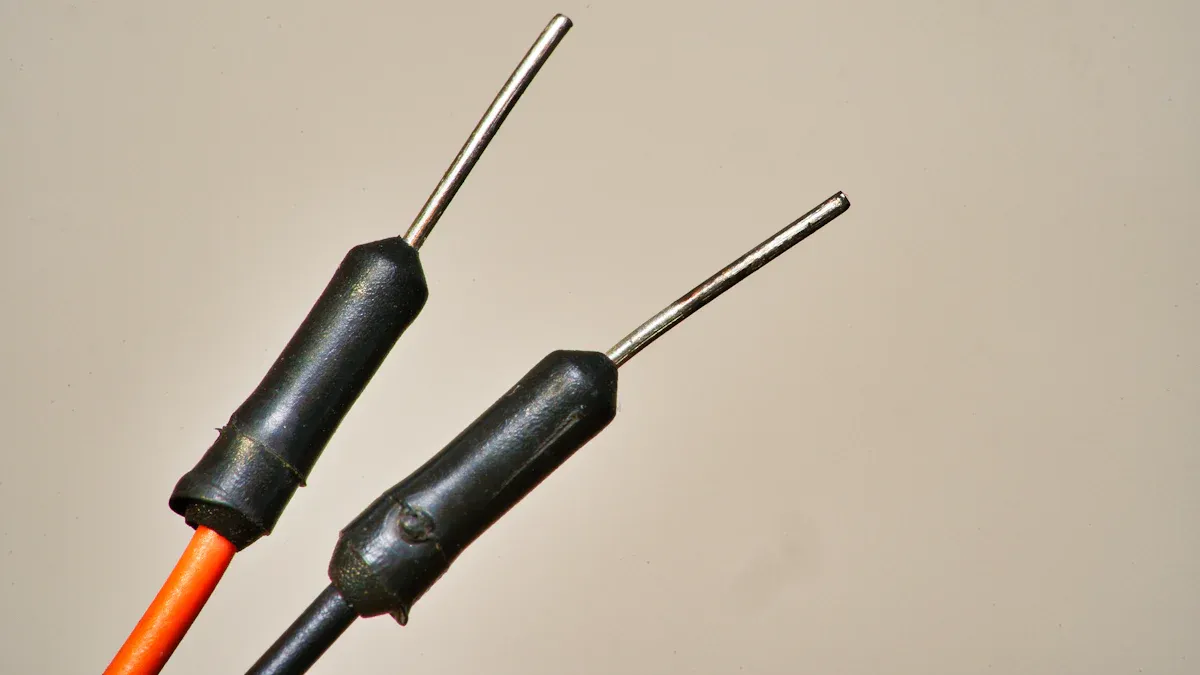
You need strong protection for parts in tough places. High temp heat shrink gives good insulation when heat, chemicals, or water can hurt your systems. Picking the right material—like FEP, PTFE, PEEK, or polyolefin—is important for lasting use. You should know rules like IEC 60529 and UL 224 to stay safe. Many industries use high temp heat shrink tubing every day:
Industry | Applications |
|---|---|
Electrical Industry | Non-conductive insulation, protection for terminals, connectors, and splices |
Construction | Securing cables, sealing pipes, tool marking, and durability |
Automotive | Wire harness and cable assembly protection from moisture, corrosion, and extreme temperatures |
Electronics | Insulating components on PCBs, organizing and protecting devices |
Boat Manufacturing | Marine electrical system protection from saltwater and environmental damage |
Aircraft and Aerospace | Insulation and protection from extreme conditions, vibration, and moisture |
This blog shows you how to pick the best heat shrink tubing and put it on the right way for your needs.
Key Takeaways
High temp heat shrink tubing keeps wires and parts safe. It protects them from heat, water, and chemicals. This helps your systems last longer.
Picking the right material, like FEP or PTFE, is very important. It makes sure your tubing stays strong and works well in hard places.
Always look at temperature ratings and industry rules. This helps you know your tubing is safe and works right.
Good installation matters a lot. Clean the surfaces first. Pick the right size. Use a heat gun to shrink the tubing evenly. This gives you a tight seal.
Check your heat shrink tubing often. Take care of it so it keeps protecting your wires in tough spots.
Why High Temp Heat Shrink Matters

Extreme Environment Protection
Working with electronics or machines in tough places is risky. Heat shrink tubing acts like a strong shield. It stops water, dust, and chemicals from getting in. Without tubing, electronic parts can short out or leak electricity. Wires may break from shaking or get scratched by rough things. Moisture can cause rust or make things stop working. Using high temp heat shrink adds insulation and protects parts. This helps your systems last longer, even with hot temperatures or harsh chemicals.
Tip: Always make sure your tubing follows the right rules for your job. This helps your tubing work well in important situations.
Key Applications
Heat shrink tubing is used in many industries. It works best where wires and parts need protection from heat and tough conditions. Here are some main uses:
Application Area | Benefits of High Temp Heat Shrink Tubing | Performance Outcome |
|---|---|---|
Aerospace | Keeps wiring harnesses safe from heat and shaking | Better reliability, less money spent on repairs |
Automotive | Protects wiring and connectors from heat and chemicals | Fewer wiring problems, lower chance of electrical fires |
In marine and industrial places, tubing is needed for harder jobs:
Application Type | Description |
|---|---|
Waterproofing Cable Splices | Tubing with glue keeps marine cables dry and power working. |
Sealing Battery Compartments | Thick tubing blocks saltwater and stops rust. |
Shielding Hydraulic System Wiring | Double tubing protects against chemical spills and damage. |
You use heat shrink tubing in important jobs like aerospace, automotive, and marine systems. These jobs need the best performance and strong protection. Picking the right tubing helps your equipment last through heat and tough environments.
Heat Shrink Tubing Selection Criteria
Temperature Ratings & Standards
You must check the temperature ratings before picking tubing. Each material can handle different heat levels. Some work well in very hot places, but others cannot. Look at this table to see the lowest and highest temperatures for each material:
Material | Minimum Temperature (°C) | Maximum Temperature (°C) |
|---|---|---|
Polyolefin | 90 | 125 |
PVC | 80 | 105 |
PTFE | 327 | 340 |
FEP | 200 | 230 |
PVDF | 150 | 175 |
Silicone | 150 | 200 |
Viton | 175 | 200 |
Elastomeric | 120 | 175 |
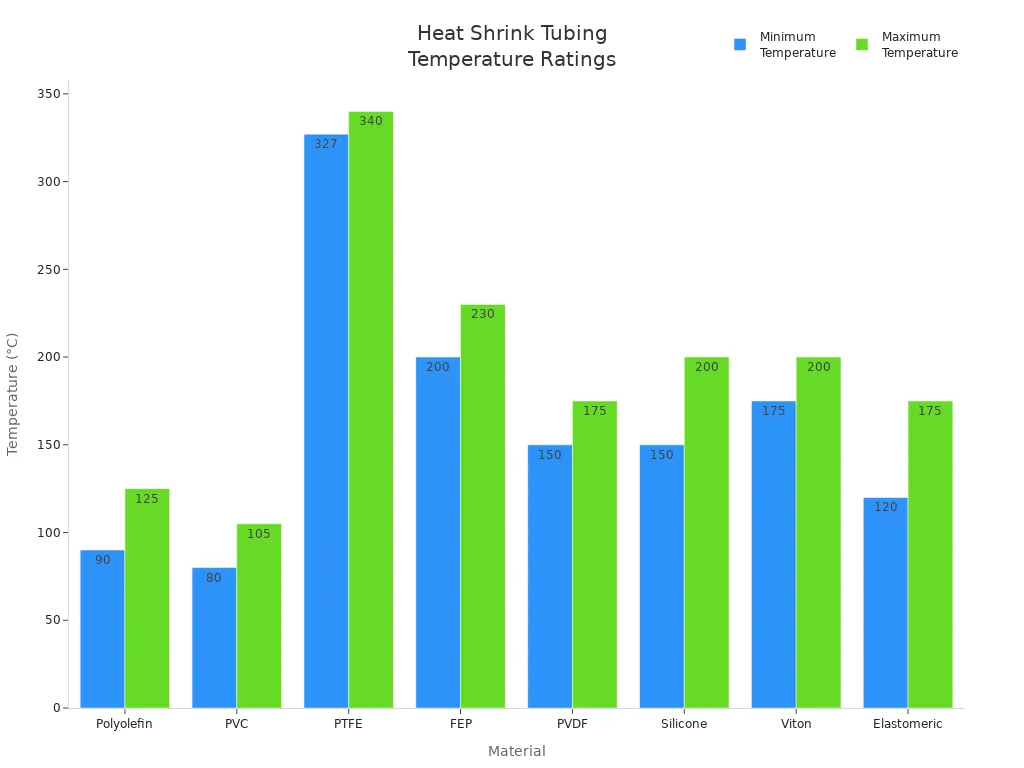
You should check if your tubing follows rules like IEC 60529 and UL 224. These rules help make sure your tubing works well and keeps things safe in tough jobs.
Material Comparison: FEP, PTFE, PEEK, Polyolefin
You want the best material for your project. FEP resists chemicals and works in high heat. PTFE resists even more chemicals and is good for harsh places. PEEK is strong and flexible, and it can handle hot steam. Polyolefin is easy to use, but it does not resist chemicals as well as FEP or PTFE.
Material | Chemical Resistance | High Temperature Suitability |
|---|---|---|
FEP | Highly resistant to chemicals, inert to most industrial chemicals | Suitable for high temperature applications |
PTFE | Less reactive than FEP, ideal for highly-corrosive environments | Excellent for high temperature applications |
PEEK | Excellent chemical resistance, good for high temperature steam | Suitable for high temperature applications |
Polyolefin | N/A | N/A |
FEP, PTFE, and PEEK all give strong insulation and work well in extreme places. You should use dual wall heat shrink tubing if you need extra glue inside for better insulation.
Durability & Resistance Factors
You want your tubing to last a long time. Durability depends on how well it handles heat, chemicals, and sunlight. Tests like restricted shrinkage, unrestricted shrinkage, fluid resistance, and heat shock show how tough the tubing is.
Test Type | Description |
|---|---|
Restricted Shrinkage | Checks voltage withstand on a metal rod. |
Unrestricted Shrinkage | Shows real tubing ability without limits. |
Fluid Resistance | Tests damage from chemicals and checks strength after exposure. |
Heat Shock | Looks for defects after four hours at high heat. |
UV resistance matters for outdoor jobs. Sunlight can make tubing crack, break, or lose color. UV-resistant polyolefin lasts longer and stays flexible outside. You should pick strong materials for jobs with lots of sun, heat, or chemicals. Dual wall heat shrink tubing gives more protection and insulation for wires and cables. This helps your systems work well for a long time.
Tip: Always match the shrink ratio and size to your wires. Dual wall heat shrink tubing with glue inside gives the best seal and keeps water and chemicals out.
Top 10 FEP Heat Shrink Tubing Options
If you want to protect wires and parts, you need good tubing. Here are ten fep heat shrink tubing choices. Each one helps with high temp heat shrink jobs in tough places.
TE Connectivity FEP Heat Shrink Tubing
TE Connectivity fep heat shrink tubing is great for hard work. It is:
Tough in rough places
Resists chemicals for factories
Has a smooth surface for easy use
Stays strong in sunlight
You can use this tubing in planes, cars, and electronics. It handles heat and keeps out chemicals. Wires and cables stay safe for a long time. The best thing is its toughness and insulation. It costs more than simple tubing, but it works better.
3M High Temp FEP Heat Shrink Tubing
3M high temp fep heat shrink tubing gives good insulation. You can use it for electric, medical, and lab jobs. It resists heat and chemicals. It shrinks evenly and fits wires tightly. The tubing is clear, so you can see wires inside. This helps when you check or fix things.
It bends easily and is simple to put on. It works well in hot and chemical-filled places. It is not as thick as some other tubing, but it still protects well.
HellermannTyton FEP Heat Shrink Tubing
HellermannTyton fep heat shrink tubing is good for factories and cars. It resists chemicals, sunlight, and heat. The surface is smooth, so you can slide it over wires. It protects sensors, connectors, and cables.
You can use it where you need clear tubing and strong insulation. It is easy to cut and use. The best thing is its toughness and chemical resistance. It costs more than polyolefin tubing, but it lasts longer in rough places.
Zeus PTFE Heat Shrink Tubing
Zeus PTFE heat shrink tubing is best for medical and plane jobs. It has these features:
Property | Description |
|---|---|
Biocompatible | FEP is used in medical devices. |
Chemically Resistant | Does not react with most common liquids. |
Excellent UV Transmission | Handles sunlight well and can be cleaned with UV light. |
Flame Resistant | Safe in high heat, does not burn easily, meets UL 94 V-0. |
High Dielectric Strength | Works as an insulator for electric parts. |
High Working Temperature | Can be used up to 392 °F (200 °C). |
Low Absorption of Solvents | Takes in very little liquid, stays strong. |
Preferred Traits Over PTFE | Shrinks at lower heat, fits sensitive parts, bends more, costs less than PTFE. |
Sterilizable | Can be cleaned with gamma, ETO, e-beam, and autoclave. |
You can use this tubing for wires in medical tools, sensors, and plane systems. It gives high temp heat shrink and resists chemicals. The best thing is it is safe for people and does not burn easily. It costs more than polyolefin, but it protects better.
Nordson Medical PEEK Heat Shrink Tubing
Nordson Medical PEEK heat shrink tubing is strong and bends well. You can use it for medical, factory, and electronics jobs. It handles heat and steam. It resists chemicals and keeps its shape.
You get tubing that covers wires, catheters, and sensors. It is easy to put on and fits tightly. The best thing is its toughness and heat resistance. It costs more, but it lasts longer in tough places.
Alpha Wire Polyolefin Heat Shrink Tubing
Alpha Wire polyolefin heat shrink tubing is popular for electric jobs. It gives these benefits:
Benefit | Description |
|---|---|
Excellent Mechanical Properties | Polyolefin is strong against damage. |
Excellent Electrical Properties | Gives good insulation for electric jobs. |
Flexibility | Bends easily, fits many shapes. |
Fast Shrinking | Shrinks quickly, saves time. |
Wide Range of Colors | Comes in many colors for easy sorting. |
You can use this tubing for wire bundles, marking, and fixing. It protects and seals electric ends. The tubing is made from good materials, so it lasts and works in many temperatures. It shrinks fast and fits well. The main problem is it does not resist chemicals as well as fep or ptfe tubing.
Sumitomo Kynar Heat Shrink Tubing
Sumitomo Kynar heat shrink tubing is tough against chemicals and heat. You can use it for cars, planes, and electronics. It resists acids, bases, and solvents. It stays strong and bends in hot places.
You get tubing that is easy to put on and shrinks evenly. It protects wires and connectors well. The best thing is its toughness and chemical resistance. It costs more than polyolefin, but it protects better in tough places.
DuPont Viton Heat Shrink Tubing
DuPont Viton heat shrink tubing is best for oil and gas jobs. It has these features:
Property | Description |
|---|---|
Resistance to Oils and Fuels | Stays strong with oil, fuel, and lubricants. |
Chemical Resistance | Handles tough chemicals like benzene, toluene, and xylene. |
Temperature Stability | Keeps its strength and shape in high heat. |
Weather Resistance | Does not change much after sunlight and ozone. |
Durometer Options | Comes in 60A and 75A, with a special kind for pumps. |
You can use this tubing for fuel lines, hydraulic systems, and cables in rough places. It gives high temp heat shrink and resists chemicals. The best thing is it lasts in oil and gas jobs. It costs more, but it protects better than regular tubing.
Raychem Adhesive-Lined Heat Shrink Tubing
Raychem adhesive-lined heat shrink tubing seals wires and cables tightly. You can use it for boats, cars, and factories. The tubing has glue inside that melts when heated. This makes a waterproof and chemical-proof seal.
You get tubing that keeps out water, rust, and shaking. It works well for cable joins and battery ends. The best thing is its strong seal and toughness. It takes longer to put on, but it protects better in tough places.
Shrinkflex Fire Retardant Heat Shrink Tubing
Shrinkflex fire retardant heat shrink tubing is made for safety. You can use it where fire risk is high, like electric panels and machines. This tubing slows fire and meets safety rules for heat and fire.
You get tubing that stops fire from spreading and protects wires. It is easy to put on and fits many wire sizes. The best thing is its fire safety and toughness. It does not resist chemicals as well as fep tubing, but it keeps you safe in places with fire risk.
Tip: Always pick the right fep heat shrink tubing for your job. Check the heat rating, chemical resistance, and toughness before buying. The top ten fep heat shrink tubing choices protect wires and cables in tough places.
High Temp Heat Shrink Comparison Table
When you look at high temp heat shrink tubing, you need to check some main features. These features help you pick the best tubing for your project. The most important things are:
Material type
Shrinkage ratio
Size choice
Operating temperature
Adhesive lining
Extra design features
Each material has its own special traits. Polyolefin is flexible and gives good electrical insulation. PE keeps out chemicals well. PVC costs less but does not handle heat as well. PTFE is best for tough jobs because it resists heat and chemicals.
The operating temperature range is very important. Regular tubing works from -55°C to +125°C. PTFE can handle temperatures over +200°C. This makes it great for extreme places.
You should check the shrink ratio too. This shows how much the tubing shrinks when heated. A 2:1 ratio means the tubing shrinks to half its size. A 3:1 ratio means it shrinks to one-third. Picking the right ratio helps you get a tight fit on wires and connectors.
Tip: Always match the tubing’s temperature range and shrink ratio to your job. This keeps your wires safe and helps your system last longer.
Here is a table to compare the top high temp heat shrink materials:
Material | Shrink Ratio | Operating Temperature Range (°C) |
|---|---|---|
Polyolefin | 2:1, 3:1 | -55 to 135 |
PVC | N/A | N/A |
Silicone rubber | N/A | -50 to 200 |
N/A | N/A | |
Polyvinylidene fluoride (PVDF) | N/A | N/A |
Teflon (PTFE) | N/A | -55 to 175 |
Viton | N/A | -55 to 200 |
You can use this table to compare materials fast. Look for the best fit based on your project’s temperature needs and shrink ratio. If you need more protection, pick tubing with adhesive lining or special features.
Tips for Installing Heat Shrink Tubing
You want your heat shrink tubing to last and protect your wires. Good installation helps you get the most out of your tubing’s durability. Follow these steps to make sure your tubing works well in extreme environments:
Clean the wire or splice before you start. Dirt or oil can stop the tubing from sticking and lower its durability.
Cut the tubing a little longer than the area you want to cover. This prevents gaps and gives better durability.
Pick the right size. The tubing should shrink to fit tightly around the largest part of your connection. If you choose the wrong size, you might lose durability and get leaks.
Use a heat gun for the best results. Avoid using open flames, which can damage the tubing and reduce its durability.
Move the heat gun back and forth. This helps the tubing shrink evenly and keeps the wall thickness strong.
Watch for the tubing to fit tightly and for adhesive to ooze out at the ends. This means you have a good seal.
Let the tubing cool before you touch it. This step locks in the durability and keeps the seal strong.
Tip: Never rush the process. If you overheat the tubing, it can melt or change color. This weakens the tubing and lowers its durability.
Common mistakes can make your tubing less effective. If you pick a size that is too small, you may get uneven seals. If you pick a size that is too big, you might see leaks. Not moving the heat gun can cause weak spots. Always check your work to make sure you get the best protection.
A careful installation gives you the highest durability and keeps your wires safe, even in tough places.
You must pick tubing that fits your environment. This helps protect your wires and parts. Dual wall, triple wall, and adhesive-lined heat shrink are good for cars, boats, and outside jobs. Materials like tungsten, stainless steel, and molybdenum are used in planes and places with high heat. To keep tubing working well, follow the right steps when you install it. Check your tubing often and store it in a safe place. Always look at product datasheets and industry rules to make sure your tubing is right for your job.
Tubing Type | Key Features | Best Applications |
|---|---|---|
Dual Wall | Keeps out water, stops fire | Cars, boats |
Viton | Resists chemicals and fire | Engine areas |
Tip: Always check datasheets and rules before buying tubing.
FAQ
What is heat shrink tubing used for?
You use heat shrink tubing to protect wires and parts from heat, chemicals, and moisture. It keeps your connections safe and helps your equipment last longer in tough environments.
How do I choose the right heat shrink tubing?
You check the temperature rating, material, and shrink ratio. You match these to your job. The global heat shrink tube market offers many options for different industries and needs.
Can heat shrink tubing resist chemicals?
You find some tubing types, like FEP and PTFE, that resist chemicals well. These materials work best in places with harsh chemicals. The heat shrink tube market includes products for chemical protection.
How do I install heat shrink tubing?
You slide the tubing over the wire or part. You use a heat gun to shrink it. You make sure the tubing fits tightly and seals the connection.
Why is heat shrink tubing important in extreme environments?
You need heat shrink tubing for jobs in aerospace, automotive, and marine industries. It protects against heat, vibration, and moisture. The global heat shrink tube market supports these critical applications.
See Also
Comparing FEP Heat Shrink Tubing Brands for Heat Tolerance
Leading Brands of Sterilizable FEP Heat Shrink Tubing
Exploring Non-Toxic FEP Heat Shrink Tubing for Industry
Evaluating Leading Brands of FEP Heat Shrink Tubing
The Importance of Gamma Resistant Heat Shrink Tubing in Healthcare

© Copyright 2024 My First Blog - All Rights Reserved.