What is thin wall PET heat shrink tubing in medical devices

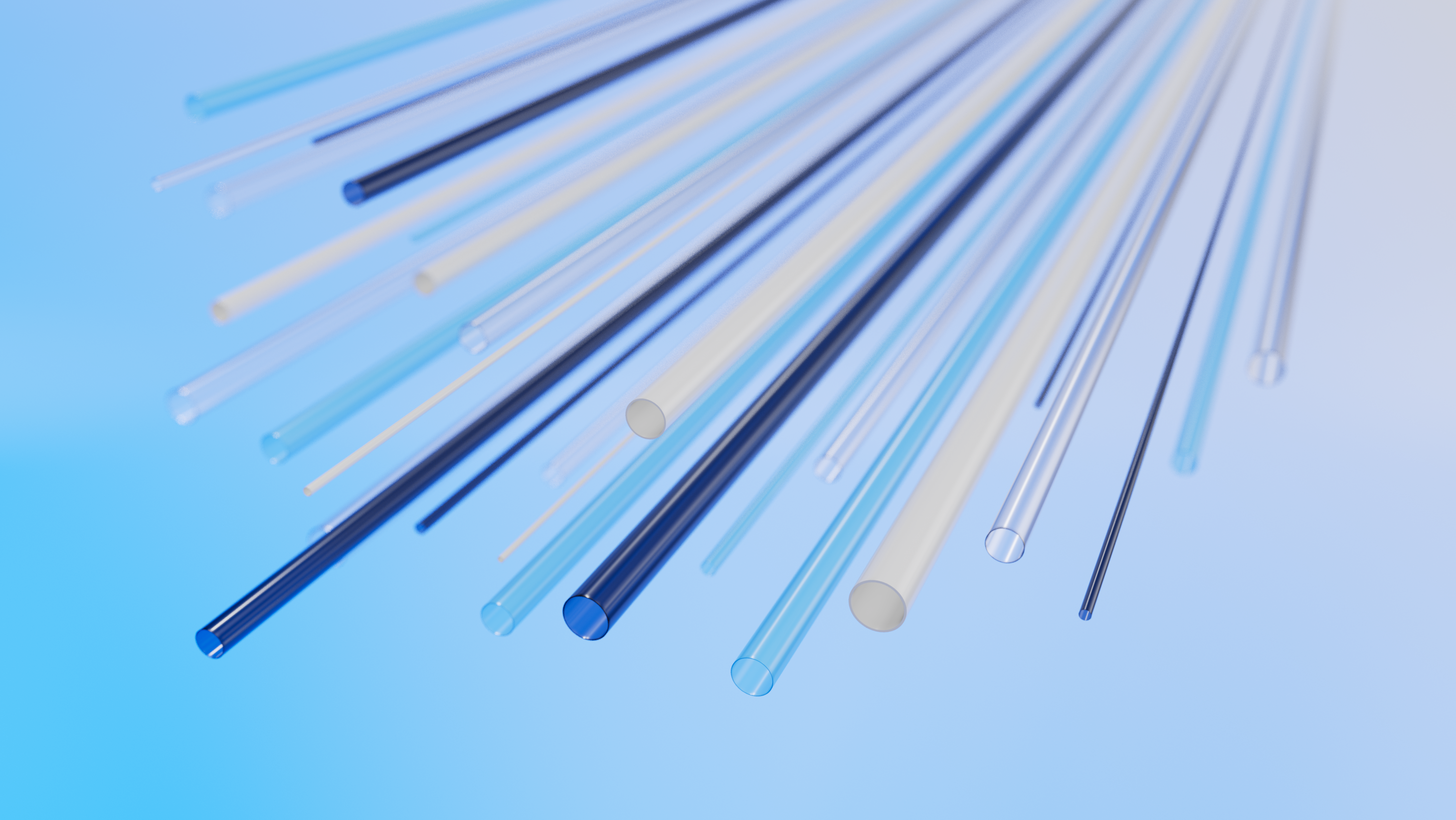
You encounter thin wall PET heat shrink medical device tubing in many advanced healthcare tools. This tubing uses ultra-thin walls to wrap tightly around wires and components. It provides insulation and structural support while letting devices remain small and safe.
The tubing prevents electrical leakage, protecting you from shocks.
It meets strict FDA and CE standards for safety.
You can clean it many times without losing its protective power.
Its design ensures stability and prevents leaks inside medical devices.
Key Takeaways
Thin wall PET heat shrink tubing protects medical device parts by providing strong insulation and support without adding bulk.
The tubing is safe for patients because it meets strict medical standards and can be sterilized many times without losing strength.
Its ultra-thin design helps make medical devices smaller and lighter, improving patient comfort and device performance.
PET tubing resists chemicals, heat, and damage, which keeps devices reliable and long-lasting in tough medical environments.
This tubing fits tightly around wires and sensors, preventing leaks and electrical problems to ensure device safety.
Thin wall PET heat shrink medical device basics
What is thin wall PET heat shrink tubing
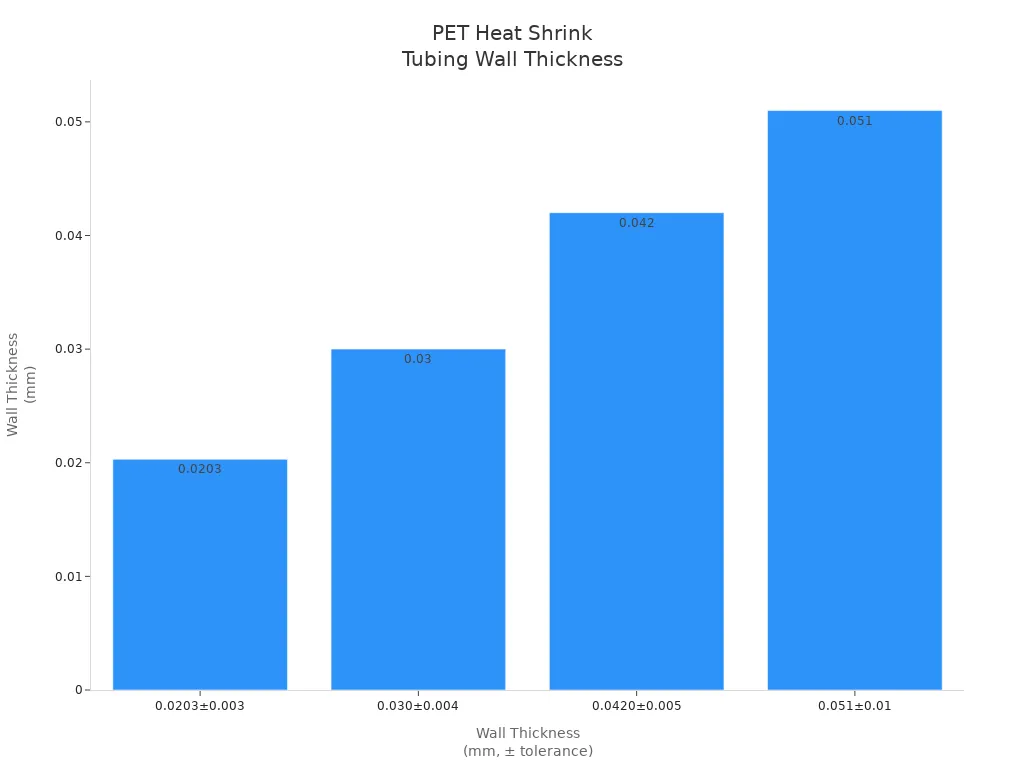
You see thin wall PET heat shrink medical device tubing in many advanced medical tools. This tubing uses PET, a strong and lightweight polymer, to create a protective layer around wires and delicate parts. You benefit from its ultra-thin walls, which range from 0.0008 inches to 0.0020 inches. These thin layers allow you to design compact devices without sacrificing insulation or support.
Measurement Type | Wall Thickness (Inch) | Wall Thickness (mm) |
|---|---|---|
Ultra Thin | 0.0008±0.0001 | 0.0203±0.003 |
Ultra Thin | 0.0012±0.0002 | 0.030±0.004 |
Ultra Thin | 0.0017±0.0002 | 0.0420±0.005 |
Ultra Thin | 0.0020±0.0004 | 0.051±0.01 |
You find standard wall thicknesses as low as 0.0001 inches and typical values up to 0.004 inches. This ultra-thin wall pet shrink tubing lets you build smaller, lighter medical devices that still deliver high performance.
Tip: Ultra-thin wall pet shrink tubing helps you achieve miniaturization in medical devices, making procedures less invasive and improving patient comfort.
How heat shrink tubing works
You activate heat shrink tubing by applying heat. PET heat shrink tubing contracts because of thermal contraction and biaxial orientation. Manufacturers stretch the PET film in two directions, storing elastic energy in the polymer chains. When you heat the tubing, this energy releases, causing the tubing to shrink tightly around the device components.
You usually apply temperatures between 70°C (158°F) and 190°C (374°F). Most medical applications use 150°C (302°F) for ideal shrinkage. This temperature range ensures the tubing fits snugly and enhances durability.
PET heat shrink tubing forms a uniform, tight seal.
You protect sensitive electronics and prevent electrical leakage.
The tubing maintains its shape and strength after repeated sterilization.
Why thin wall matters in medical devices
You rely on thin wall PET heat shrink medical device tubing for several reasons. Thin walls provide effective insulation without adding bulk. You can design smaller, more maneuverable devices that improve patient outcomes. The tubing protects internal components from moisture, chemicals, and scratches. You maintain shape and strength after multiple cleanings.
Property | Thin Wall PET Tubing | Thicker Alternatives |
|---|---|---|
Strength | High | Moderate |
Flexibility | Excellent | Limited |
Insulation | Effective | Bulky |
Weight | Light | Heavy |
Durability | High (resists chemicals, moisture, scratches) | Moderate |
You gain several advantages:
Lightweight and durable protection for compact medical devices.
High tensile and dielectric strength shields delicate parts from mechanical stress and electrical failure.
Ultra-thin walls enable slimmer designs and more functions in compact instruments.
You simplify complex assemblies, reducing component count and speeding up time-to-market.
Note: Thin wall PET heat shrink medical device tubing supports insulation, compactness, and structural support. You achieve safer, more reliable medical devices that meet strict regulatory standards.
PET properties and advantages
Key features of PET
You rely on PET for heat shrink tubing in medical devices because it offers a unique combination of physical and chemical properties. PET stands out for its high strength and durability. You benefit from its ability to maintain mechanical strength even under stress. The material resists chemicals, so you can clean and sterilize devices without worrying about damage. PET remains stable at high temperatures, which means you can use it in demanding medical environments.
Property | Description |
|---|---|
Maintains integrity during cleaning and sterilization. | |
Ensures safety for patients and healthcare professionals. | |
Mechanical strength | High tensile strength suitable for demanding medical use. |
Thermal stability | Can withstand high temperatures without degrading. |
You find PET heat shrink tubing delivers excellent clarity, so you can inspect device components easily. Its shrink ratio of 2:1 lets you achieve a tight fit around wires and sensors. You choose PET for its economical cost and reliable performance.
Biocompatibility and safety
You trust PET in medical devices because it meets strict biocompatibility standards. The material does not leach harmful chemicals, so you protect patients and healthcare workers. PET has been used in sutures and artificial blood vessels, showing its safety in direct contact with the body. You must ensure the manufacturing process avoids impurities, so you rely on certifications.
Certification | Description |
|---|---|
Evaluates the biocompatibility of materials used in medical devices, ensuring no adverse reactions. | |
USP Class VI | Ensures the tubing is free from harmful chemicals and safe for prolonged use in medical environments. |
FDA Approval | Confirms compliance with regulations for medical devices sold in the United States. |
PET heat shrink tubing can be sterilized using several methods.
Some types withstand autoclaving, while others may deform under high heat.
Ethylene oxide sterilization requires careful handling to avoid residue.
Gamma irradiation may change material properties over time.
Note: You always check certifications and test results to guarantee biocompatibility and safety.
Comparison with other heat shrink tubing materials
You compare PET heat shrink tubing to polyolefin and fluoropolymer tubing when choosing materials for medical devices. PET offers superior mechanical strength and clarity. Polyolefin lacks tensile strength and does not provide the same transparency. Fluoropolymer tubing resists higher temperatures but costs much more.
Property | PET Tubing | Polyolefin Tubing | Fluoropolymer Tubing |
|---|---|---|---|
Shrink Ratio | 2:1 | N/A | N/A |
Clarity | Excellent | N/A | Opaque/Semi-transparent |
Mechanical Strength | Superior | Lacks tensile strength | N/A |
Temperature Resistance | -196°C to 135°C (short-term 200°C) | N/A | Up to 260°C |
Cost | N/A | Significantly more expensive |
You also consider cost. PET heat shrink tubing is more affordable than FEP, which you use for reusable equipment needing extreme resistance.
Material | Cost | Performance Characteristics |
|---|---|---|
PET | Lower | Economical, suitable for mechanical strength and stability |
FEP | Higher | Superior high-temperature and chemical resistance, justified for reusable equipment |
You select PET for its balance of high strength, clarity, and cost-effectiveness in medical devices.
Ultra-thin wall PET shrink tubing manufacturing
Production process overview
You start with high-purity pet pellets. Manufacturers melt these pellets and extrude them into thin tubes. The process uses precise temperature and speed controls to shape the tubing. You see the tubing stretched in two directions, which gives it strength and flexibility. This step, called biaxial orientation, is key for ultra-thin wall pet shrink tubing. After stretching, the tubing cools and sets its shape. You can cut the tubing to custom lengths for different medical devices.
The process includes:
Melting and extruding pet
Biaxial stretching for strength
Cooling and cutting to size
You rely on this process to create tubing that meets strict medical standards.
Achieving ultra-thin walls
You achieve ultra-thin wall pet shrink tubing by controlling every step of the process. Wall thickness control is critical. You use advanced machinery to monitor the thickness in real time. Sensors check the tubing as it forms, so you get consistent results. You adjust the stretching and cooling to reach the exact wall thickness you need. This process lets you produce tubing as thin as 0.0008 inches.
Tip: Wall thickness control ensures that every piece of ultra-thin wall pet shrink tubing fits perfectly and performs reliably in your medical devices.
You benefit from step-by-step guidance in the process. This guidance reduces confusion and helps you avoid mistakes. Faster and steadier production means you get tubing quickly and with fewer defects. Early problem detection lets you fix issues before they affect the whole batch. You save time and money with a well-controlled process.
Benefit | Description |
|---|---|
Step-by-step guidance | Clear instructions for consistent production |
Faster and steadier production | Efficient process for reliable output |
Early problem detection | Identifies issues before they become serious |
Time and cost savings | Streamlined process reduces expenses |
Quality control for medical use
You must test ultra-thin wall pet shrink tubing before using it in medical devices. Quality checks confirm that the tubing meets all safety and performance standards. You look for strength, chemical resistance, and electrical safety. Testing follows strict rules set by international standards.
Standard/Specification | Purpose/Focus | Key Quality Control Tests |
|---|---|---|
Biocompatibility and medical safety | Tests for safety, strength, and chemical resistance | |
UL/CSA 224 | Insulation tubing standards | Tests for strength, oil resistance, flexibility, and voltage |
AMS-DTL-23053 | Heat shrink tubing standards | Tests for weight, fungus resistance, and electrical safety |
3-A Sanitary Standards | Health and sanitary compliance | Testing at approved labs for health rules |
You trust these tests to ensure that ultra-thin wall pet shrink tubing meets FDA and global medical device regulations. Consistency in wall thickness control and process quality gives you confidence in every batch.
Applications in medical devices
Catheter reinforcement and lamination
You use pet heat shrink tubing in catheters to improve strength and flexibility. This tubing reinforces catheter shafts, helping them withstand higher pressure during procedures. You notice that catheters become more bendable, which allows for smoother navigation inside the body. The smooth surface of pet tubing reduces friction, making insertion and removal easier for patients. You often see this tubing in:
Central venous catheters
Peripheral intravenous catheters
Guiding catheters
Balloon catheters
Diagnostic catheters
Microcatheters
Drainage catheters
Dialysis catheters
Urinary catheters
Neurovascular catheters
You rely on pet for its ability to maintain dimensional stability under heat and provide a secure fit around catheter components.
Sensor encapsulation
You protect sensitive sensors in medical devices by using pet heat shrink tubing. This tubing forms a tight, clear barrier around sensors, shielding them from moisture and chemicals. You ensure that sensors remain accurate and reliable during use. Pet offers exceptional strength and resilience, so you can trust it to keep sensors safe even in demanding environments. You benefit from the tubing’s flexibility, which adapts to different sensor shapes and sizes.
Electrical insulation and protection
You depend on pet heat shrink tubing for electrical insulation in implantable medical devices. The tubing shields wires and circuits from moisture, chemicals, and physical stress. Its high dielectric strength prevents electrical failures, which is critical for patient safety. You can sterilize the tubing without losing its protective properties. Pet’s heat resistance ensures that insulation remains intact after repeated sterilization cycles.
Other medical uses
You find pet heat shrink tubing in many other medical applications. It reinforces connections in catheter assemblies, reducing the risk of failure. The tubing acts as a protective outer layer, guarding against environmental factors. You benefit from its chemical resistance, which prolongs the life of medical devices. Pet’s high tensile strength and adaptability make it suitable for a wide range of uses, from surgical instruments to diagnostic tools.
Feature | Description |
|---|---|
Protective Outer Layer | Provides a barrier against environmental factors, enhancing durability. |
Reinforcement of Connections | Ensures secure assembly of components, reducing the risk of failure. |
Chemical Resistance | Maintains integrity in various medical environments, prolonging device life. |
Flexibility | Allows for easy application and adaptability to different shapes and sizes. |
High Tensile Strength | Contributes to the overall reliability and longevity of the catheter assembly. |
Tip: You improve patient comfort and device reliability by choosing pet heat shrink tubing for your medical applications.
Benefits and design considerations
Performance and reliability
You depend on PET heat shrink tubing for consistent performance in every medical application. PET provides high tensile strength, which means your devices can handle stress without breaking. The tubing resists chemicals, so you do not worry about cleaning agents or sterilants damaging your equipment. PET maintains its shape and protective qualities even after repeated sterilization cycles. You trust PET to deliver electrical insulation, which keeps sensitive circuits safe. PET’s thin walls allow for a snug fit, enhancing the reliability of each application. You see PET used in catheters, sensors, and connectors because it stands up to demanding medical environments.
PET is biocompatible, so you avoid adverse reactions in patients.
PET meets ISO 10993 and USP Class VI standards, confirming its safety for medical use.
PET’s strength and chemical resistance increase the lifespan of your devices.
Device miniaturization and patient safety
You achieve miniaturization in medical devices by choosing PET heat shrink tubing. PET’s ultra-thin walls let you design smaller, lighter tools without losing protection or support. This feature improves patient comfort and allows for less invasive procedures. PET’s strong shrinking ability ensures a tight seal, which prevents leaks and keeps internal components secure. You rely on PET for applications where space is limited, such as microcatheters and implantable sensors. PET’s clarity also helps you inspect assemblies for quality control.
PET’s biocompatibility ensures safe contact with tissues and fluids.
PET withstands sterilization, so you maintain safety standards throughout the device’s life.
PET’s electrical safety and durability contribute to better patient outcomes.
Regulatory and sterilization factors
You must meet strict regulations in medical device manufacturing. PET heat shrink tubing complies with global standards, including FDA, ISO 10993, and USP Class VI. You can use PET in any application that requires proven safety and reliability. PET endures extreme temperature changes, making it suitable for autoclaving and other high-temperature sterilization methods. PET’s chemical resistance protects against harsh cleaning agents, so insulation stays intact after each cleaning. You choose PET for applications that demand repeated sterilization and long-term use.
Regulatory Standard | PET Compliance | Benefit for Medical Application |
|---|---|---|
FDA | Yes | Approved for medical device use |
ISO 10993 | Yes | Ensures biocompatibility |
USP Class VI | Yes | Confirms safety for prolonged contact |
Tip: Always verify that your PET tubing meets the required certifications for your specific medical application.
You rely on thin wall PET heat shrink tubing to improve medical device performance and safety. PET tubing offers enhanced insulation, mechanical durability, and biocompatibility. You benefit from its flexibility and lightweight design, which supports device miniaturization and patient comfort.
Insulation and protection ensure electrical safety.
Non-toxic materials prioritize patient safety.
Adaptability fits complex device shapes.
You should always choose materials that deliver reliability and long-term performance in medical applications.
FAQ
What is the main purpose of thin wall PET heat shrink tubing in medical devices?
You use thin wall PET heat shrink tubing to insulate, protect, and reinforce wires or components. This tubing helps you create smaller, safer medical devices that meet strict regulatory standards.
How do you apply PET heat shrink tubing?
You slide the tubing over the part you want to cover. You use heat, usually from a heat gun, to shrink the tubing. The tubing forms a tight, protective seal around the component.
Is PET heat shrink tubing safe for patients?
You can trust PET heat shrink tubing. Manufacturers test it for biocompatibility and safety. The tubing meets FDA, ISO 10993, and USP Class VI standards, so you protect patients from harmful chemicals.
Can you sterilize PET heat shrink tubing?
You sterilize PET heat shrink tubing using methods like autoclaving, ethylene oxide, or gamma irradiation. The tubing resists chemicals and heat, so you maintain device safety after repeated sterilization.
What makes PET better than other tubing materials?
You choose PET for its high strength, clarity, and cost-effectiveness. PET offers better mechanical durability and insulation than polyolefin. It costs less than fluoropolymer tubing, making it ideal for most medical devices.
See Also
Key Uses of Ultrathin PET Heat Shrink Tubing in Healthcare
The Importance of Ultra-Thin PET Tubing for Medical Equipment
New Developments in FEP Heat Shrink Tubing for Healthcare
The Significance of Gamma Resistant Heat Shrink Tubing in Medicine
Essential Insights on PET Heat Shrink Tubing for Electronics

© Copyright 2024 My First Blog - All Rights Reserved.