How to Avoid Common Mistakes When Selecting High Tensile Strength Medical PET Heat Shrink Tubing

You must pick the right high tensile strength medical PET heat shrink tubing. This helps your medical devices stay safe and work well. If you miss important details, your device might break or not follow rules. Shrinkage, temperature limits, and sizing are all important. Always look for ISO 10993 or USP Class VI certification. These show the tubing is safe for medical use. Good suppliers help you avoid problems with quality. They help your device work the way it should.
Key Takeaways
Always check how strong and tough the PET heat shrink tubing is. Strong tubing keeps your medical devices safe and working well.
Watch the shrinkage properties. The right size gives a tight fit. This stops leaks and device problems.
Know the activation temperature. Using the right heat stops damage to the tubing. It also keeps the tubing strong.
Check compliance and supplier quality. Look for certifications like ISO 10993 and USP Class VI. These show the tubing is safe and reliable.
Use a checklist when picking tubing. This helps you avoid mistakes. It also makes sure your medical devices work well.
Common Mistakes in High Tensile Strength Medical PET Heat Shrink Selection
Overlooking Tensile Strength and Durability
You should check tensile strength and durability before using pet heat shrink tubing. If you forget, your device might break or stop working. High tensile strength medical pet heat shrink tubing keeps parts safe from damage. It helps your device stay strong. The table below explains why strength and durability are important in medical device making:
Property | Impact on Medical Devices |
|---|---|
Tensile Strength | Makes devices strong when stressed and stops damage. |
Resistance to Wear/Tear | Lets devices last longer, even with lots of use or tough conditions. |
Sterilization Resistance | Lets tubing handle many cleaning steps without losing strength. |
If you want your device to work well, pick tubing with high strength and durability.
Ignoring Shrinkage Properties (Radial & Axial)
You need to notice shrinkage properties. Pet heat shrink tubing gets smaller in width (radial) and length (axial). If you ignore this, your device might not fit or seal right. Top makers use tight fit rules, like a gap of 15% or less, and a shrink ratio of 1.1:1. Ultra-thin pet heat shrink tubing needs careful sizing to work well. Using the wrong shrink ratio can cause leaks or make your device fail.
Incorrect Sizing and Shrink Ratio
Picking the wrong size is a common mistake. Tubing that is too small makes seals uneven. Tubing that is too big can cause leaks. Always match the shrink ratio to your device. For example, a 2:1 shrink ratio means tubing shrinks to half its size. Ultra-thin pet heat shrink tubing comes in different shrink ratios, so check the specs for your parts. Getting the right size helps your device fit tight and work well.
Neglecting Activation and Max Temperature
You need to know the activation temperature for pet heat shrink tubing. Most medical tubing activates at about 215°C. Too much heat can melt or change the tubing’s color. This makes it weaker and less durable. Ultra-thin pet heat shrink tubing needs careful heat to avoid damage. Always use the right temperature to keep your device safe.
Failing to Check Compliance and Supplier Quality
Always check compliance and supplier quality. Medical devices need tubing that meets strict biocompatibility rules. Look for FDA approval, ISO 13485, ISO 10993, and USP Class VI certifications. These show the tubing is safe for medical use and can handle cleaning steps. Good suppliers give you quality tubing and help you follow safety rules. If you skip this, your device might not pass safety checks or work in catheters, electrical insulation, or other important parts.
Tip: Always ask your supplier for certificates and test reports. This helps you show the tubing meets all medical and safety rules.
Ultra-thin pet heat shrink tubing is important in medical device making. If you avoid these mistakes, your devices and parts will be safer, stronger, and work better.
Step-by-Step Guide to Selecting PET Heat Shrink Tubing
Verifying Tensile Strength Requirements
You need to check the strength of pet heat shrink tubing. High tensile strength medical pet heat shrink keeps parts safe when stressed. Measure the tubing’s diameter and wall thickness. Use tools to make sure the tubing fits your device. Look for air bubbles or uneven shrinking in the tubing. This helps you find problems early and keeps your device strong.
Quality Control Metrics | Details |
|---|---|
Diameters | 0.006"–0.020" (±0.001", typical); 0.021"–0.5" (±5%, typical) |
Wall Thickness | 0.0001"–0.0005" (±0.0001", typical); 0.0006"–0.004" (±20%, typical) |
Temperature Range | -196°C to 135°C (long-term); Up to 200°C (short-term); Melting: 235°C |
Electrical Properties | Dielectric strength: >4,000 V/mil; Volume resistivity: 10^18 Ohm-cm |
Sterilization Methods | Ethylene oxide, Gamma radiation, Autoclaving |
Biocompatibility | Complies with ISO 10993 standards |
Test the tubing to see if it sticks well to all parts. This step makes the tubing last longer and work better. Make sure the tubing can handle cleaning and sterilizing. Strong tubing means your device will stay safe and last longer.
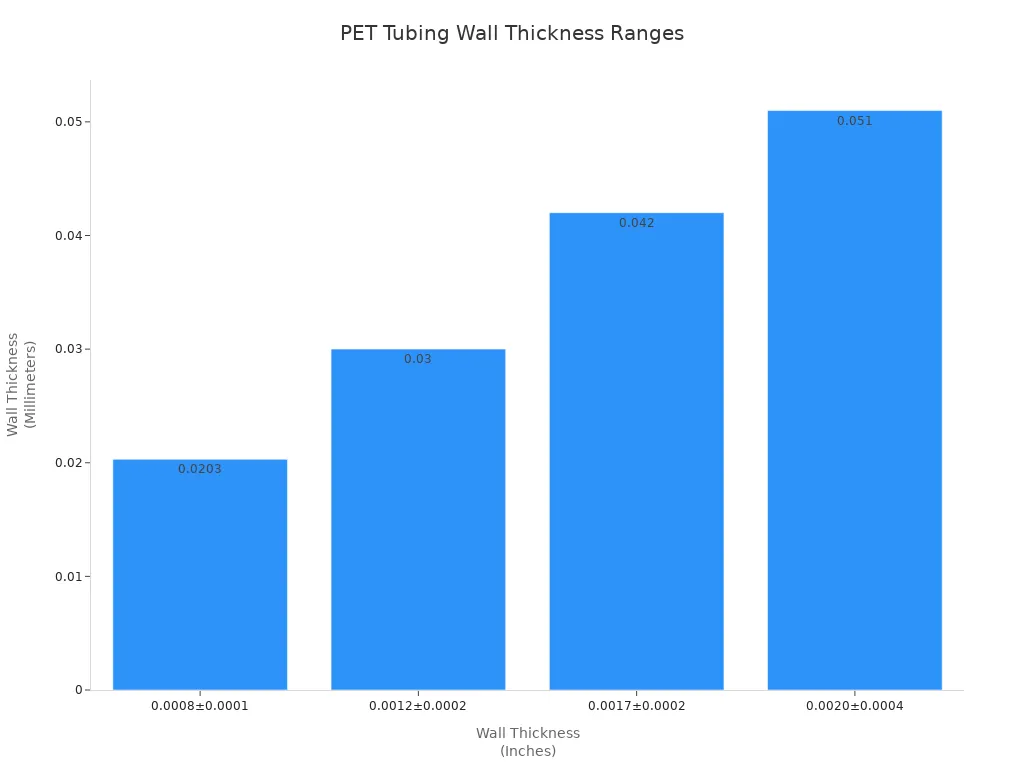
Assessing Shrinkage and Wall Thickness
You should know how much pet heat shrink tubing will shrink. Both width and length shrinking change how the tubing fits your device. Measure the tubing before and after shrinking. This helps you get the right size for your parts. Ultra-thin pet heat shrink tubing needs extra care when sizing. Wall thickness matters for strength and how well the tubing works. Thicker walls give more strength. Thinner walls make the tubing bend easier.
Wall Thickness (Inches) | Wall Thickness (Millimeters) |
|---|---|
0.0008±0.0001 | 0.0203±0.003 |
0.0012±0.0002 | 0.030±0.004 |
0.0017±0.0002 | 0.0420±0.005 |
0.0020±0.0004 | 0.051±0.01 |
Always check for even shrinking and no misalignment. This keeps your device safe and helps it work better. If you use ultra-thin pet heat shrink tubing, check the wall thickness often. This helps you avoid weak spots and keeps your device strong.
Sizing for a Tight Fit (≤15% Gap)
You must size pet heat shrink tubing for a tight fit. The gap between tubing and your device should be less than 15%. This rule helps you get a good seal and performance. If the gap is too big, the tubing may not protect your parts. If the gap is too small, the tubing may not fit.
Measure the biggest diameter of your device.
Pick tubing that is no more than 15% bigger than your device.
Check the shrink ratio to make sure the tubing fits tightly after shrinking.
Ultra-thin pet heat shrink tubing works best when you follow this rule. A tight fit makes the tubing last longer and keeps your device safe. This step is very important for medical devices like catheters and electrical insulation.
Evaluating Temperature Resistance
You need to check the temperature resistance of pet heat shrink tubing. Devices often go through cleaning with high heat. The tubing must handle both short and long heat exposure.
Specification Type | Temperature Range |
|---|---|
Short-term exposure | Up to 200°C |
Long-term exposure | -196°C to 135°C |
Ultra-thin pet heat shrink tubing must survive cleaning without losing strength or shape. Always check the tubing’s melting point and heat resistance. This keeps your device safe and helps it work well. Good temperature resistance means your tubing will last longer and protect your parts.
Ensuring Medical Compliance and Supplier Reliability
You must check that pet heat shrink tubing meets all medical rules. Look for USP Class VI and ISO 10993 certifications. These show the tubing is safe for medical devices. Always ask your supplier for proof of these certifications. Check the manufacturer’s documents for ISO 13485. This shows the supplier follows good quality systems.
USP Class VI certification proves safety and biocompatibility.
ISO 10993 checks for toxicity and irritation.
ISO 13485 shows good quality management for medical devices.
FDA and CE certifications help your products enter the market.
Pick suppliers with a good reputation for quality and reliability. Good suppliers give you all needed documents and help you follow safety rules. This step protects your device and builds trust with customers.
Tip: Always keep records of all certifications and test reports. This helps you pass audits and keeps your devices safe.
Ultra-thin pet heat shrink tubing is important in medical device making. If you follow these steps, your parts will be safer, stronger, and work better.
Practical Tips and Checklist for Medical PET Heat Shrink Tubing
Key Questions for Suppliers
When you pick pet heat shrink tubing, ask suppliers good questions. This helps you get tubing that is safe and works well for medical devices. Use this table to help you talk with suppliers:
Factor | Description |
|---|---|
Regulatory compliance | Ask if the tubing has FDA and CE certificates for safety. |
Market reputation | Pick suppliers who are known for good tubing. |
Customer trust | Choose suppliers trusted by top medical device makers. |
Biocompatibility | Make sure the tubing meets ISO 10993 rules to avoid bad reactions. |
Chemical safety | Check for USP Class VI to know the tubing is safe. |
FDA Approval | Make sure the tubing follows U.S. medical device rules. |
Material quality | Pick tubing that is strong and resists chemicals. |
Tip: Always ask for certificates and test reports before you buy pet heat shrink tubing.
Essential Criteria for Final Selection
You need a simple checklist when you choose pet heat shrink tubing. This keeps your medical device making easy and safe. Here are the main things to check:
Look at tensile strength and durability for all tubing.
Make sure the tubing fits your device with the right size and shrink ratio.
Check if the tubing can handle cleaning like autoclaving or gamma radiation.
Review all certificates for biocompatibility and chemical safety.
Test the tubing to see if it shrinks evenly and has no weak spots.
Use ultra-thin pet heat shrink tubing for small or delicate parts.
Always match the tubing to what your device needs. This helps you avoid problems when making medical devices.
Medical Device Application Considerations
Every device is different. You must think about this when you pick pet heat shrink tubing for your parts. The table below shows what to check for each use:
Consideration | Description |
|---|---|
Size and Dimensional Accuracy | Tubing must fit your device exactly. Small mistakes can hurt performance or safety. |
Material Durability and Biocompatibility | Tubing should be strong and not cause bad reactions with tissue. |
Compliance with Medical Standards | Tubing must meet FDA and ISO rules for medical device making. |
Technical Factors | Watch the shrink temperature to stop wrinkles or bad shrinking. |
Note: Ultra-thin pet heat shrink tubing is best for small parts that need tight sizing and easy cleaning.
Always check what your device needs before you pick pet heat shrink tubing. This makes sure the tubing helps your device work well, stay strong, and be safe.
You can stop common mistakes in making medical devices by using a simple process to pick pet heat shrink tubing. Always look at the tubing’s details, like how much it shrinks and what heat it can take. Check every certification for the tubing before you use it. Ask your supplier if the pet heat shrink tubing is good quality and follows the rules. Use a checklist to help you choose the right tubing. If your device is hard to make, talk to experts for help. Look over your steps and reach out to suppliers you trust. Pet heat shrink tubing keeps your device safe. Tubing with high tensile strength helps make strong medical devices. Pet heat shrink tubing protects your device from harm. Tubing that fits right makes your device safer. Tubing that meets rules keeps your device strong. Pet heat shrink tubing is important for making medical devices. Tubing that passes all tests helps you feel sure about your choice. Tubing that works well helps your device last longer. Tubing that fits your device makes building medical devices easier.
FAQ
What is pet heat shrink tubing used for in medical devices?
You use pet heat shrink tubing to cover, insulate, and protect wires or components in medical devices. It helps keep parts safe from damage and ensures your device works well during use and cleaning.
How do you choose the right size of pet heat shrink tubing?
You measure the largest part of your device. Then, you pick pet heat shrink tubing that is no more than 15% bigger. This helps you get a tight fit and strong seal after shrinking.
Can pet heat shrink tubing handle high temperatures?
Yes, pet heat shrink tubing can handle high temperatures. You can use it during sterilization or cleaning. Most types resist heat up to 200°C for short times and up to 135°C for long use.
Is pet heat shrink tubing safe for all medical devices?
You should check for certifications like ISO 10993 and USP Class VI. These show pet heat shrink tubing is safe for medical use. Always ask your supplier for proof before you use it in your device.
How do you test pet heat shrink tubing for quality?
You can test pet heat shrink tubing by shrinking it on a sample part. Check for even shrinking, no bubbles, and a tight fit. You should also review test reports and certificates from your supplier.
See Also
Selecting The Ideal Ultra-Thin PET Heat Shrink Tubing
A Comprehensive Guide For Choosing FEP Heat Shrink Tubing
Key Advice For Effectively Utilizing FEP Heat Shrink Tubing

© Copyright 2024 My First Blog - All Rights Reserved.