How Molecular Structure Triggers the Shrink Effect in Heat Shrink Tubing


You can think of the molecular structure in heat shrink tubing like a tangled pile of rubber bands. When manufacturers stretch and set these bands, they stay extended until you apply heat. Polyolefin, a common material, and a process called cross-linking help lock this stretched state in place. When you heat the tube, the polymer chains move and snap back to their original form. This process forms the basis of the Science Behind Heat Shrinking Tubes: How Molecular Structure Creates the Shrink Effect. This mechanism matters in real life. For example, in railway systems, heat shrinkable tubes protect wiring against flames and fluids. In aerospace circuits, they guard against fires from sparks or heat surges.
Key Takeaways
Polyolefin is the main material in heat shrink tubing. It offers flexibility, strength, and excellent temperature resistance, making it ideal for various applications.
Cross-linking locks polymer chains in place, allowing heat shrink tubing to shrink back to its original size when heated. This process ensures durability and reliability.
Always check the recommended activation temperature of heat shrink tubing. Proper heating ensures even shrinking and prevents damage to the tubing or components.
Once heat shrink tubing is shrunk, it cannot return to its original size. Plan your project carefully to ensure a proper fit before applying heat.
Heat shrink tubing is widely used in electrical insulation, automotive wiring, and aerospace applications, providing protection against moisture, dust, and chemicals.
The Science Behind Heat Shrinking Tubes: How Molecular Structure Creates the Shrink Effect

Polyolefin and Its Properties
You often see polyolefin as the main material in heat shrink tubing. This material stands out because of its unique molecular structure. Polyolefin contains long chains of molecules that give it flexibility and strength. When you use heat shrink tubing, you want a material that can handle tough conditions. Polyolefin meets this need.
Tip: Polyolefin works well in many environments. You can use it for electrical insulation, automotive wiring, and even in aerospace and military settings.
Here is a table that shows why polyolefin is so effective for heat shrink tubing:
Property | Description |
|---|---|
Temperature Resistance | Excellent high-temperature resistance (up to -55℃ to 135℃) |
Electrical Insulation | Provides reliable electrical protection |
Chemical Resistance | Suitable for harsh environments |
Flexibility | Offers good flexibility for various applications |
You can count on polyolefin to resist petroleum products, hydraulic fluids, and mild acids. This makes it a smart choice for outdoor equipment and solar cables. Polyolefin also gives you better electrical insulation than many other polymers. For example, it can handle high voltage, which makes it safer for electrical work.
When you look at the science behind heat shrinking tubes: how molecular structure creates the shrink effect, you see that polyolefin’s structure plays a big role. The long chains and strong bonds help the tubing return to its original shape when heated. You get a reliable and durable product for many uses.
Polymer Chains and Cross-Linking
The science behind heat shrinking tubes: how molecular structure creates the shrink effect also depends on what happens to the polymer chains inside the tubing. These chains act like tiny springs. When manufacturers stretch the tubing, the chains line up and stay stretched. Cross-linking then locks these chains in place.
Cross-linking creates a three-dimensional network inside the polymer.
This network helps the tubing keep its shape when you heat it.
The tubing does not melt or flow. Instead, it shrinks back to its original size.
You can think of cross-linking as tying knots in a net. These knots stop the net from coming apart. In heat shrink tubing, cross-linking stops the polymer chains from moving too far. When you apply heat, the tubing shrinks evenly and smoothly.
There are several ways to create cross-linking in heat shrink tubing. Here is a table that shows the most common methods:
Method | Description |
|---|---|
Radiation Cross-linking | Uses electron beam or gamma radiation to create molecular bonds, enhancing mechanical properties and chemical resistance. |
Chemical Cross-linking | Utilizes peroxide catalysts for cost-effective production with good performance characteristics. |
Silane Cross-linking | Offers moisture-cure capability for improved long-term stability. |
The science behind heat shrinking tubes: how molecular structure creates the shrink effect shows that cross-linking is key. You get a tube that shrinks when heated but does not lose its strength or shape. This makes heat shrink tubing safe and reliable for many jobs.
The science behind heat shrinking tubes: how molecular structure creates the shrink effect gives you a better understanding of why polyolefin and cross-linking matter. You can now see how these features work together to make heat shrink tubing so useful.
Manufacturing Process and Setup
Extrusion and Stretching
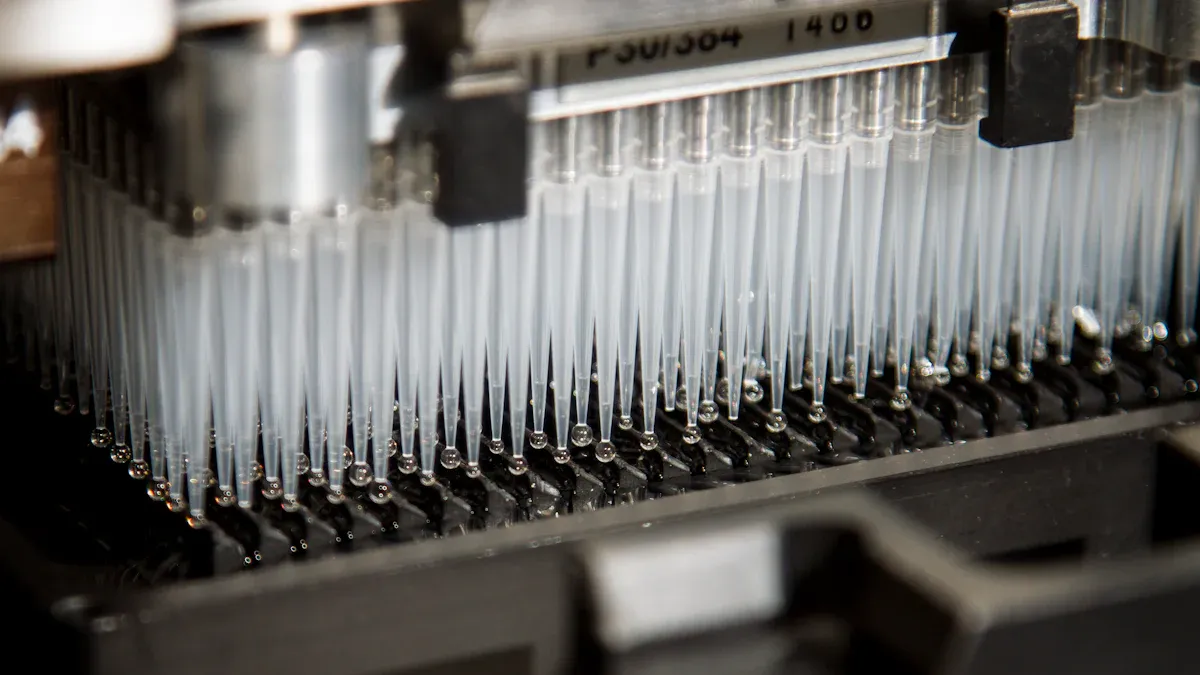
You start with polyolefin pellets. Manufacturers melt these pellets and push the material through a die. This process shapes the tubing and creates orientation in the polymer chains. The next step is stretching. When you stretch the tubing, you align the polymer chains even more. This step introduces locked-in stresses. These stresses set up the tubing for the shrink effect you see later.
The extrusion process creates orientation in the polymer chains.
Stretching aligns these chains further.
Locked-in stresses form during these steps.
When you heat the tubing, these stresses relax. The tubing shrinks back to its original size. This is a key part of The Science Behind Heat Shrinking Tubes: How Molecular Structure Creates the Shrink Effect.
Irradiation and Cross-Linking
After stretching, the tubing goes through irradiation. This step uses high-energy beams to create cross-links between the polymer chains. Cross-linking forms a strong network inside the tubing. You get a material that does not melt or flow when heated.
Safety matters during this step. You must control the temperature and use proper ventilation. Here are some important safety points:
Overheating can cause burns and release harmful fumes.
Non-flame-retardant tubing can catch fire in risky environments.
Use heat guns at 200-300°C for even shrinking.
Avoid touching hot tubing to prevent burns.
Good ventilation helps remove any irritating fumes.
Cross-linked tubing is hard to recycle because it becomes a thermoset.
Locking the Expanded State
The final step locks the tubing in its expanded state. Manufacturers cool the tubing quickly after stretching and cross-linking. This cooling traps the polymer chains in their stretched position. The tubing stays expanded until you apply heat.
You might wonder about the environmental impact of this process. Polyolefin tubing offers a safer choice compared to PVC. Here is a table that shows the difference:
Material Type | Environmental Impact | Notes |
|---|---|---|
Polyolefin | Lower toxicity and emissions | Halogen-free, produces low smoke when burned |
PVC | Higher toxicity and emissions | Contains halogens, releases toxic gases |
The Science Behind Heat Shrinking Tubes: How Molecular Structure Creates the Shrink Effect depends on each of these steps. You get tubing that shrinks safely and reliably when you need it.
Heat Activation and Shrink Mechanism
Temperature Range for Shrinking
You trigger the shrink effect in heat shrink tubing by applying heat. Polyolefin tubing needs a specific temperature to activate this change. You can see the typical activation temperature in the table below:
Material Type | Activation Temperature |
|---|---|
Polyolefin Heat Shrink Tubing | 143 °C |
You should use a heat gun or another controlled heat source. If you heat the tubing to about 143 °C, the material starts to shrink. This temperature ensures the tubing contracts evenly and tightly around wires or connectors. You avoid overheating, which can damage the tubing or the components inside.
Tip: Always check the recommended activation temperature for your tubing. Using the right heat keeps your project safe and effective.
Molecular Chain Mobility
When you heat the tubing, the molecular chains inside start to move. The heat softens the tubing and activates the internal polymer segments. You see the tubing shrink because the chains relax and return to their original shape. This process improves the mechanical strength and fit of the tubing.
Here is a table that explains how heat affects the molecular chains:
Evidence Description | Explanation |
|---|---|
Heat activation causes polymer segments to reorganize | The tubing shrinks and returns to its original size, making it stronger and more reliable. |
Relaxation of oriented molecular chains | The chains relax, which is essential for proper shrinkage and performance. |
Activation temperature range | The tubing shrinks best between 90°C and 150°C, ensuring uniform contraction and preventing damage. |
When you heat the tubing above the glass transition temperature, it softens and activates the polymer segments.
The internal stress from heating breaks the balance, guiding the segments to recover their original shape.
Radial Shrinkage vs. Length Stability
You notice that heat shrink tubing shrinks mostly in the radial direction. The tubing wraps tightly around wires or connectors, but it keeps its length. Scientists call this anisotropic behavior. The tubing shrinks more across its width than along its length. This design lets you cover connections without changing the length of your wiring. You get effective insulation and sealing, which protects your electrical work.
Note: Radial shrinkage ensures a snug fit, while length stability keeps your wiring organized and secure.
Irreversibility of the Shrink Effect
Why Shrinking Is Permanent
When you use heat shrink tubing, you notice that the shrinking process only happens once. The tubing does not return to its original size after it cools. This happens because of the way the polymer chains and cross-links work inside the material. When you heat the tubing, the polymer chains relax and move back to their original, unstretched positions. The cross-links hold these chains in place, so they cannot stretch out again.
You can think of this like baking clay in an oven. Once the clay hardens, you cannot make it soft and flexible again. The same thing happens with heat shrink tubing. The cross-linking process creates a strong network that locks the tubing into its new shape. This network does not break down when you cool the tubing. The shrink effect becomes permanent.
Note: You should always check the fit before shrinking the tubing. Once you apply heat, you cannot undo the process.
Limitations of Reversibility
Heat shrink tubing gives you a tight and secure fit, but it also comes with some limits. After you shrink the tubing, it cannot adapt to new shapes or changes. The material becomes hard and loses its flexibility. If you try to stretch or reshape it, the tubing may crack or break.
Here is a table that shows the main limitations:
Characteristic | Description |
|---|---|
Shrinkage Process | Irreversible; once shrunk, it cannot return to its original form. |
Adaptability to Deformations | Cannot adapt to dynamic deformations after hardening, limiting flexibility. |
You should use heat shrink tubing in places where you do not expect movement or changes. If you need something that can bend or stretch after installation, you may want to choose a different material.
🔍 Tip: Plan your project carefully. Make sure the tubing fits well before you apply heat, since you cannot reverse the shrink effect.
Applications and Benefits
Electrical Insulation Uses
You often see heat shrink tubing in electrical work. Electricians use it to cover wires and connectors. The tubing keeps out moisture and dust. It also stops wires from touching each other, which prevents short circuits. The secret lies in the molecular structure of polyolefin. Manufacturers use advanced cross-linking technology to create strong molecular bonds inside the tubing. This process gives the tubing a special memory. When you heat it, the tubing shrinks evenly and holds its shape. The three-dimensional network inside the tubing makes it strong, resistant to chemicals, and stable at high temperatures. You get reliable protection that lasts for years.
Tip: Use heat shrink tubing when you want to protect wires in cars, homes, or even airplanes. It works well in places where safety matters.
Other Practical Applications
Heat shrink tubing does more than just insulate wires. You find it in many industries because it protects and seals different parts. Here are some common uses:
In cars, you use it to protect wiring harnesses from shaking, rubbing, and fluids.
In aerospace and defense, it gives lightweight and tough insulation for important systems.
In medical devices, it covers catheters and other tools, making them safe and smooth.
You also see heat shrink tubing in food, chemical, and medical industries. The table below shows how different industries use it and the benefits they get:
Industry | Market Share | Benefits |
|---|---|---|
Food & Beverage | 22% | Gives hygienic, safe, and strong insulation. Meets safety rules. |
Chemical | 18% | Protects against harsh chemicals. Keeps systems safe and working. |
Aerospace & Medical | 30% | Offers top thermal and chemical resistance. Works well in extreme conditions. |
🔍 Note: Heat shrink tubing helps many industries by making equipment safer and longer-lasting.
You now know that polyolefin’s unique molecular structure and the careful manufacturing process create the shrink effect in heat shrink tubing. The table below shows how different structures add strength and flexibility:
Molecular Structure | Properties Contributed | Effect on Shrinkage |
|---|---|---|
Polyethylene (PE) | Good flexibility, low temperature resistance | Maintains stability in cold environments, reducing brittleness |
Polypropylene (PP) | High strength, heat resistance, excellent transparency | Enhances visual appeal and protects products from impact |
Biaxial Stretching | Rearrangement and orientation of molecular chains | Produces a shrinking effect when heated |
Cross-linking and heat activation play a big role. As Joe Porter says,
"Cross-linking helps the tubing maintain its shape before and after shrinking."
Once you shrink the tubing, you cannot reverse it. This makes planning important. When you understand this science, you make better choices and appreciate how everyday materials work.
FAQ
What happens if you overheat heat shrink tubing?
You risk damaging the tubing. Too much heat can cause it to burn, crack, or lose its insulating properties. Always use a heat gun at the recommended temperature for best results.
Can you reuse heat shrink tubing after shrinking?
You cannot reuse it. Once you shrink the tubing, it stays in its new shape. If you remove it, you need a new piece for your next project.
Is heat shrink tubing safe for outdoor use?
You can use polyolefin heat shrink tubing outdoors. It resists moisture, chemicals, and UV light. Make sure you choose tubing rated for outdoor conditions.
How do you choose the right size of heat shrink tubing?
Measure the diameter of your wire or connector. Pick tubing with an expanded diameter larger than your item and a shrunk diameter smaller.
Tip: Check the shrink ratio on the packaging for a perfect fit.

© Copyright 2024 My First Blog - All Rights Reserved.