PET vs PTFE Heat Shrink Tubing Key Differences and Best Uses


When you look at pet vs ptfe heat shrink tubing, you can see they work differently. Pet heat shrink tubing is strong and not expensive. It is a good pick for covering wires and cables. It is also used in electronic tools and cars. Ptfe is special because it can handle high heat and strong chemicals. This makes it great for tough jobs in factories or hospitals. Here is where each one works best:
Application Area | Description |
|---|---|
Wire and Cable | Used to cover and protect wires and cables in many places. |
Electronic Equipment | Gives good cover and safety for important electronic parts. |
Automotive | Needed for wire bundles and links in tricky car systems. |
Medical | Used in medical tools that must work well and last long. |
Industrial | Protects and covers in factories where things can get rough. |
Key Takeaways
PET heat shrink tubing is tough and not expensive. It works well to protect wires in cars and electronics. PTFE heat shrink tubing is best for very hot or chemical places. It gives better electrical safety for hard jobs. Pick PET if you want something cheap and strong. Pick PTFE if you need it to work in harsh places. Think about where you will use the tubing and what rules you must follow. This helps keep things safe and working right. Both PET and PTFE have many sizes. You can find the right size for your project.
PET vs PTFE Heat Shrink Tubing Overview
PET Heat Shrink Tubing Basics
Pet heat shrink tubing is known for being strong. It protects wires and parts from damage. Pet can handle scratches and pressure. Many industries use pet because it is tough and not costly. It wraps tightly around things to keep them safe. The tubing shrinks a lot, so it fits well. Pet also keeps out chemicals and water. This makes it good for cars and electronics. Pet is cheaper and easier to find than fep. People use pet when they want something strong and affordable.
Tip: Pick pet heat shrink tubing if you need strong and low-cost wire protection.
PTFE Heat Shrink Tubing Basics
Ptfe heat shrink tubing works well in very hard places. Ptfe can take high heat and gives great electrical safety. You can use ptfe where other tubing might not last. It does not break down from strong chemicals. Hospitals and factories use ptfe for important jobs. Ptfe can handle more heat than fep, but fep bends more easily. Ptfe costs more than pet, but it is very reliable. Use ptfe when you need the best insulation and chemical safety.
Note: Ptfe heat shrink tubing is best for tough jobs where you need top performance.
Key Material Properties Comparison
Mechanical Strength and Durability
Pet and ptfe heat shrink tubing are not the same. Pet is strong and tough. It does not break easily. Pet can handle scratches and rubbing. It keeps wires safe for a long time. Ptfe is good with chemicals and heat. But ptfe is not as tough as pet. Ptfe does not protect from scratches as well.
PET heat shrink tubing:
Strong and tough
Handles scratches well
Lasts a long time
PTFE:
Great with chemicals and heat
Not as good with scratches
Temperature and Chemical Resistance
Temperature and chemical resistance are important. Ptfe can take very high heat. It works well even when it gets hot. Pet can take heat too, but not as much as ptfe.
Material | Maximum Operating Temperature |
|---|---|
PTFE | -55°C to 260°C |
PET | 150°C (302°F) |
Pet works in many places. Ptfe is better for very hot jobs. Both pet and ptfe keep out chemicals, oils, and bad stuff. Pet protects from many things that can hurt wires. Ptfe is the best for harsh chemicals.
PET:
Keeps out chemicals, oils, and bad stuff
Protects from things that can hurt wires
PTFE:
Best at keeping out harsh chemicals
Handles tough chemicals better than pet
Electrical Performance
Electrical safety is important for wires. Ptfe gives the best electrical protection. It keeps electricity from leaking. Ptfe is good for jobs with lots of power. Pet does not have a special rating, but it still keeps wires safe.
PTFE:
Best electrical protection
Keeps electricity from leaking
PET:
Good for most jobs
Shrink Percentage and Flexibility
Shrink and flexibility help tubing fit well. Pet shrinks tight around wires. It fits many shapes. Pet keeps out water and chemicals. Ptfe shrinks too, but it is not as bendy. Pet is easier to use and bends more.
PET:
Shrinks tight
Bends easily and fits well
PTFE:
Shrinks but not as bendy as pet
Think about these differences before you pick pet or ptfe heat shrink tubing. Each one has its own strengths. They are good at different things like toughness, heat, chemicals, electricity, and bending.
Cost and Availability of Heat Shrink Tubing
Price Differences
When you compare pet heat shrink tubing to ptfe, you will notice a big difference in price. Pet heat shrink tubing gives you strong protection at a lower cost. You can buy pet for about $1.00 per meter if you order in bulk. This makes pet a smart choice for large projects or when you need to cover many wires. Here is what you should know:
Pet heat shrink tubing: $1.00 per meter (minimum order 500 meters)
Pet works well for electrical insulation and has a temperature rating of 150°C.
Ptfe costs more than pet. You pay extra for its high temperature and chemical resistance.
If you want to save money and still get good protection, pet heat shrink tubing is the better option. You will find ptfe more expensive because it handles higher temperature and offers better chemical resistance.
Sourcing and Common Sizes
You can find pet heat shrink tubing in many sizes. It comes with inner diameters from 0.15 mm to 8.5 mm. Wall thickness ranges from 0.0038 mm to 0.200 mm. This means you can use pet for small wires or bigger cables. Pet is easy to source and fits most standard needs.
Material | Inner Diameter (mm/inch) | Wall Thickness (mm/inch) |
|---|---|---|
PET | 0.15 | 0.0038~0.200 (0.00015-0.008) |
Ptfe heat shrink tubing also comes in many sizes. You can get ptfe in sizes from 1/32 inch up to 1 inch. Wall thickness changes with size, so you can pick what fits your job best.
Material | Nominal Size | Wall Thickness |
|---|---|---|
PTFE | 1/32" | 0.023" |
PTFE | 1/16" | 0.028" |
PTFE | 1/8" | 0.032" |
PTFE | 5/32" | 0.032" |
PTFE | 3/16" | 0.035" |
PTFE | 1/4" | 0.035" |
PTFE | 3/8" | 0.035" |
PTFE | 1/2" | 0.055" |
PTFE | 3/4" | 0.055" |
PTFE | 1" | 0.065" |
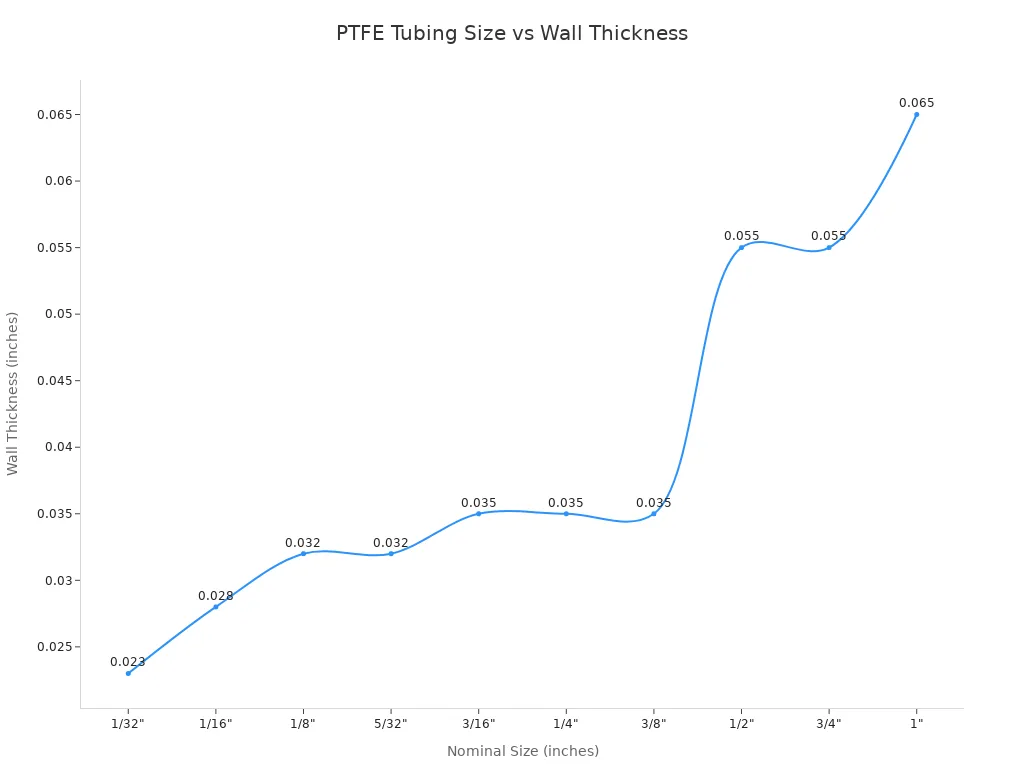
You will find pet heat shrink tubing in most supply stores. It is easy to get and comes in many sizes. Ptfe is also available, but you may need to order from special suppliers. Both pet and ptfe give you options for different wall thickness and diameter. You can choose the right tubing for your temperature and chemical resistance needs.
Applications of PET and PTFE Heat Shrink Tubing
Best Uses for PET Heat Shrink Tubing
Pet heat shrink tubing is used in many places. It is strong, not expensive, and works for lots of jobs. Pet keeps wires safe from water and dust. It also gives good insulation. You can use pet when wires might get scratched or face strong chemicals. Here are some ways people use pet:
Automotive: Pet heat shrink tubing helps protect car wires. It keeps wires safe from scratches, water, and big temperature changes. This makes your car’s electrical parts work well.
Electronics: Pet heat shrink tubing fits tightly on wires and parts. It blocks dust and water to keep electronics safe.
Industrial: Pet is used in factories to protect wires from chemicals and damage.
Medical: Pet heat shrink tubing covers tools like endoscopes and probes. It is light and thin, so it does not make tools heavy.
Fep heat shrink tubing can do some of these jobs too, but pet is stronger and costs less.
Tip: Pick pet heat shrink tubing if you want something strong, light, and not expensive for wires in cars, electronics, or factories.
Best Uses for PTFE Heat Shrink Tubing
Ptfe heat shrink tubing is best for very hard jobs. Use ptfe when you need tubing that can take high heat, strong chemicals, and gives great electrical safety. Here are the main ways to use ptfe:
Aerospace and Defense: Ptfe heat shrink tubing covers wires in planes and radar systems. It does not burn easily and blocks EMI. It works in very hot or cold places, from -90°C to 260°C.
Medical Devices: Ptfe is safe for the body and can be cleaned with strong methods. You will see it in catheters, surgery tools, pacemaker wires, and test equipment.
Industrial: Ptfe protects wires from airplane fuel, oil, and de-icing stuff. It is light, so it helps save fuel.
Electronics: Ptfe is the best choice when you need top electrical safety and chemical protection.
Industry | Primary Use Case | Key PTFE Advantage | Operating Temperature Range |
|---|---|---|---|
Aerospace & Defense | Avionics wiring, radar systems | Flame resistance, EMI stability | -90°C to 260°C |
Medical Devices | Catheters, surgical tools | Biocompatibility, sterilization resistance | -80°C to 250°C |
Note: Ptfe heat shrink tubing is great when you need something safe, strong, and reliable in tough places.
Industry Examples
You can see how pet and ptfe heat shrink tubing are used in real jobs. Each one is best for certain things:
Automotive: Pet heat shrink tubing keeps car wires safe from scratches, water, and heat changes. This helps your car’s wires work well.
Electronics: Pet fits tight and blocks chemicals for circuit boards and connectors.
Medical: Pet is used for tools like endoscopes. Ptfe is used for catheters, endoscopes, and test tools that need tiny, safe wires.
Aerospace: Ptfe heat shrink tubing covers wires in planes and radar. It does not burn and blocks EMI.
Industrial: Both pet and ptfe protect wires in tough factory jobs, but ptfe is better with strong chemicals and heat.
Type of Tubing | Standards and Compliance | Key Features |
|---|---|---|
Medical-grade PET | Biocompatibility, abrasion resistance | |
Industrial-grade PTFE | General performance focus | Chemical and temperature resistance |
Remember: When you pick pet or ptfe heat shrink tubing, think about what your job needs. Check if you need protection from heat, chemicals, or scratches. This will help you choose the right tubing.
How to Choose the Right Heat Shrink Tubing
Decision Factors
When you pick heat shrink tubing, you need to think about a few things. The place where you use the tubing is very important. You should check the temperature, weather, and if there are any chemicals around. If you work with cars, you will see lots of temperature changes and maybe oil or chemicals. You also need to make sure the tubing follows the rules for your job. This keeps everyone safe and follows the law.
Application environment: Think about hot or cold places, wet air, and chemicals.
Certifications: Make sure the tubing is okay for your job, like cars or hospitals.
Physical characteristics: Look at color, how big it gets, how small it shrinks, and how thick it is.
Heat shrink tubing must work in very hot and very cold places. You need to choose a material that does not break in these conditions. If you work with cars, you will see the temperature go up and down a lot. You also need to know if there are chemicals like oil or cleaners. Sometimes you need extra layers or special tubing to keep wires safe.
PTFE gives the best electrical safety. This is why people use it for electric jobs. PET heat shrink tubing is strong and gives good protection in places where things do not change much.
Common Selection Scenarios
You can stop mistakes if you follow these steps:
Do not pick tubing just because it shrinks a lot. Always check how much heat it can take.
Do not use thick or glue-lined tubing on hot parts. This can trap heat and make things break faster.
Do not shrink tubing too much. Too much heat or pulling can hurt wires and cause trouble.
Use ink that can take heat for printing. If you use the wrong ink, it can fade or smear and cause mistakes.
Scenario | Recommended Tubing | Reason |
|---|---|---|
Automotive wiring | PET | Strong, affordable, handles scratches |
High-temperature jobs | PTFE | Withstands extreme heat and chemicals |
Controlled environments | PET | Provides mechanical reinforcement |
Electrical insulation | PTFE | Highest dielectric strength |
Tip: Always pick tubing that fits your job. If you work with cars, use PET because it is strong and costs less. For hot places or where there are chemicals, use PTFE.
You can make the best choice if you think about where you work, what rules you must follow, and what your job needs.
You can tell that pet heat shrink tubing is strong and not expensive. It protects wires in many different jobs. Pick pet if you need tough tubing for cars, electronics, or most other uses. Use ptfe if you need the best electrical safety or if there is a lot of heat or strong chemicals. Think about what your project needs and pick the tubing that works best for your job. This will help you get the best results.
FAQ
What is the main difference between PET and PTFE heat shrink tubing?
PET is strong and costs less. PTFE can handle more heat and chemicals. Use PET for most wire jobs. Pick PTFE for really tough places.
Can you use PET heat shrink tubing in high-temperature applications?
PET works up to 150°C. If it gets hotter, use PTFE instead. PET is good for cars and electronics.
How do you select the right heat shrink tubing for your project?
Check how hot it gets and if there are chemicals. Think about electricity needs too. PET is fine for normal jobs. PTFE is better for hard jobs. Always pick tubing that fits your job.
Is PET heat shrink tubing easy to find in supply stores?
You can get PET in many sizes at most stores. It fits both small and big wires. PET is easy to buy and works for many uses.
Does PET provide good protection against chemicals?
PET protects from water and some chemicals. For strong chemicals, use PTFE. PET keeps wires safe in cars and electronics.
See Also
Comparing FEP And PTFE For Superior Chemical Resistance
Selecting Optimal FEP Biocompatible Heat Shrink Tubing Solutions
Evaluating FEP Heat Shrink Tubing Brands For Heat Tolerance

© Copyright 2024 My First Blog - All Rights Reserved.