PET vs. Other Shrink Tube Materials: Which is Best for Your Application?

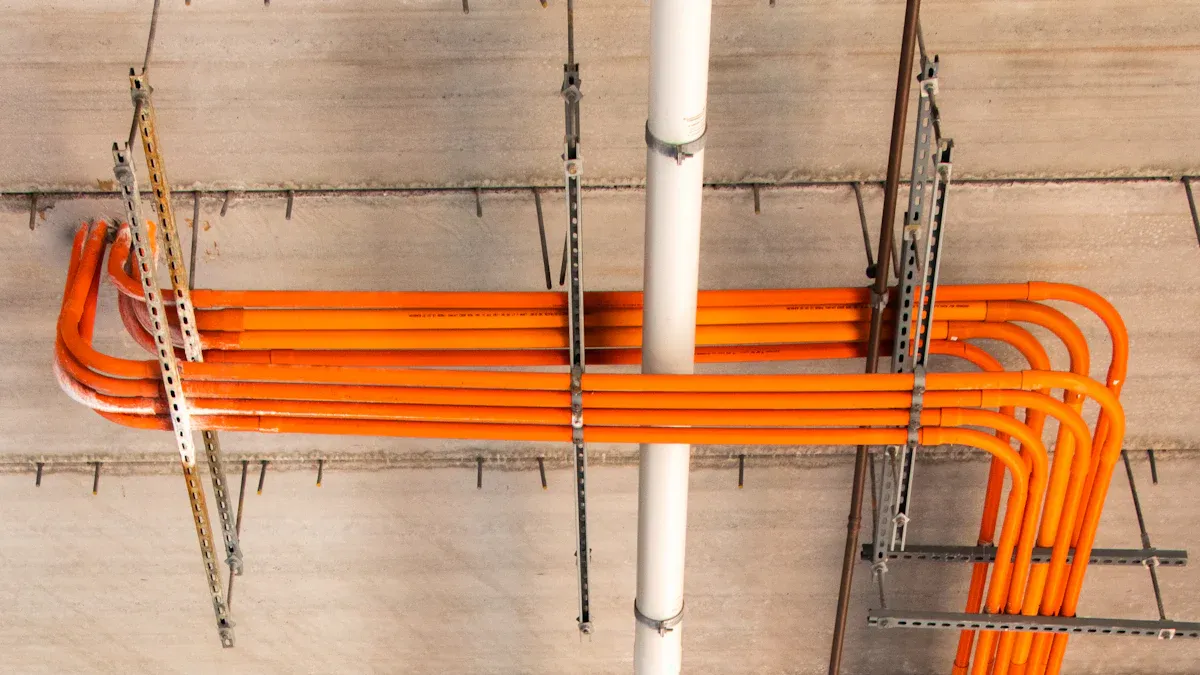
When you choose a shrink tube material, you want the best one for your project. PET is a good choice if you need something clear, strong, and thin. It is also better for the environment. Before you decide, think about what is most important for your work. Here are some things to remember:
What the material is made of and how thick it is
How well it works with heat and very hot or cold temperatures
If it can seal well and not get holes or scratches easily
Where you will use it and if it will shake or face rust
Every job is different, so make sure you know what you need most.
Key Takeaways
PET shrink tube is see-through, tough, and good for the planet. It works well for projects that need to be strong and easy to see.
Think about what your project needs, like how much heat it can take and how bendy it should be, before you pick a shrink tube material.
Polyolefin bends easily and is good for many uses. PVC costs less but is not as good for the environment.
If you need something for high heat or chemicals, fluoropolymer and FEP are great choices. They give better protection.
Always think about how your material affects the environment. PET can be recycled and is better for green projects.
Shrink Tube Material Overview
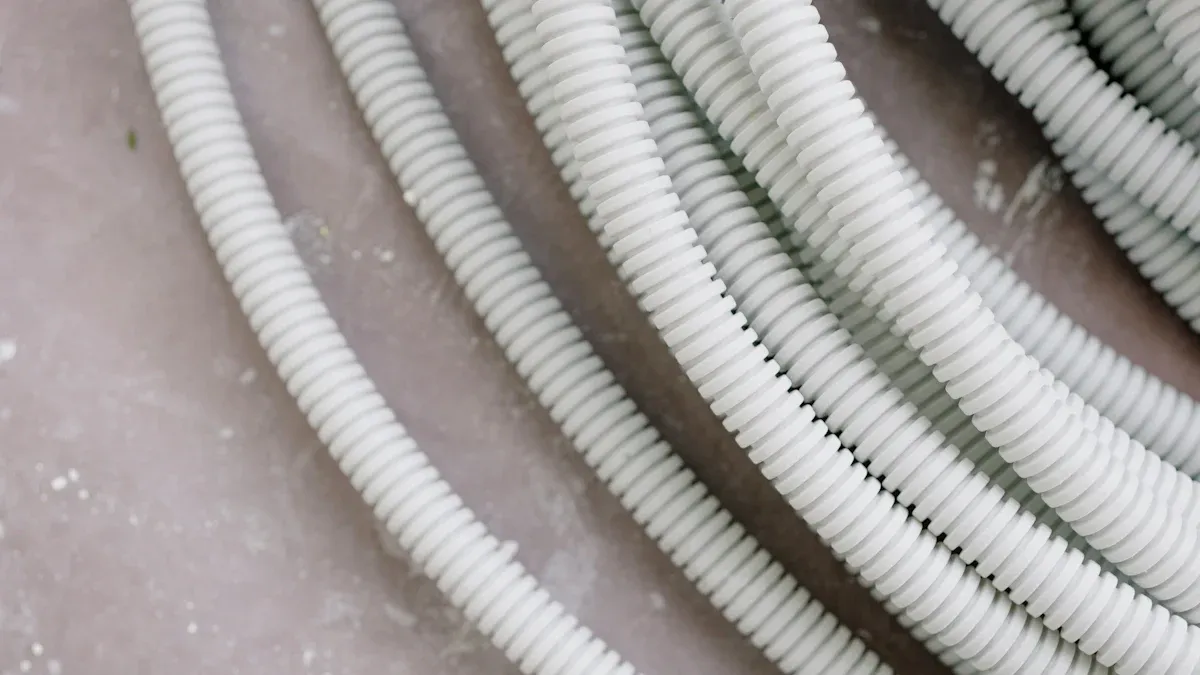
PET Shrink Tube Material
PET shrink tube material is clear and strong. It is thin but does not break easily. You can recycle PET, so it helps the environment. PET is good for healthcare and cars because it fights off chemicals. It keeps its shape well. PET shrinks a lot, so it wraps tightly around things.
Polyolefin Shrink Tube Material
Polyolefin shrink tube material is used for many jobs. People use it to bundle wires or cover electrical parts. It bends easily and can take heat. Polyolefin does not crack much, so it works where things move.
PVC Shrink Tube Material
PVC shrink tube material costs less than others. It fits many shapes and is used in plumbing and chemical work. PVC bends and handles chemicals, but it is not good for the earth. When heated, PVC can give off chlorine and is hard to recycle.
Fluoropolymer Shrink Tube Material
Fluoropolymer shrink tube material is very tough. It fights off chemicals and high heat. You see it in labs for medicine and science. It protects equipment from harsh things.
Elastomer Shrink Tube Material
Elastomer shrink tube material is best for places that shake or move. It is used in planes and big machines. It stretches and goes back to normal, so it keeps wires safe when things vibrate.
FEP Shrink Tube Material
FEP shrink tube material is strong against chemicals and heat. It is used when you need something that will not break down. FEP is picked for hard jobs where safety is very important.
OPS Shrink Tube Material
OPS shrink tube material is used for food packaging. It looks clean and you can print on it. OPS is safer than PVC, but recycling it can be hard in some places.
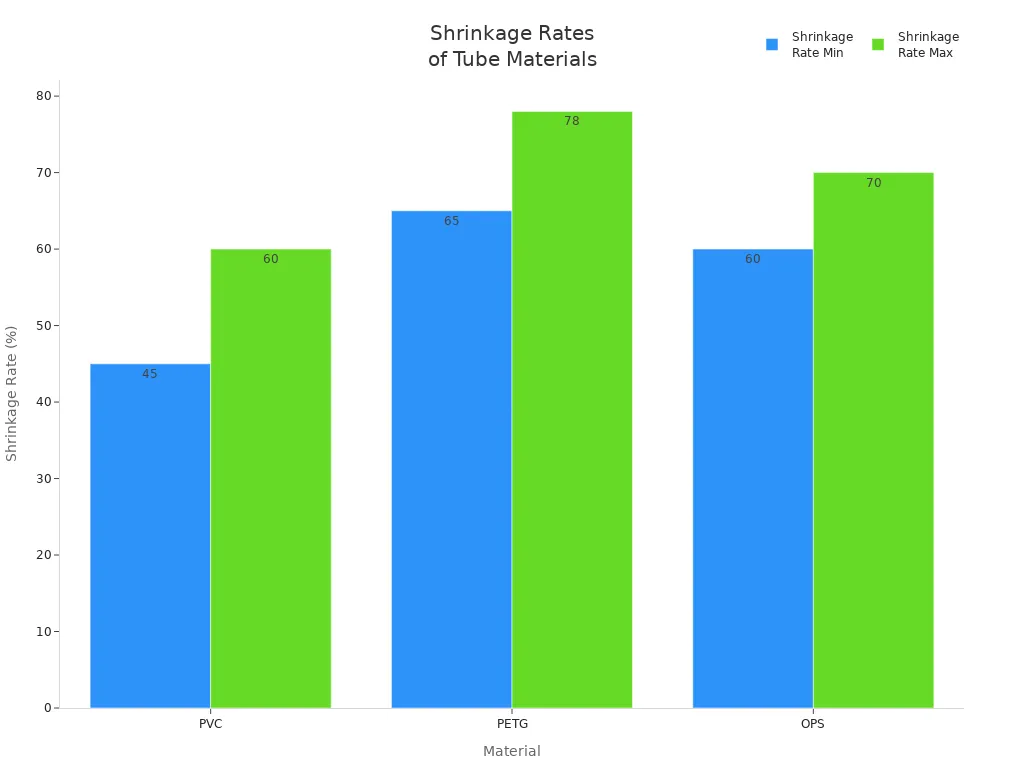
Here’s a quick look at how these materials compare:
Material | Shrinkage Rate | Environmental Impact | Recommended Applications | Shrink Tunnel Compatibility |
|---|---|---|---|---|
PVC | 45%–60% | Low (chlorine emissions, not recyclable) | Cost-sensitive, regular-shaped containers | Works with both steam and hot air tunnels |
PETG | 65%–78% | High (recyclable, low emissions) | Premium branding, complex bottle shapes | Performs best in steam tunnels with uniform heat |
OPS | 60%–70% | Moderate (less toxic than PVC, limited recycling access) | Food-grade packaging, clean print requirements | Compatible with both, but sensitive to mechanical stress and heat variation |
If you want a shrink tube material that is clear, strong, and good for the earth, PET is a smart choice. For other needs, you can pick polyolefin, PVC, or another special type.
Key Comparison Factors
Temperature Resistance
You want your shrink tube to handle heat. PET stands out here. It can take temperatures up to 200°C. That means you can use it in hot places without worry. Polyolefin also does well with heat, but not as much as PET. PVC starts to soften at lower temperatures. Fluoropolymer and FEP can handle even higher heat than PET. If you work in a place with lots of heat, PET, FEP, or fluoropolymer are your best bets.
Tip: Always check the highest temperature your project will reach before you pick a shrink tube material.
Chemical & Environmental Resistance
You might need your shrink tube to fight off chemicals or water. PET resists many chemicals and does not soak up water. Polyolefin works well for most jobs, but strong chemicals can damage it. PVC handles some chemicals but can break down over time. Fluoropolymer and FEP are the champions here. They stand up to almost anything, even harsh acids. Elastomer does okay, but it is not the best for chemicals.
Flexibility & Mechanical Properties
Do you need your shrink tube to bend or stretch? Polyolefin is very flexible. You can bend it without cracks. PET is strong and thin, but it is not as stretchy as polyolefin or elastomer. Elastomer is the best if you need something that stretches and snaps back. PVC is flexible, but it can get stiff in cold weather. FEP and fluoropolymer are tough, but they do not bend as much as polyolefin.
If you need a lot of bending, try polyolefin or elastomer.
If you want strength and a tight fit, PET is a good choice.
Durability & Longevity
You want your shrink tube to last. PET is strong and does not tear easily. It keeps its shape for a long time. Polyolefin lasts well, but it can wear out if you bend it too much. PVC can crack as it gets older, especially in sunlight. Fluoropolymer and FEP last the longest. They do not break down, even after years of use. Elastomer is tough in places that shake or move.
Note: For outdoor or long-term jobs, PET, fluoropolymer, or FEP will give you the best results.
Cost & Availability
Cost matters for many projects. PVC is the cheapest and easy to find. Polyolefin also costs less and is everywhere. PET costs a bit more, but you get better strength and clarity. Fluoropolymer and FEP are the most expensive. Elastomer sits in the middle. If you need a lot of shrink tube material and want to save money, PVC or polyolefin are good picks. If you need top performance, PET or fluoropolymer are worth the extra cost.
Environmental Impact
You care about the planet. PET is a smart choice because you can recycle it. It does not give off bad fumes when you heat it. Polyolefin is better than PVC, but it is not as green as PET. PVC is the worst for the environment. It releases chlorine gas when heated and is hard to recycle. Fluoropolymer and FEP are safe to use, but recycling them is tough. OPS is safer than PVC, but not as easy to recycle as PET.
If you want to help the earth, PET is the best shrink tube material for most jobs.
Material | Max Temp (°C) | Chemical Resistance | Flexibility | Durability | Cost | Recyclable? |
|---|---|---|---|---|---|---|
PET | 200 | High | Medium | High | Medium | Yes |
Polyolefin | 135 | Medium | High | Medium | Low | Sometimes |
PVC | 105 | Medium | Medium | Low | Low | No |
Fluoropolymer | 250+ | Very High | Low | Very High | High | No |
Elastomer | 120 | Medium | Very High | High | Medium | No |
FEP | 200+ | Very High | Low | Very High | High | No |
OPS | 85 | Low | Low | Low | Low | Sometimes |
PET vs. Polyolefin Shrink Tube Material
Performance Comparison
You may ask how PET and polyolefin compare. Both are good, but they work best in different ways. PET is strong and can handle high heat. Polyolefin bends more and moves better. PET is clear, so you can see through it. Polyolefin is usually cloudy or not see-through.
Here’s a simple side-by-side chart:
Property | PET Tubing | Polyolefin Tubing |
|---|---|---|
Mechanical Strength | Superior mechanical strength | Lacks tensile strength |
Temperature Resistance | Excellent resistance to extreme temperatures | Performs well in moderate ranges |
Flexibility | Less flexible | More flexible |
Chemical Resistance | Better chemical resistance | Moderate chemical resistance |
Clarity | Excellent clarity for inspection | Generally opaque |
PET is good for tough jobs and hot places. Polyolefin is better if you need something that bends and stretches.
Tip: Pick PET for strength and clear tubing. Choose polyolefin if you want something flexible and easy to use.
Application Suitability
You need to pick the right material for your project. Polyolefin fits many sizes because it shrinks a lot, from 1.5:1 up to 10:1. PET shrinks less, from 1.1:1 to 3:1, but it insulates wires better.
Material | Shrink Ratio | Key Applications |
|---|---|---|
Polyolefin | 1.5:1 to 10:1 | Ideal for devices with varying diameters, medical applications |
PET | 1.1:1 to 3:1 | Best for insulation of electrical wires, high dielectric strength |
Polyolefin is best for jobs with low heat and things that change shape.
PET is best for electrical wires and when you need strong, clear tubing.
If you need tubing for wires in electronics or cars, PET is a smart pick. For medical tools or projects that move a lot, polyolefin is easier to use.
PET vs. PVC Shrink Tube Material
Performance Comparison
When you look at PET and PVC, you notice big differences. PET is very clear and shiny. PVC is clear at first, but it can turn yellow later. PET is also stronger than PVC. It is light but does not break easily. PVC feels heavier, but it cracks more often.
You should also think about the environment. PET is easy to recycle and does not make bad fumes. PVC is not good for the earth. It is hard to recycle and can give off harmful gases when heated.
Here’s a quick look at how PET and PVC compare:
Property | PET | PVC |
|---|---|---|
Clarity | Superior clarity and gloss | Moderate transparency, can yellow over time |
Strength | High strength-to-weight ratio, impact-resistant | Denser, more prone to cracking |
Environmental Impact | Widely recyclable, eco-friendly | Difficult to recycle, may release harmful chemicals |
If you want a shrink tube that looks nice, lasts long, and is better for the planet, PET is the best choice.
Application Suitability
You might wonder where each material works best. PET is used in medical and high-tech jobs. You see it in catheters and balloon bonding. It also protects small parts in devices. PET helps with laser welding and keeps wires neat. It is good for printing labels or markers too.
PVC costs less and is used for simple jobs. People use it for basic wire covering or packaging. But if you need something for medical tools or things that must stay clear and strong, PET is the smarter choice.
Here are some common uses for PET:
Application | Description |
|---|---|
Catheter Stiffness Modulation | Makes catheters bend or stay stiff as needed |
Balloon Catheter Bonding | Makes balloon parts stick together well |
Component Protection | Puts a tough layer on device parts |
Laser Welding Assistance | Helps put device pieces together |
Braiding and Coiling Termination | Gives a neat end to braided or coiled wires |
Tubing Tipping & Reflow Soldering | Makes soldering and tip making more exact |
Balloon Clamping | Holds balloons so they fill and empty evenly |
Substrate for Printing and Marking | Makes a good surface for labels and marks |
PET is better for hard jobs, while PVC is best for easy, cheap needs.
If you want a shrink tube that is clear, strong, and better for the earth, PET is the best pick.
PET vs. Fluoropolymer Shrink Tube Material
Performance Comparison
You may wonder how PET compares to fluoropolymer shrink tubes like FEP. Both materials do a good job, but they are best for different things. PET gives strong protection and stands up to many chemicals, oils, and solvents. FEP is a kind of fluoropolymer that is even better with chemicals. It can handle harsh chemicals that hurt other materials.
Let’s see how they match up:
Property | PET | FEP (Fluoropolymer) |
|---|---|---|
Chemical Resistance | Resistant to a wide range of chemicals, oils, and solvents | Superior chemical resistance, ideal for harsh chemicals |
Temperature Tolerance | Up to 150°C (302°F) | Up to 200°C (392°F) |
FEP can take more heat than PET. If you need tubing for very hot places, FEP is the better choice. PET works for most jobs, but FEP is best when you need top chemical and heat resistance.
Tip: If your project has strong acids or high heat, try fluoropolymer tubing.
Application Suitability
You have lots of choices for shrink tube materials. PET and FEP both work in electronics and medical devices, but they are good for different needs.
PET is a smart pick for general insulation. You see it in car wiring, wire and cable insulation, and medical devices that must be clean. PET also keeps electronics safe from bumps and scratches.
FEP is used when you need more protection. It works in food and chemical factories. You find it in medical devices like catheters and implants. FEP can handle high heat and tough chemicals, so it is used in labs and factories.
Here’s a quick list to help you choose:
Choose PET for:
Wire and cable insulation
Automotive wiring harnesses
Medical devices that must stay clean
Protecting electronics
Choose FEP for:
Food or chemical processing
Medical implants and catheters
High-temperature jobs
If you want a clear, strong, and eco-friendly tube, PET is a great choice. If you need the best chemical and heat resistance, FEP is the best pick.
PET vs. Elastomer Shrink Tube Material
Performance Comparison
You might wonder how PET and elastomer shrink tubes stack up against each other. PET shrink tubes give you great strength and clarity. They hold their shape well and resist chemicals. You can count on PET to stay strong, even in hot places. PET does not stretch much, but it wraps tightly and protects wires or parts.
Elastomer shrink tubes act differently. They stretch a lot and snap back to their original shape. You can bend, twist, or pull them, and they will not break. Elastomer tubes handle vibration and movement better than PET. They also work well in cold weather because they stay flexible.
Here’s a quick table to help you compare:
Property | PET Shrink Tube | Elastomer Shrink Tube |
|---|---|---|
Strength | High | Medium |
Flexibility | Medium | Very High |
Stretchiness | Low | Very High |
Clarity | High | Low |
Chemical Resistance | High | Medium |
Vibration Resistance | Medium | Very High |
Tip: If you need a tube that stretches and moves, elastomer is your friend. If you want strength and a clear look, PET is the way to go.
Application Suitability
You have to think about where you will use the shrink tube. PET works best when you need a strong, clear cover. You see PET in electronics, medical devices, and places where you want to see what’s inside. PET also helps when you need a tight fit and good protection from chemicals.
Elastomer shrink tubes shine in tough spots. You find them in airplanes, cars, and machines that shake or move a lot. Elastomer keeps wires safe when things vibrate or shift. It also helps in cold places because it stays soft.
Choose PET if you need:
Clear tubing for inspection
Strong protection from chemicals
A tight, neat wrap
Pick elastomer if you need:
Tubing that stretches and bends
Protection from vibration or movement
Good performance in cold weather
Remember: The best choice depends on what your project needs most. Think about how much stretching, bending, or strength you need before you decide.
PET vs. FEP Shrink Tube Material
Performance Comparison
When you look at PET and FEP shrink tubes, you see two strong choices. PET gives you great strength and clarity. You can count on it to hold its shape and protect wires or parts. PET works well in places where you need to see what’s inside. It also stands up to many chemicals and can handle heat up to 200°C.
FEP, on the other hand, takes things up a notch. FEP shrink tubes resist even harsher chemicals and higher temperatures. You can use FEP in places where almost nothing else will survive. FEP stays stable in extreme heat and cold. It does not break down when exposed to strong acids or solvents. FEP also has very low leach-out rates, so it keeps things pure and safe, especially in healthcare.
Here’s a quick table to help you compare:
Property | PET Shrink Tube | FEP Shrink Tube |
|---|---|---|
Max Temp | 200°C | 200°C+ |
Chemical Resistance | High | Very High |
Clarity | High | High |
Flexibility | Medium | Medium |
Purity | Good | Excellent |
Tip: If you need the best chemical and heat resistance, FEP is hard to beat.
Application Suitability
You might wonder where each material fits best. PET shrink tubes shine in controlled environments. You often see them when you need mechanical strength or want to reinforce something. PET works well in electronics, automotive, and some medical devices.
FEP shrink tubes step in when you face extreme conditions. You find FEP in labs and hospitals. It handles high-purity jobs and tough chemicals. FEP also works with many sterilization methods, so it’s safe for healthcare.
Here’s how you might use each one:
PET tubing is great for controlled spaces and when you need extra strength.
FEP tubing fits best in extreme heat, harsh chemicals, or high-purity environments.
FEP’s low leach-out rates make it safe for medical and lab use.
FEP works well with sterilization, so it’s a top pick for healthcare.
If you need a tough, clear tube for regular jobs, PET is a smart choice. If your work involves harsh chemicals or needs the highest purity, FEP is the way to go.
PET vs. OPS Shrink Tube Material
Performance Comparison
When you look at PET and OPS shrink tube materials, you see some clear differences. PET stands out for its strength and toughness. You can count on it to handle stretching and pulling without breaking. OPS gives you good strength, but it feels more brittle. If you drop or bend OPS, it can crack more easily.
Here’s a quick table to help you compare:
Property | PET | OPS |
|---|---|---|
Tensile Strength | High | Good |
Impact Resistance | Excellent | Brittle |
Flexibility | Less flexible than PVC | Limited flexibility |
Environmental Impact | Recyclable, eco-friendly compared to PVC | Recyclable, lower impact than PVC |
PET also wins when you need something that lasts. It keeps its shape and protects your items. OPS has a lower heat tolerance, so it can warp or lose shape if things get too hot. Both PET and OPS are better for the environment than PVC, since you can recycle them.
Tip: If you want a shrink tube that is strong and tough, PET is the better pick. If you need something for a simple job and want to save on material, OPS might work.
Application Suitability
You might wonder where each material fits best. PET works well for tricky shapes and jobs that need a tight, stable wrap. You can use PET for packaging with high-quality graphics or for items that need to stay safe during shipping. PET’s flexibility and dimensional stability help it fit around complex designs.
OPS, on the other hand, is great for simple containers. It has a high shrink rate, so it wraps tightly around bottles and boxes. OPS gives you good clarity and stiffness, which makes it look nice on store shelves. Its lower density can help you save on material costs.
OPS is a good choice when you need:
Clear packaging that holds its shape
A tight fit for regular-shaped bottles or boxes
Lower material costs
PET is better when you need:
Packaging for complex shapes
High-quality graphics or printing
Extra strength and durability
Keep in mind, OPS does not handle heat or bending as well as PET. If your packaging needs to survive tough handling or higher temperatures, PET will serve you better. For basic, cost-sensitive jobs, OPS can do the trick.
Practical Recommendations for Shrink Tube Material Selection
Electrical Insulation Applications
You want your wires and cables to stay safe. Picking the right shrink tube material helps you protect them from heat, chemicals, and damage. Here are some things you should check:
Make sure the material meets standards like UL, CSA, ASTM, AMS, or EU rules.
Think about how much rubbing or scratching the tube will face.
Check if the tube needs to block chemicals or UV light.
Decide if you need a tight seal to keep water and dirt out.
Polyolefin works well for electrical jobs. It bends easily and handles heat up to 135°C. PVC costs less and comes in many colors, but it does not handle heat as well. If you need extra strength and clarity, PET is a smart choice. It resists chemicals and keeps wires neat.
Tip: Always check the rules for your project. If you need a tube that lasts and protects, PET or polyolefin are good picks.
Environmental Protection Needs
You may need to protect your wires or parts from water, dust, or chemicals. Some tubes seal tightly and keep out moisture. Others fight off harsh chemicals or sunlight. Here’s what you should look for:
Choose a tube that resists chemicals if your project faces oils or acids.
Pick a tube with a strong seal if you want to keep water out.
Look for UV resistance if your project sits outside.
Fluoropolymer and FEP tubes give you the best protection from chemicals. Polyolefin works well for most jobs and seals tightly. PET resists many chemicals and keeps its shape. Elastomer tubes stretch and move, so they protect wires in places that shake.
Note: If you need a tube for tough environments, fluoropolymer or PET will help your project last longer.
High-Temperature Requirements
Some jobs get hot. You need a tube that can handle the heat. Polyolefin works up to 135°C. PVC handles up to 105°C, but it may soften. PTFE stands out. It stays strong up to 260°C and resists chemicals.
Here’s a quick table to help you choose:
Material | Temperature Resistance | Advantages |
|---|---|---|
Polyolefin | -55℃ to 135℃ | Flexible, flame retardant, good insulation |
PTFE | Up to 260℃ | Strong, resists chemicals, wears well |
PET | Up to 200℃ | Clear, strong, resists chemicals |
If your project faces extreme heat, PTFE is the best pick. For most jobs, PET gives you good heat resistance and clarity.
Tip: Always check the highest temperature your project will reach. Pick a tube that stays strong and safe.
Cost-Sensitive Projects
You may want to save money. PVC costs less and is easy to find. Polyolefin also costs less and works for many jobs. Elastomer sits in the middle. PET costs more, but you get better strength and clarity. Fluoropolymer and FEP cost the most.
Here’s how you can decide:
Pick PVC or polyolefin for simple jobs and big projects.
Choose PET if you need extra strength or clarity.
Use elastomer if your project needs tubes that stretch and bend.
Note: Saving money matters, but make sure the tube fits your needs. Sometimes paying more gives you better results.
Eco-Friendly Choices
You care about the planet. Some tubes are better for the earth. PET stands out. You can recycle it, and it has low toxicity. PLA is compostable and made from plants. PVC is not biodegradable and can cause problems when burned.
Here’s a table to help you compare:
Material Type | Environmental Profile |
|---|---|
PET / PETG | Recyclable, low toxicity |
PLA | Compostable, bio-based |
PVC | Non-biodegradable, controversial incineration |
PET is a smart choice if you want a tube that helps the environment. PLA works for packaging and short-term jobs. Avoid PVC if you want to keep your project green.
Tip: If you want a shrink tube material that is strong, clear, and eco-friendly, PET is your best bet.
You’ve seen how PET stands out for clarity, strength, and eco-friendliness. Other materials like polyolefin, PVC, and fluoropolymers each have their own strengths. The best shrink tube depends on your project’s needs—think about the environment, shrink ratio, and safety standards like ASTM or UL. Try a pre-production trial before you decide. If you’re unsure, talk with a supplier or technical expert. They can help you pick the right material for your job.
FAQ
What is the main advantage of PET shrink tube?
PET shrink tube gives you high clarity and strength. You can recycle it, so it helps the planet. It also resists chemicals and heat better than many other materials.
Can I use PET shrink tube for electrical wires?
Yes, you can. PET shrink tube insulates wires well. It keeps them safe from heat, chemicals, and damage. You get a tight, clear wrap that lets you see the wire inside.
Is PET shrink tube safe for food or medical use?
You can use PET shrink tube for food and medical items. It does not give off harmful chemicals. Many companies pick PET for clean and safe packaging.
How do I choose the right shrink tube material?
Think about what your project needs most. Ask yourself:
Does it need to handle heat?
Should it bend or stretch?
Do you want it to be eco-friendly?
What is your budget?
Tip: Try a sample before you buy a lot.
See Also
Comparing FEP And PTFE For Superior Chemical Resistance
Selecting Optimal FEP Shrink Tubing For Class III Devices
Key Considerations When Selecting FEP Shrink Tubing

© Copyright 2024 My First Blog - All Rights Reserved.