Flexibility and Durability Compared NiTi Tubing or Stainless Steel Tubing

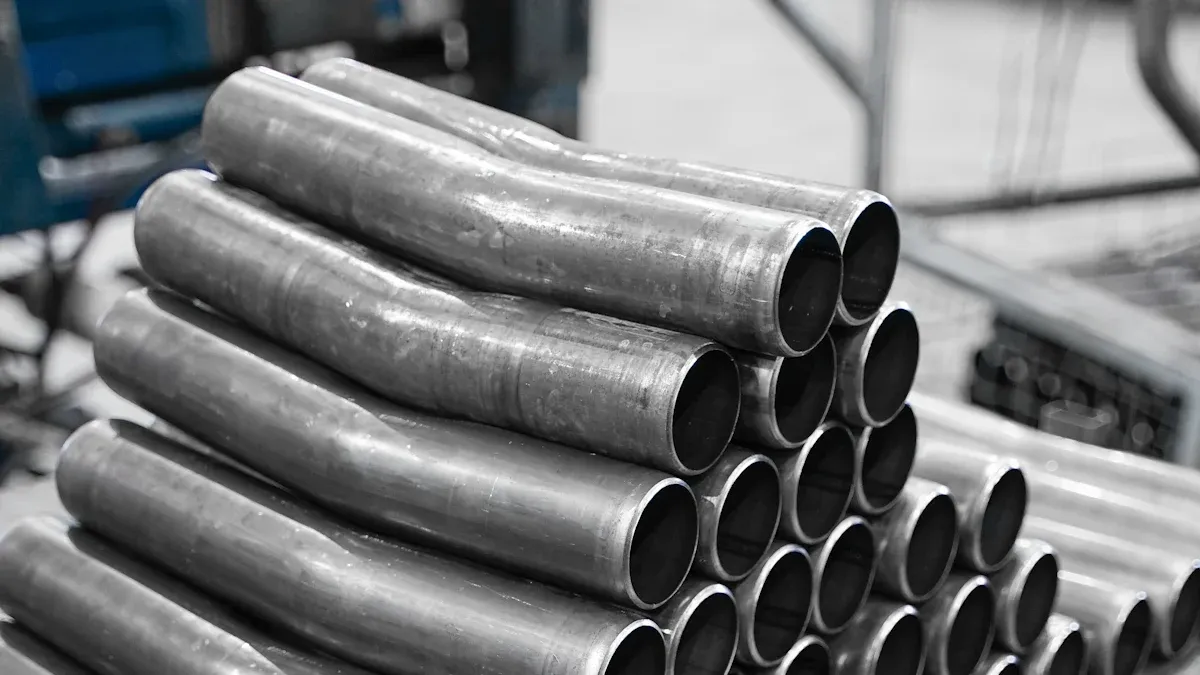
When you compare niti tubing vs stainless steel tubing, you'll notice that nitinol tubing bends much more easily and retains its shape. In contrast, stainless steel tubing is stiffer and does not bend as much without remaining deformed. Flexibility and durability are crucial because they enable tubing to function effectively in confined spaces, endure longer, and facilitate fluid movement in medical and industrial applications.
Parameter | Stainless Steel | Nitinol |
|---|---|---|
Occlusion rate | 75% | 0% |
Thrombus grade | III | I |
Thrombus weight | 20 mg | 2.5 mg |
Carotid blood flow | 1.5 ml/min | 24.0 ml/min |
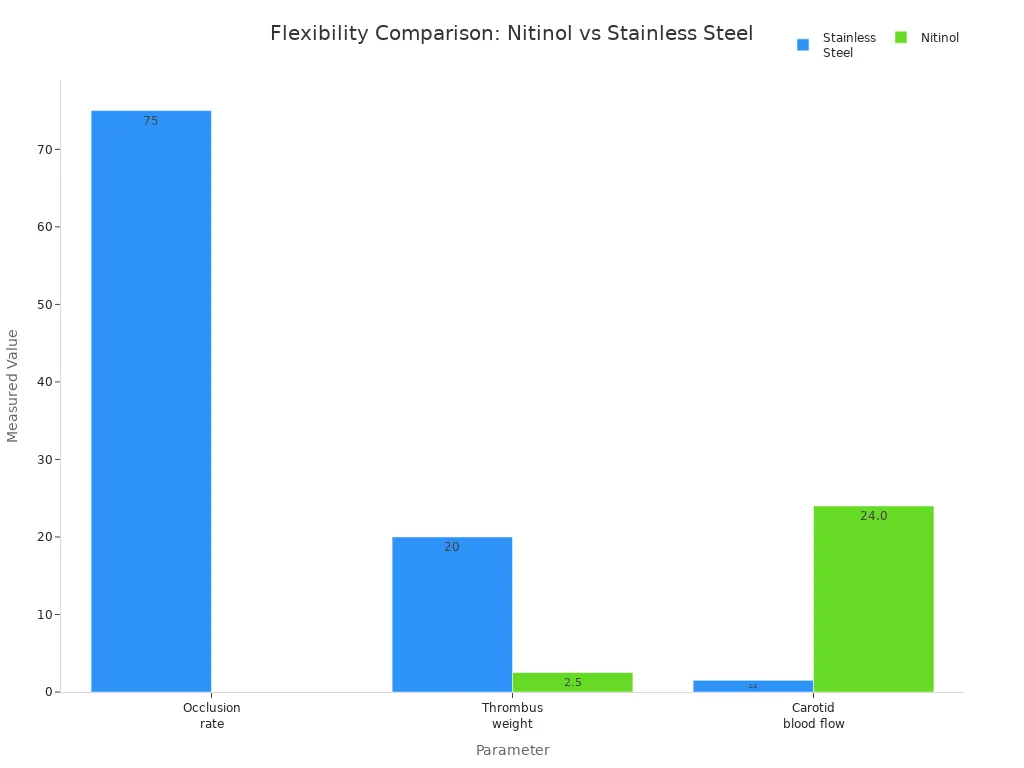
It's important to consider flexibility and durability when evaluating niti tubing vs stainless steel tubing, as tubing must be able to bend repeatedly, withstand exposure to chemicals, and be safe for use with soft tissues or fluids. The ideal tubing choice ultimately depends on your specific requirements regarding functionality and safety.
Key Takeaways
Nitinol tubing bends easily and goes back to its shape. This makes it good for medical tools that move through small spaces.
Stainless steel tubing is very strong and keeps its shape. It works well when you need the tubing to stay the same shape.
When you pick tubing, think about what your project needs. You may need tubing that bends or tubing that stays strong.
Nitinol tubing is great if you need to bend it many times. It also works well in hot places. Stainless steel is better if you need tubing that does not rust and is easy to clean.
Always check the price and if the tubing is safe for the body. This helps make sure it is good for medical use.
Niti Tubing vs Stainless Steel Tubing: Flexibility

Nitinol Tubing Flexibility and Shape Memory
Nitinol tubing bends easily and goes back to its shape. This happens because of the shape memory effect. Nitinol tubing can recover from being bent up to 13%. You can twist or bend nitinol tubes, and they will return to normal. This makes nitinol tubing much more flexible than most metals.
Parameter | Nitinol Tubing Value/Description | Stainless Steel Tubing Value/Description |
|---|---|---|
Deformation Strain Recovery | Up to 13% | N/A |
Flexibility Increase | 32% to 40% over thicker needles | High rigidity, suitable for fixed shapes |
Positional Accuracy | ±2.5 microns | Precision-engineered with tight tolerances |
Wall Thickness Tolerance | ±0.005 mm | ±0.0005 inches |
Nitinol tubing is special because it is superelastic. You can stretch, twist, or squeeze nitinol tubes, and they will not break. The shape memory effect helps nitinol tubing return to its shape after bending. This happens when nitinol changes from a soft phase to a hard phase with heat. This change lets nitinol tubing move in a precise way. You can see this in robots, medical tools, and electronics. The flexibility and shape memory of nitinol tubing help make small, smart designs that can move and change.
The shape memory effect helps nitinol tubing go back to its shape after bending.
You can bend nitinol tubing without hurting it.
This is important for careful movements in robots and medical tools.
Nitinol tubing can work as an actuator and change shape with heat.
These special features have changed wearable devices and electronics.
Stainless Steel Tubing Rigidity
Stainless steel tubing is strong and keeps its shape. It does not bend easily, even under pressure. The high Young's modulus and shear modulus make it very stiff.
Property | Value |
|---|---|
Young's Modulus (E) | 193 GPa |
Shear Modulus (G) | 86 GPa |
Ultimate Tensile Strength | 505 MPa |
Yield Strength | 215 MPa |
Elongation | 40% |
You use stainless steel tubing when you need something to stay straight and strong. Its stiffness means it does not bend much. This can be a problem if you need the tubing to move. Flexible braided stainless steel tubing (FBSS) can bend more. FBSS keeps its strength and resists heat and chemicals, but it is a bit more flexible. This makes FBSS good for hot or high-pressure places.
Stainless steel tubing is stiff and does not bend much.
You might need FBSS for systems that must move.
Stainless steel tubing is best when you need a strong, fixed shape.
Flexibility Impact on Medical Applications
Flexibility is very important in medical tools. Nitinol tubing is much more flexible than stainless steel tubing. This helps doctors use nitinol tubing in catheters and stents. These tools must move through tight, curvy spaces in the body. Nitinol tubing bends without breaking or folding. It goes back to its shape after bending, so it lasts longer.
Superelastic nitinol tubing lets catheters and stents move through twisty blood vessels.
Nitinol tubing does not break or fold, which keeps patients safe.
Devices with nitinol tubing give doctors better control.
Nitinol tubing helps lower the risk of hurting blood vessels.
The shape memory and flexibility of nitinol tubing help patients heal better.
Stainless steel tubing is not as flexible. It is harder to use in tools that must bend or twist. Stainless steel tubing is good for tools that need to stay straight and strong. Sometimes, you can use FBSS, but it is still not as flexible as nitinol tubing.
When you pick between niti tubing and stainless steel tubing for medical tools, think about how much bending you need. Nitinol tubing lets you move and recover shape more easily. Stainless steel tubing gives you strength, but not as much flexibility.
Durability of Nitinol Tubing and Stainless Steel Tubing
Fatigue Resistance and Longevity
Nitinol tubing and stainless steel tubing act differently when bent many times. Nitinol tubing can bend and stretch over and over. It works well in places where it must move a lot. This is why doctors use nitinol tubing in medical tools inside the body.
Nitinol tubing loses a little strength after many fast bends.
Stainless steel tubing keeps its strength even if you change the speed or place.
Nitinol tubing changes a bit in strength, but stainless steel tubing stays the same.
Stainless steel tubing has a limit for how much stress it can take. If you keep the stress low, it will last a long time. Tests show that some stainless steel tubing can handle stress close to its proof strength. This means you can trust it for jobs where it does not move much.
Nitinol tubing is tested with diamond-shaped pieces to copy real use. These tests follow ASTM F2516 rules. Nitinol tubing does well with repeated stress. Some types, like TM-1, last longer than others, like TM-2. You should pick the right nitinol tubing for your job.
Property | Nitinol | Stainless Steel |
|---|---|---|
Corrosion Resistance | Excellent | Good |
Biocompatibility | Excellent | Good |
Nitinol tubing lasts a long time in medical and factory jobs. Stainless steel tubing also lasts long if you keep the stress low.
Heat and Corrosion Resistance
Nitinol tubing can handle high heat without losing its shape. You can use it in hot places and it stays strong. Stainless steel tubing can lose some strength if it gets too hot for a long time. This can make it weaker and not work as well.
Corrosion resistance is also important. Nitinol tubing has a special layer that stops rust. This layer keeps it safe from damage, even in salty or harsh places. You can use nitinol tubing in water or with chemicals, and it stays strong.
Stainless steel tubing also fights rust well. It has a chromium oxide layer that helps protect it. But sometimes water can get under this layer and cause hidden rust. You might not see this until it gets worse. Small cracks can also form if the tubing faces water and chemicals. If you do not find these cracks early, the tubing can break suddenly.
Nitinol tubing is better than regular steel in tough places. You can trust it where other tubing might fail.
Durability in Medical and Industrial Use
You should think about how long tubing will last before you choose. Nitinol tubing is used in medical tools that must move and last a long time. For example, doctors use it in heart tools that bend a lot. These tools must not break after many bends. How you make nitinol tubing can change how long it lasts. Cleaner nitinol tubing lasts longer.
Stainless steel tubing is strong and works well in many factories. You can use it where the tubing does not need to bend much. It is good for pipes, frames, and supports. Stainless steel tubing is strong and fights rust, but it may not last as long as nitinol tubing if it must move a lot.
Tip: Always pick tubing that fits your job. If you need strong tubing that fights rust and does not move, stainless steel tubing is a good pick. If you need tubing that bends, lasts long, and fights rust, nitinol tubing is better.
Both types of tubing are strong and last long. Nitinol tubing bends more and works better in tough places. Stainless steel tubing gives steady strength and fights rust in calm places. Pick the tubing that matches how much movement, heat, and rust protection you need.
Application Suitability in Medical and Industrial Fields
Medical Applications of Nitinol Tubing
Nitinol tubing is used in many medical devices. It is superelastic and has shape memory. These features help it go back to its shape after bending. Doctors use nitinol tubing in stents and guidewires. These devices move through small blood vessels. They must bend but not break. Nitinol tubing is also in heart valves and grafts. These tools need to move a lot and stay strong in the body.
Studies show nitinol tubing works well in less invasive surgeries. For example, nitinol stents help treat brain aneurysms. Nitinol guidewires make procedures faster and work better. The table below shows some results from studies:
Study Description | Application Area | Results |
|---|---|---|
Self-expanding nitinol stent (Enterprise) for wide-necked intracranial aneurysms | Neurovascular | Initial clinical and angiographic results in 31 aneurysms |
Electrodetachable, fully retrievable SOLO stent system | Neurovascular | Results of endovascular coil occlusion of wide-necked cerebral aneurysms |
Neuroform™ Microdelivery Stent System | Neurovascular | Assists with endovascular coiling for both ruptured and unruptured aneurysms |
Nitinol guidewires | General | Significantly reduce procedure times with a p-value of 0.05 or less |
Self-expanding stents in neurovascular treatments | Neurovascular | Provide structural support to blood vessels, enabling effective endovascular coiling, with demonstrated effectiveness in treating wide-necked aneurysms |
Nitinol tubing is a good choice for implants that must last and work well in the body.
Medical Applications of Stainless Steel Tubing
Stainless steel tubing is also used in many medical devices. You can find it in catheters, bone tools, and surgery tools. Stainless steel tubing is strong and stiff. This is important for implants that must not bend. It also does not rust, so it is safe in the body.
Catheter delivery systems
Orthopedic instrument parts for cutting and drilling
Tubes and needles for moving fluids and gases
Tubes for eye, brain, and heart tools
Liposuction and embalming tools
Endoscopy and laparoscopy
Stainless steel tubing is easy to clean and use again. You can use it many times in surgeries. The table below compares stainless steel and nitinol in surgery tools:
Material | Key Properties | Applications in Surgery |
|---|---|---|
Stainless Steel | High strength, rigidity, corrosion resistance | Surgical instruments, orthopedic implants |
Nitinol | Superelasticity, shape memory | Stents, guidewires |
Pick stainless steel tubing for devices that must stay straight and strong.
Industrial Uses and Selection Criteria
Both nitinol tubing and stainless steel tubing are used in factories. Nitinol tubing is good for devices that must bend, like heart valves and stents. Its superelasticity and shape memory help in moving parts. Stainless steel tubing is used in lab tools and machines. It is strong and does not rust.
When you pick tubing for medical or factory use, look at these things:
Superelasticity and shape memory for moving parts
Biocompatibility for implants and medical devices
Corrosion resistance for tough places
Cost and how easy it is to get
How it is made and wall thickness
Quality checks, like ultrasonic tests
Tip: Use nitinol tubing for implants and medical devices that must bend and last long. Pick stainless steel tubing for medical and factory tools that need strength and easy cleaning.
You can choose the right tubing by looking at how it works, the price, and how long it lasts. This helps you pick the best tubing for your medical devices and other uses.
Additional Considerations: Biocompatibility, Manufacturing, and Cost
Biocompatibility for Medical Use
When picking tubing for medical devices, biocompatibility is very important. Both nitinol and stainless steel are safe for use in the body. Nitinol does not cause cell or nerve problems. It does not cause gene or allergy issues either. Sometimes, nickel can come out of nitinol, but special coatings help stop this. Stainless steel is often used as a standard in tests. It is safe for the body but is not as bendy as nitinol.
Material | Biocompatibility Ratings | Key Findings |
|---|---|---|
Nitinol | No cytotoxicity | Shows no cytotoxic, neurotoxic, genotoxic, or allergic activity compared to AISI 316 LVM steel. |
Nickel concerns | Nickel release is a concern; surface treatments can mitigate this. | |
Stainless Steel | Reference Control | Used as a benchmark for comparison; known for its biocompatibility but lacks the advantages of nitinol. |
Fatigue Resistance | Nitinol has lower fatigue crack growth resistance compared to stainless steel. |
Groups like the FDA make rules for testing medical tubing. You must follow ISO 10993-1 for these tests. The tests check for cell harm, allergies, and body reactions. For implants, a 60-day test checks if nickel comes out of nitinol. ASTM F2063 gives rules for making medical nitinol, including how strong and safe it must be.
Note: Always check for nickel and coatings when you pick nitinol for implants.
Manufacturability and Processing
Making nitinol tubing for medical use is tricky. Its superelasticity and shape memory need careful control of chemicals and heat. Small changes can affect how nitinol works in devices. You must follow strict rules like ASTM F2063. These rules cover temperature and what is inside the metal. This makes making nitinol harder than making stainless steel tubing. Not many companies make medical nitinol, so it can be hard to find.
Stainless steel tubing is easier to make. You can cut, weld, and finish it with normal tools. This means stainless steel is easier to get for medical and other uses.
Nitinol needs careful work to be good for medical use.
Stainless steel is easier to make and find.
Cost Comparison
Cost is important when choosing tubing for medical use. Stainless steel tube prices change by grade, size, and how many you buy. You can save money by picking the right type and size. Nitinol costs more because it is special and harder to make. The higher price is worth it for devices that need to bend, last long, and handle heat. Nitinol’s shape memory and superelasticity are useful in medicine and space.
Tip: Pick stainless steel for cheaper medical devices. Use nitinol if you need tubing that bends and lasts longer.
Summary Table: Niti Tubing vs Stainless Steel Tubing
Quick Comparison of Key Properties
Picking tubing for your project can be tricky. You want to know the main differences fast. The table below shows how nitinol tubing and stainless steel tubing compare. This table helps you choose which tubing is right for you.
Attribute | Nitinol Tubing | Stainless Steel Tubing |
|---|---|---|
Flexibility | Superior flexibility from shape memory and superelasticity. Bends and returns to shape. | Lower flexibility. Stays rigid and holds its form. |
Durability | High durability. Excellent fatigue resistance. Handles many bends without breaking. | Good durability. Strong but less resistant to repeated bending. |
Tensile Strength (MPa) | 500–900 | 600–1100+ |
Corrosion Resistance | Excellent. Forms a stable oxide layer for extra protection. | Good. Depends on chromium content and surface care. |
Cost | Higher. Made from expensive nickel and titanium. | Lower. Made from iron, chromium, and nickel. |
Application Suitability | Best for medical devices that need to bend, like stents and catheters. | Best for tools that need strength and rigidity, like surgical instruments. |
Tip: Pick nitinol tubing if you need it to bend and last. Choose stainless steel tubing if you want strong, stiff tubing for less money.
Nitinol tubing is special because it can bend and go back to its shape. You use it in things that must move a lot. Stainless steel tubing is very strong and keeps its shape. You see it in tools that must stay straight. Both types do not rust easily, but nitinol tubing often lasts longer in hard jobs. Always pick the tubing that fits what you need for your project.
Now you know nitinol tubing bends easily and remembers its shape. This makes it great for things that need to move or bend. Stainless steel tubing is strong and stays straight. It works well for tools that should not bend. Think about what your project needs before you pick tubing.
Tip: Always think about price, if it is safe for the body, and how well it works before you choose. Pick the tubing that fits your job for the best outcome.
FAQ
What makes nitinol tubing more flexible than stainless steel tubing?
Nitinol tubing bends easily because it has shape memory. It is also superelastic. You can twist or stretch nitinol tubing. It goes back to its shape after bending. Stainless steel tubing is stiff. It does not bend much.
Can you use nitinol tubing in high-temperature environments?
You can use nitinol tubing in hot places. It keeps its shape and strength when it is hot. Stainless steel tubing can lose strength if it gets too hot. This happens when it stays hot for a long time.
Is stainless steel tubing safer for medical implants?
Both materials are safe for medical use. Stainless steel tubing is strong and safe. Nitinol tubing is safe too. You should check for nickel allergies with nitinol tubing. Special coatings help stop nickel from coming out.
Why does nitinol tubing cost more than stainless steel tubing?
Nitinol tubing costs more because it uses nickel and titanium. Making nitinol tubing takes more time and skill. Stainless steel tubing uses cheaper metals. It is easier to make than nitinol tubing.
See Also
Evaluating Nitinol Tubing Strength Against Stainless Steel Options
The Influence of Cyclic Life Testing on NiTi Tubing Durability
The Importance of Nitinol Tubing in Modern Medical Uses
Choosing the Right Supplier for Your Nitinol Tubing Requirements
Finding the Most Cost-Effective Supplier for 2mm Nitinol Tubing

© Copyright 2024 My First Blog - All Rights Reserved.