High Temperature Heat Shrink Tubing: Applications, Materials, and Selection Criteria


You deal with hard situations when you use electrical or industrial machines. High Temperature Heat Shrink Tubing keeps things safe where normal tubing melts or breaks. This product made USD 2.17 billion in 2024. It will grow to USD 3.49 billion by 2032. More people need it for electronics, cars, and airplanes.
Challenge | Solution Provided by High Temperature Tubing |
|---|---|
High thermal loads in modern power systems | High temperature tubing protects parts from very hot heat. |
Increased operating temperatures in motors | Materials must stay strong when they get hot. |
Demanding environments in high-voltage systems | Tubing works where most insulation does not last. |
Key Takeaways
High temperature heat shrink tubing keeps wires safe from heat. It is very important for jobs in aerospace and automotive.
Pick the correct size and material for your tubing. This helps it fit well and work best in your projects.
Check heat shrink tubing often for any damage. This keeps things safe and working in tough places.
Use good ways to install, like heating evenly and placing tubing right. This gives a tight seal and strong protection for a long time.
Know what your project needs, like temperature and chemical resistance. This helps you choose the best tubing for your job.
What Is High Temperature Heat Shrink Tubing
High temperature heat shrink tubing is a special cover. It protects wires, cables, and parts from heat and tough conditions. This tubing can handle much hotter temperatures than regular tubing. It keeps your equipment safe where normal insulation would melt or break.
Key Features and Benefits
High temperature heat shrink tubing does more than protect from heat. It has many features that help your projects last longer and work better. Here are some main benefits:
Electrical insulation: This tubing stops shorts by making a strong barrier.
Protection against the environment: It keeps out water, dust, chemicals, and extreme heat.
Mechanical protection and strain relief: It makes wire connections stronger and helps them last longer.
Enhanced safety: Flame-retardant materials lower fire and electrical risks.
Customization and versatility: You can get this tubing in many sizes and colors for different jobs.
Easy application: You only need heat to make it shrink and fit tightly.
High temperature heat shrink tubing also has extra advantages. It resists solvents, acids, and bases. It stands up to tough weather. It does not corrode and helps stop leaks. Many industries use it for fuel cells, lithium-ion batteries, and medical devices.
Differences from Standard Heat Shrink Tubing
You might wonder how high temperature heat shrink tubing is different from regular tubing. The main difference is how much heat it can handle. Look at this table to see the key differences:
Characteristic | High Temperature Heat Shrink Tubing | Other Types of Tubing |
|---|---|---|
Maximum Temperature Resistance | Above 135°C, up to 240°C | Varies, generally lower |
Material Composition | Fluoropolymers | Various plastics |
Chemical Resistance | High | Moderate to low |
Durability | Excellent | Varies |
Applications | Aerospace, medical | General use |
High temperature heat shrink tubing uses special materials like fluoropolymers. These materials make it very strong against heat and chemicals. Standard tubing uses basic plastics that cannot handle as much stress. You find high temperature heat shrink in airplanes, cars, and medical equipment. Regular tubing works best for simple, everyday jobs.
Another big difference is how the tubing reacts to heat. Some high-temperature heat shrink can work from -200°C to 200°C. Standard tubing cannot handle such a wide range. High temperature heat shrink also shrinks at lower temperatures when you install it. This makes it easier to use in sensitive places.
Importance in Electrical and Industrial Use
You need high temperature heat shrink tubing in many electrical and industrial places. Machines and systems often get very hot. If you use the wrong insulation, it can fail and cause big problems. High temperature heat shrink keeps wires and parts safe, even when things get very hot.
High-temperature insulation helps keep equipment safe and efficient in extreme heat.
Materials like ceramics and fiberglass lower energy use and protect machines.
If insulation cannot handle the heat, it can break down. This leads to failures and safety risks.
You see high temperature heat shrink in power plants, factories, and vehicles. It protects against fire, keeps connections strong, and helps your equipment last longer. By choosing the right tubing, you make sure your systems stay safe and reliable, even in tough conditions.
Applications of High Temperature Heat Shrink
Aerospace and Automotive
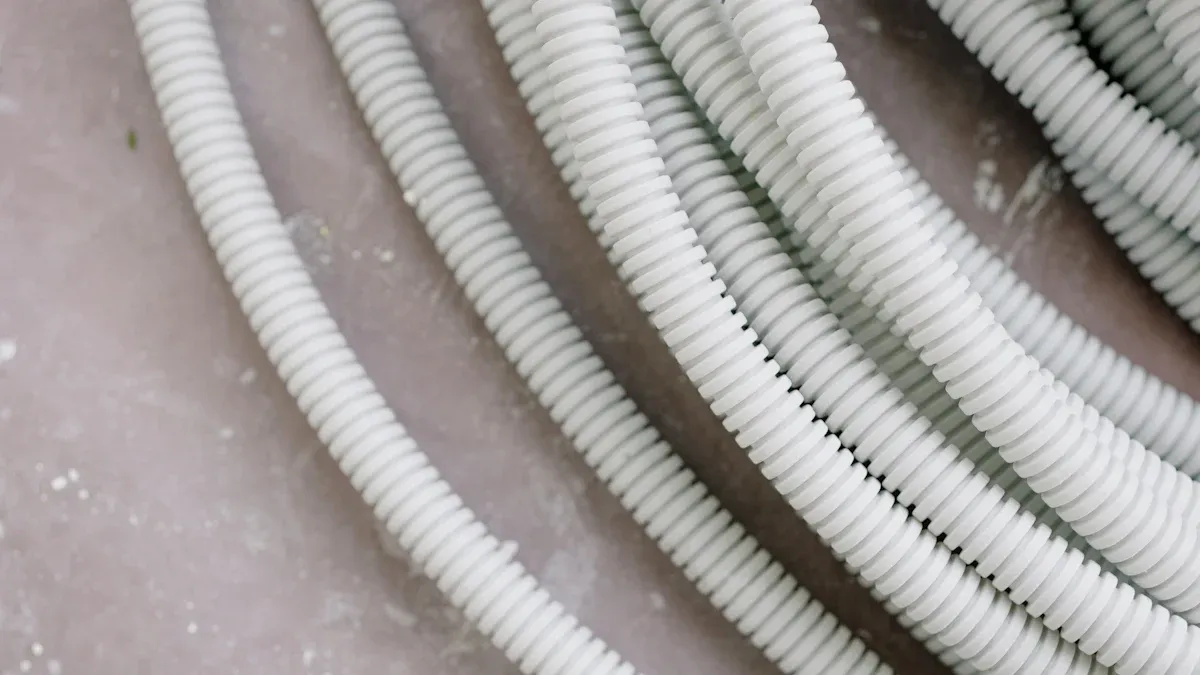
Heat shrink tubing is used in cars and airplanes a lot. It covers wires near engines and exhausts where it gets very hot. This insulation can handle heat and shaking. The tubing stops wires from getting damaged. It keeps connectors safe from water and chemicals. You can use different colors to organize wires. This makes fixing things easier. Here are some important uses:
High-temperature insulation for wires and cables
Protection against abrasion from movement
Sealing connectors from moisture and dust
Strain relief for wires and terminals
Wire harnessing for organization
Industrial and Manufacturing
Factories and machines work in hard places. Heat shrink tubing keeps wires safe from heat and chemicals. It also protects them from being pulled or bent. You use it to keep wires neat in control panels. It helps protect cables in machines. This tubing stops electrical problems and keeps machines working well. It gives extra support so connections last longer. People use it for safety and to make sure things work right.
Tip: Put heat shrink tubing on factory wires to stop problems from broken wires.
Electrical and Electronics
People use heat shrink tubing to cover wires in electrical work. It keeps out water, dust, and things that can scratch wires. The tubing stops wires from touching and causing shorts. It also helps at the ends of wires so they do not break. You can use it to keep wires neat and safe.
Sealing against moisture and contaminants
Providing strain relief for connectors
Protecting against abrasion
Oil, Gas, and Energy
In oil, gas, and energy jobs, you need tubing that can take heat and strong chemicals. Materials like PEEK, PTFE, and FEP give good protection. These can handle heat up to 260°C. They also stand up to oils, fuels, and grease. You use heat shrink tubing to cover wires in solar panels and wind turbines. It also protects battery pack wires. The tubing keeps cables safe from weather and chemicals.
Material | Temperature Resistance | Chemical Resistance | Applications |
|---|---|---|---|
PEEK | Up to 260°C | High stability | Oil, gas, aerospace |
PTFE | Up to 232°C | Resistant to oils | Oil, gas, aerospace |
FEP | Up to 232°C | High stability | Oil, gas, aerospace |
You count on heat shrink tubing to keep your systems safe in tough places. It is important that the tubing can handle heat and chemicals.
Materials for High-Temperature Heat Shrink Tubing
When you pick heat shrink tubing for hot jobs, you should know about the materials. Each material has things it does well and things it cannot do. Picking the right one helps your wires last longer and stay safe.
Polyolefin and PVC
Polyolefin heat shrink tubing is used in many places. It works up to 135°C and protects against heat and chemicals. Polyolefin stays bendy and does not crack fast. Some types can take even more heat, so they are good for strong power jobs. PVC heat shrink tubing is also used a lot. It costs less and is good for easy jobs. PVC can take heat up to 105°C but can break if it gets too hot. Polyolefin is better for most hot jobs. Use PVC only where it does not get very hot.
Material | Continuous Operating Temperature Range | High-Temperature Suitability |
|---|---|---|
PVC | -55°C to 105°C | Limited, prone to aging and cracking beyond range |
Polyolefin | Up to 125°C or 135°C | Excellent, some variants up to 150°C suitable for high-power applications |
PTFE and Fluoropolymers
PTFE and other fluoropolymers give the best protection in tough places. These materials can take very high heat, chemicals, and fire. PTFE works up to 250°C and does not melt or break down fast. You can use it where there are strong acids, oils, or fuels. PTFE keeps its shape and size even when it gets hot. Fluoropolymers like Viton and Teflon do not burn easily and are safe for hard jobs.
Great at handling heat
Does not react with chemicals
Does not catch fire easily
Does not change size much with heat
Stays strong when hot
Material Comparison and Temperature Ratings
You should compare materials before picking one. Look at how much heat they can take. Here is a table to help you:
Material | Maximum Operating Temperature (°C) |
|---|---|
Polyolefin | 135 |
PVC | 105 |
Silicone rubber | 200 |
Teflon (PTFE) | 175 |
Viton | 200 |
Fluorine rubber | 200 |
Teflon (high temp) | 260 |
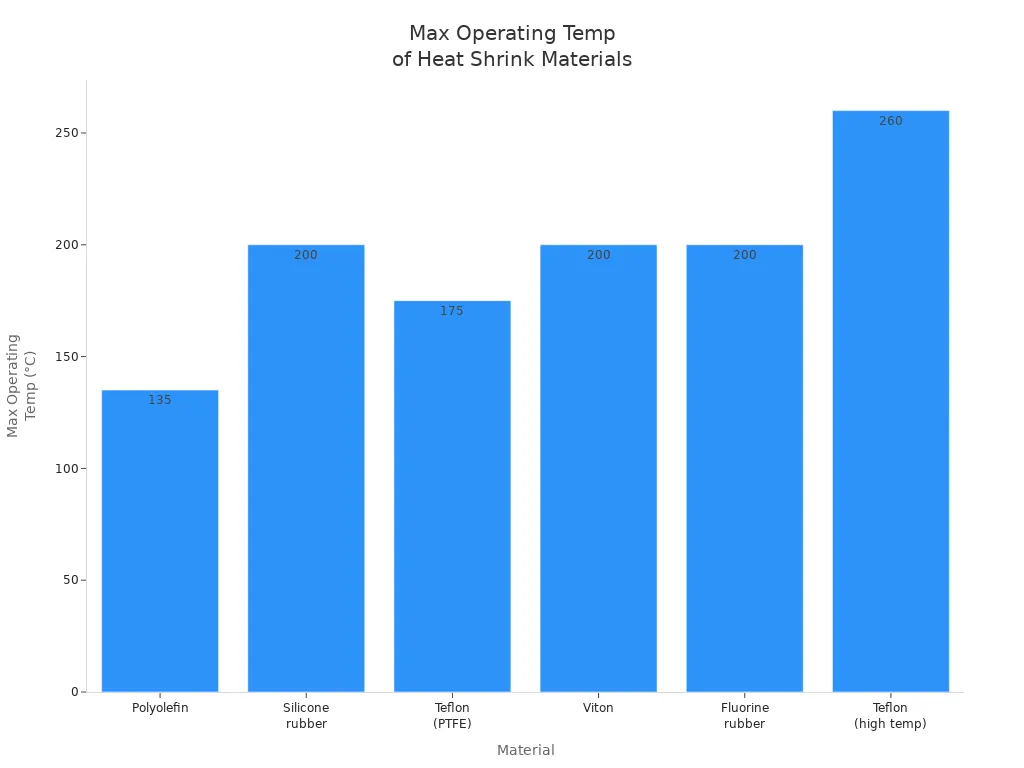
You can also get adhesive lined heat shrink tubing for extra sealing. This kind has glue inside to keep out water and dust. Always pick tubing that matches your job’s heat and chemical needs.
Selection Criteria for Heat Shrink Tubing
Picking the right heat shrink tubing is important. It helps keep your project safe and working well. You need to check a few things before you choose. Every job needs different insulation, covering, and strength. Here is how you can pick the best tubing for your electrical or industrial work.
Sizing and Shrink Ratios
You must know the size you need before you start. The size and shrink ratio help the tubing fit tightly. If you choose the wrong size, your equipment may not be safe.
Look at the shape and size of the part you want to cover.
Check the stickiness of the glue if you use adhesive-lined tubing.
Think about how hot your project gets.
Decide which shrink ratio you need. Common ratios are 2:1, 3:1, or 4:1.
Make sure you have the right tools for the job.
To find the smallest diameter, use this formula:
(Heat Shrink Non-Recovered ID – Recovered ID) × 20% + Recovered ID > Application’s Smallest Effective Diameter
For the largest diameter:
(Heat Shrink Non-Recovered ID – Recovered ID) × 80% + Recovered ID < Application’s Largest Effective Diameter
Tip: Always measure your wires and connectors before you buy. This helps you pick the right size and makes sure the tubing fits well.
Material Compatibility
Material compatibility is very important for heat shrink tubing. You need to match the tubing material with the wire or part. This helps the tubing last longer and work better.
Material compatibility affects how well the tubing insulates and protects. The right material stands up to heat, chemicals, and stress. This is important in jobs like aerospace and automotive. If you use the wrong material, you might see cracks or breaks. Picking the right material makes the tubing stronger and keeps your insulation safe.
Always check the types of wires and connectors you use. Some materials work better with copper. Others are good for aluminum or special cables. This step is a big part of picking heat shrink tubing.
Environmental and Chemical Resistance
You must think about where you will use the tubing. Some places have high heat, strong chemicals, or lots of sunlight. The tubing must handle these things to keep your system safe.
Tubing made from PTFE can handle very hot and cold temperatures. Long exposure to high heat can still cause damage.
Many types resist chemicals, but strong acids or long exposure can lower performance. Always check chemical compatibility.
Tubing must handle the highest pressure in your system. Pressure drops when temperatures rise.
If you use tubing outside, UV resistance is important. Sunlight can break down some materials. For wet places, moisture resistance matters. Adhesive-lined or dual-wall tubing gives extra protection against water.
Note: Always match the tubing’s resistance to your job’s needs. This keeps your insulation and covering working well.
Electrical Performance and Certifications
You need to check the electrical requirements for your project. Some jobs need special certifications to meet safety rules. These certifications show that the tubing meets industry standards.
Application | Required Standards | Key Performance Factors | willele Recommendation |
|---|---|---|---|
Railway signaling | EN 45545, IEC 60332 | Flame spread, toxicity, smoke | Premium V-0 grade |
Aircraft harness | FAR 25.853, AS23053 | Weight, flexibility, thermal stability | High-performance grade |
Marine control | IEC 60092, IACS | Salt spray, UV, oil resistance | Marine-grade formulation |
Building plenum | UL910 (Steiner Tunnel) | Flame spread index <25 | Low-smoke V-0 grade |
Solar DC wiring | UL 4703, EN 50618 | UV resistance, temperature cycling | Weather-resistant grade |
EV charging | ISO 17409, IEC 62893 | Oil resistance, flexibility | Automotive-grade |
You should always look for standards and certificates that match your industry. This helps you use heat shrink tubing safely and keeps your system up to code.
Wall Thickness and Installation
Wall thickness affects how strong and bendy the tubing is. Thicker walls give more protection but are harder to bend. Thinner walls are easier to use in tight spaces but may not protect as well.
Choose the right wall thickness for your needs. Heavy-duty jobs need thicker tubing.
Make sure the tubing fits well before you shrink it.
Follow the instructions for safe use. Use the right tools and heat.
Check the types of tubing you use. Some have extra glue inside for better sealing. Others are made from common materials like polyolefin or fluoropolymers. Always match the wall thickness and installation method to your needs.
Tip: Good installation keeps your covering strong and helps your system last longer.
By following these steps, you can pick the best tubing for your electrical and industrial needs. Always check the requirements for your job, including material, size, and certifications. This helps you get the best performance and safety from your heat shrink tubing.
Practical Tips for High Temperature Heat Shrink
Common Mistakes to Avoid
You want your heat shrink tubing to last and protect your wires. Many people make simple mistakes that can cause problems later. Here are some common errors you should watch out for:
Not reading the manufacturer’s instructions
Picking the wrong size of tubing
Skipping cable preparation
Using the wrong tools
Heating the tubing unevenly or not enough
Ignoring dirt, oil, or moisture on the cable
Placing the tubing in the wrong spot
Rushing the job
Forgetting to test after installation
If you choose tubing that is too small, it will not fit over your cable. If it is too large, it will not shrink tightly. Both mistakes can make your connection weak. Always measure your cable and pick the right size for a snug fit.
Tip: Take your time and follow each step. Careful work helps your tubing last longer.
Best Installation Practices
You can get the best results by following a few simple steps. Start by selecting tubing that fits snugly after shrinking. Cut the tubing with sharp scissors or a knife for a clean edge. Make sure the tubing is a little longer than the area you want to cover.
Place the tubing so it covers the whole area. Use a heat gun or another safe heating tool. Move the heat back and forth to shrink the tubing evenly. Do not hold the heat in one spot for too long. Let the tubing cool for at least five minutes before you touch or move it.
Note: Even heating helps the tubing shrink smoothly and gives you a tight seal.
Maintenance and Inspection
You should check your heat shrink tubing often, especially in harsh environments. Look for cracks, splits, or signs of wear. If you see damage, replace the tubing right away. Clean the surface with a dry cloth to remove dust or oil. Regular checks help you catch problems early and keep your equipment safe.
Remember: Good maintenance keeps your wires protected and your systems running well.
You should think about what you need before picking high temperature heat shrink tubing. Make sure you know the job, the material, and the size. Always look at datasheets to find out about wall thickness and chemical resistance. For the best outcome, follow these steps:
Pick the correct size and material.
Cut the tubing and put it in place.
Use a heat gun to shrink the tubing evenly.
Careful planning and putting on the tubing the right way keeps your project safe and helps it last longer.
FAQ
What is the main application for high temperature heat shrink tubing?
High temperature heat shrink tubing is used in many places. People use it in airplanes, cars, factories, and energy systems. Each place needs strong protection from heat, chemicals, and things that can break wires.
How do you choose the right tubing for your application?
First, think about what your project needs. Check how hot it gets, what chemicals are around, and how much stress there is. Look at different tubing materials. Pick the one that works best for your job.
Can you use high temperature heat shrink tubing in outdoor application environments?
Yes, you can use this tubing outside. It stands up to sunlight, rain, and bad weather. It helps protect wires in solar panels, wind turbines, and other outdoor equipment.
What are the benefits of using heat shrink tubing in electrical application projects?
Heat shrink tubing gives strong insulation and keeps wires safe. It stops wires from getting too hot or damaged by chemicals. The tubing helps prevent shorts and keeps your project working well.
How often should you inspect tubing in critical application areas?
You should check the tubing often in important places. Look for cracks, splits, or signs of damage. Change the tubing if you see problems to keep everything safe.
See Also
Selecting Optimal FEP Biocompatible Heat Shrink Tubing Solutions
A Comprehensive Guide for FEP Autoclavable Heat Shrink Tubing
Comparing Medical Grade and Industrial Grade Heat Shrink Tubing
Exploring Heat Shrink Tubing Applications for Electrical Wire Insulation

© Copyright 2024 My First Blog - All Rights Reserved.