The Science Behind High Temp Shrink Tube Materials: PTFE vs. PET vs. FEP

Selecting the best High Temp Shrink Tube depends on how each material deals with heat and strong chemicals. PTFE can work at very high heat, up to 250°C. FEP also stays strong in high heat. PET does not do well in very hot places. PTFE and FEP stay strong and safe even when it is very cold. PET gets weaker after it touches liquid oxygen.
Material | Maximum Continuous Operating Temperature |
|---|---|
PTFE | 250°C |
FEP | High (exact temperature not specified) |
PET | N/A |
Key Takeaways
PTFE is the top pick for high heat and chemical resistance. It works well for hard jobs in places like airplanes and hospitals.
PET costs less and is simple to use. It is great for basic wire safety in normal electronics. But it cannot take high heat.
FEP is bendy and stands up to chemicals. It is good for medical and lab work where bending and seeing through are needed.
Picking the right shrink tube depends on heat, chemicals, and strength. This helps keep things safe and long-lasting.
Always think about the shrink ratio and price when you choose a shrink tube. This helps your project work well.
High Temp Shrink Tube Overview
What Are Shrink Tubes
Shrink tubes are plastic tubes that get smaller when heated. They fit tightly around wires or cables. This helps protect the wires from getting hurt. High Temp Shrink Tube is special because it can take a lot of heat. People use these tubes where normal plastic would melt. The tubes keep wires safe from heat, chemicals, and water. They also stop electricity from leaking out. This helps machines work well.
Tip: High Temp Shrink Tube is great for hard jobs in places like factories, airplanes, and hospitals.
Shrink tubes are made from different materials. Each kind has its own good points. Some tubes bend easily. Others are very strong. You need to pick the right one for your job.
Why Material Choice Matters
Picking the right material for a High Temp Shrink Tube is important. Some materials, like PTFE, can take heat up to 250°C. Others, like polyolefin, only go up to 125°C. Fluoropolymers such as PTFE and FEP are good against heat and chemicals. Silicone tubes work in hot and cold places. Polyolefin tubes are both bendy and can take some heat.
Property/Function | Description | Application Area |
|---|---|---|
Chemical Resistance | FEP tubing stands up to chemicals and solvents, so it lasts longer. | Aerospace, Automotive |
Thermal Stability | It works well even when it gets very hot or cold. | Medical, Telecommunications |
Flexibility | It can bend and fit many uses. | Electrical, Industrial |
Dielectric Properties | It stops electricity from leaking, which keeps things safe. | Electrical Applications |
Biocompatibility | It is safe for medical use and works well. | Medical Procedures |
Optical Clarity | You can see through it to check parts inside. | Medical, Aerospace |
High Temp Shrink Tube is used in many places:
Aerospace
Automotive
Telecommunications
Medical
Engineers choose the material based on where it will be used and how much protection is needed. The right tube keeps things safe and working for a long time.
Material Properties
PTFE Features
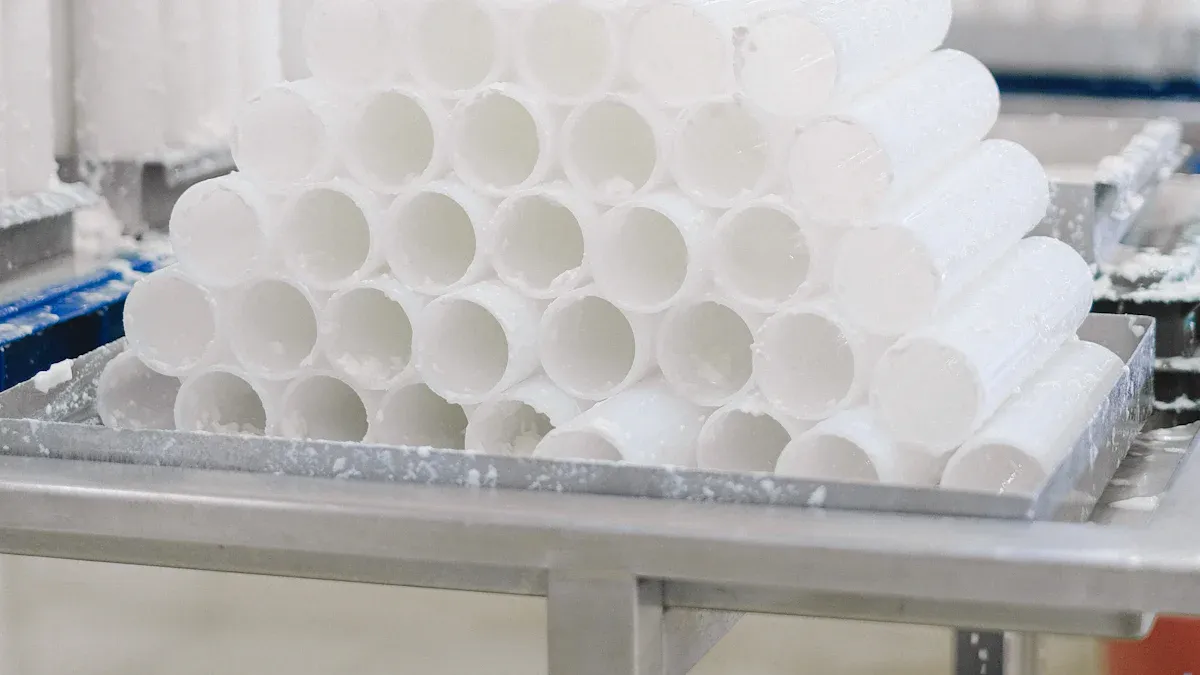
PTFE is a great choice for very hot places. It can handle both hot and cold temperatures. Many industries use PTFE because it is reliable. PTFE shrink tubes work from -200°C to 200°C. Some types can even go up to 250°C for a short time. PTFE needs a lot of heat to shrink, starting at 350°C.
Property | Value |
|---|---|
Operating Temperature | -200°C to 200°C |
Maximum Continuous Temperature | 250°C |
Shrink Ratio | 1.7:1 and 4:1 |
Shrink Temperature | ≥350°C |
Shrink Rate (%) | 3.5 to 4.0 |
PTFE has many good points:
It does not break down when near chemicals.
It keeps wires safe from electricity.
It can stand very hot conditions.
It does not get damaged easily by stress or rubbing.
But PTFE also has some problems:
It is not as bendy as other materials.
It costs more than regular shrink tubes.
You may need special tools to use it.
PTFE does not work for every job because of its temperature limits.
Note: PTFE is best for places with lots of heat and chemicals, like in airplanes or medical tools.
PET Features
PET is a common material for shrink tubes. It is easy to use and does not cost much. PET shrink tubes wrap tightly around things. They shrink a lot sideways, about 48%. They do not shrink much up and down, only about 8%. PET cannot take as much heat as PTFE or FEP.
Part Number | Nominal Size (mm) | Horizontal Shrinkage Ratio (%) | Vertical Shrinkage Ratio (%) |
|---|---|---|---|
YPET0030 | 3 | 48±4 | 8±3 |
YPET0040 | 4 | 48±4 | 8±3 |
YPET0050 | 5 | 48±4 | 8±3 |
YPET0060 | 6 | 48±4 | 8±3 |
YPET0080 | 8 | 48±4 | 8±3 |
YPET0100 | 10 | 48±4 | 8±3 |
YPET0120 | 12 | 45±4 | 8±3 |
YPET0200 | 20 | 32.9±0.3 | 8±3 |
PET has these good points:
You can see through it to check wires.
It is simple to use and put on.
It costs less than PTFE and FEP.
It is strong enough for many jobs.
But PET also has some bad points:
It cannot take very high heat.
It does not fight chemicals as well as PTFE or FEP.
PET can get weak if it touches some chemicals or gets very cold.
Tip: PET shrink tubes are good for basic wire jobs, but not for very hot or harsh places.
FEP Features
FEP is another good choice for High Temp Shrink Tube. It works in very hot and very cold places, from -200°C to 205°C. FEP shrink tubes do not shrink as much as PTFE or PET. The shrink ratio is between 1.3:1 and 1.6:1. FEP is known for being bendy and clear.
Property | Value |
|---|---|
Operating Temperature | -200°C to +205°C |
Maximum Working Temperature | 200°C |
Shrink Ratio | 1.3:1 to 1.6:1 |
Expansion Ratio | 1.3:1 to 1.6:1 |
FEP has many good points:
It works well in hot and cold places.
It protects against many strong chemicals.
It is very bendy, so it fits in small spaces.
It keeps wires safe from electricity.
FEP also has some problems:
It costs more than some other materials.
It does not fight some metals and chemicals.
It does not shrink as much, so it may not fit as tight as PET.
Note: FEP shrink tubes are good for jobs that need both bendiness and chemical safety, like in labs or medical tools.
Comparison Table
Temperature Resistance
Temperature resistance means how well a material handles heat. PTFE can take the most heat. FEP also works well when it is hot. PET is better for cooler places.
Polymer Name | Maximum Temperature (°C) |
|---|---|
PTFE - Polytetrafluoroethylene | 290 |
FEP - Fluorinated Ethylene Propylene | 205 |
PET - Polyethylene Terephthalate | 140 |
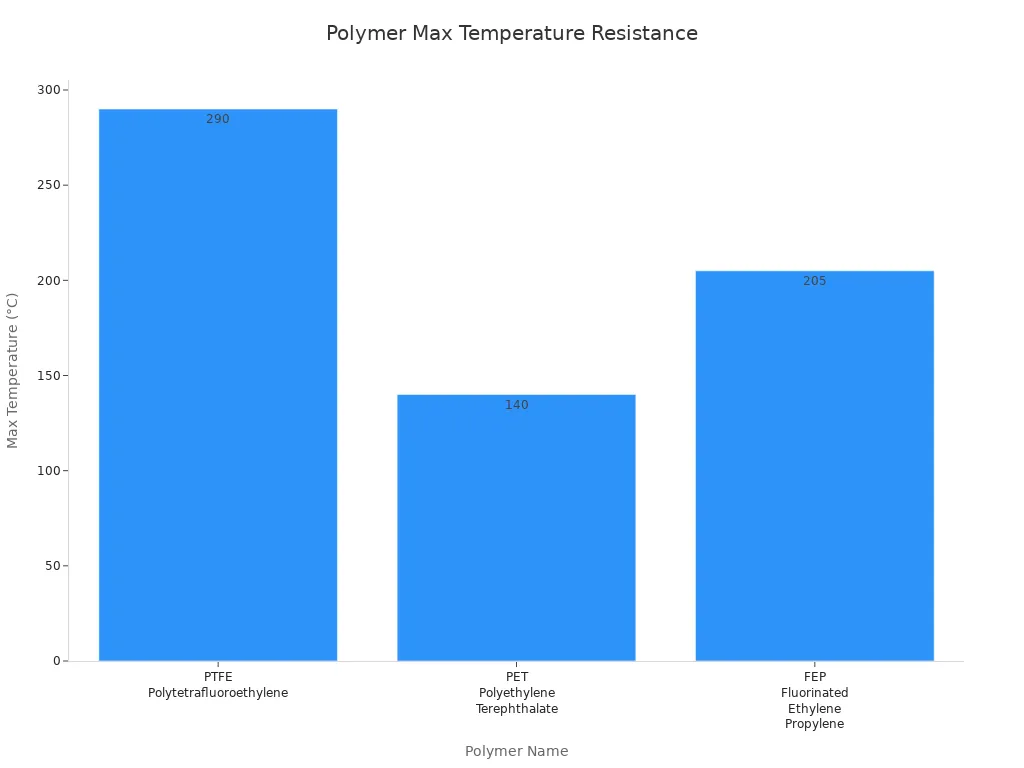
PTFE and FEP keep wires safe in very hot places. PET is not good for jobs with a lot of heat.
Chemical Resistance
Chemical resistance tells how well a material fights acids and solvents. PTFE and FEP do not get hurt by most chemicals. PET does not protect as well.
Chemical | PTFE | FEP | PET |
|---|---|---|---|
Acetic acid (10%) | Resistant | Resistant | Moderate |
Sulphuric acid (95%) | Resistant | Resistant | Moderate |
Acetone | Resistant | Resistant | Moderate |
Benzene | Resistant | Resistant | Moderate |
Chloroform | Resistant | Resistant | Moderate |
PTFE and FEP keep wires safe from strong chemicals. PET can get weak if it touches harsh acids or solvents.
Mechanical Strength
Mechanical strength shows how tough a material is. PTFE is very strong and does not wear out fast. FEP is strong but bends more easily. PET is okay for simple jobs but not as tough as PTFE or FEP.
PTFE: Very strong, does not break or wear out.
FEP: Strong and bends easily, good for bending.
PET: Medium strength, best for easy wire jobs.
PTFE is good for places where wires get used a lot. FEP is good when you need both strength and bending.
Flexibility & Clarity
Flexibility and clarity help you know how easy it is to use the tube and see inside. FEP bends well and is clear. PTFE is not as bendy and you cannot see through it. PET lets you see a little but does not bend as much as FEP.
Material | Flexibility | Optical Clarity |
|---|---|---|
FEP | Bends well if thin; stiffer if thick | Very clear, easy to see inside |
PTFE | Not very bendy; not see-through | Hard to see inside |
PET | Bends a little | You can see a bit inside |
FEP makes it easy to look at wires and bend the tube. PTFE is best for strength, not for seeing inside.
Cost
Cost helps you pick the right material for your money. PTFE and FEP cost more than PET. PET is the cheapest for easy jobs.
Product Description | Price Range (per meter) | Minimum Order Quantity |
|---|---|---|
PTFE Heat Shrinking Tube | $0.26 - $0.74 | 1 meter |
Industrial grade PTFE Tubing | $1.09 - $1.59 | 1 meter |
PEBAX Medical Heat Shrink Tube | $3 - $6 | 500 meters |
PTFE and FEP cost more but protect better. PET saves money for simple work.
Shrink Ratio
Shrink ratio tells how tight the tube gets after heating. FEP/PTFE tubes shrink to half their size. PET shrinks a lot sideways but not much up and down.
PTFE/FEP: Shrink to half their size (2:1).
PET: Shrinks about 48% sideways, 8% up and down.
High Temp Shrink Tube made from PTFE or FEP fits wires tightly and keeps them safe. PET is good when you need to cover more space.
Application Suitability
PTFE Use Cases
PTFE is used where heat and chemicals can hurt machines. Many industries pick PTFE because it lasts long and does not react with things. PTFE can handle both hot and cold places. Engineers use PTFE to protect wires in airplanes. It also insulates medical tools and helps make computer chips. PTFE is good for chemical equipment because it does not rust or break down.
Industry |
|---|
Chemical/Industrial |
Healthcare |
Aerospace |
Pharmaceutical |
Semiconductor |
Food & Beverage |
Solar Panel Manufacturing |
PTFE is also used in making solar panels and food products. It keeps wires safe from electricity and chemicals. This makes PTFE a great choice for High Temp Shrink Tube jobs.
PTFE keeps machines safe in places with lots of heat and strong chemicals.
PET Use Cases
PET shrink tubes are best for simple jobs that need basic protection and see-through tubes. Cars use PET to cover wires and make battery ends stronger. This stops rust and helps wires last longer. Electronics makers use PET to wrap and group wires in computers and phones.
Sector | Use Case Description |
|---|---|
Automotive | Covering wires with heat shrink tubing to stop rust and make them last. |
Automotive | Making battery ends stronger with thick heat shrink tubing. |
Electronics | Wrapping and grouping wires in devices, computers, and phones. |
PET is good for easy wire jobs where heat and chemicals are not a big problem.
PET shrink tubes let you see wires and are easy to use in everyday electronics.
FEP Use Cases
FEP shrink tubes bend easily and fight chemicals in medical and lab jobs. Catheters and surgery tools use FEP because it bends and stays clean. FEP helps fix moving parts in biotech machines. Clean filling and pouring systems use FEP to keep things safe. Lab tools and cell growing tech use FEP because it is clear and strong.
Catheter delivery devices
Surgery and blood tools
Fixing moving parts
Clean filling and pouring systems
Lab tools
Biotech and medicine jobs
Cell and tissue growing tech
FEP is best when you need tubes that bend and protect from chemicals.
FEP shrink tubes keep medical and lab tools safe from harm and dirt.
Choosing The Right High Temp Shrink Tube
Selection Guide
Picking the best material starts with knowing what the job needs. Engineers check how hot it gets, if chemicals are around, and how strong the tube must be. The table below shows how PTFE, PET, and FEP do in these areas:
Criteria | PTFE | PET | FEP |
|---|---|---|---|
Temperature Resistance | Excellent | Good | Excellent |
Chemical Resistance | Excellent | Moderate | Excellent |
Mechanical Strength | Good | Moderate | Good |
Application-Specific Needs | High-performance applications | General use | Medical and industrial uses |
PTFE is best for places with lots of heat and strong chemicals. PET is good for simple jobs where saving money matters and the area is not rough. FEP works well in medical and factory jobs that need tubes to bend and fight chemicals.
Tip: Always pick a tube that matches what the job needs. This helps wires and parts last longer.
Practical Considerations
Engineers think about other things before picking a tube. They check if the tube must bend in tight spots. FEP bends easily and stays clear, which is good for medical tools. PTFE protects well but is stiff. PET costs less and works for easy jobs, but does not handle heat or chemicals as well.
Size and shrink ratio are important, too. PTFE and FEP shrink tight and keep wires safe. PET shrinks more sideways, so it covers wide spots but may not fit as tight. Cost matters, especially for big projects.
A High Temp Shrink Tube should fit the job, fit the space, and not cost too much. Picking carefully makes equipment safer and last longer.
The main differences between PTFE, PET, and FEP shrink tubes are in how much they shrink, how much heat they can take, and where they work best. The table below shows these important features:
Material | Shrink Ratio | Temperature Resistance | Dielectric Strength | Applications |
|---|---|---|---|---|
PET | 1.1:1–3:1 | Moderate | High | Electrical insulation |
PTFE/FEP | 1.3:1–4:1 | High | Moderate | High-temperature uses |
PTFE is good for tough places and fixing wires.
PET is used for jobs that need electrical insulation.
FEP is best for medical and factory jobs where shrinking a lot is not needed.
Picking the right shrink tube keeps wires and equipment safe. Readers should look at the comparison and selection guide to choose the best tube for their project.
FAQ
What is the main difference between PTFE, PET, and FEP shrink tubes?
PTFE handles the highest temperatures and strongest chemicals. PET costs less and works for basic jobs. FEP bends easily and stays clear, making it good for medical and lab tools.
Can PTFE shrink tubes be used in medical devices?
PTFE shrink tubes protect wires in medical devices. They resist heat and chemicals. Hospitals use them for safe insulation and long-lasting performance.
How much do PET shrink tubes shrink?
PET shrink tubes shrink about 48% sideways and 8% up and down. This makes them fit tightly around wires and parts.
Are FEP shrink tubes safe for food and beverage applications?
FEP shrink tubes resist chemicals and heat. Food and beverage companies use them because they do not react with ingredients and keep equipment clean.
See Also
Comparing FEP And PTFE Tubing For Chemical Durability
Evaluating FEP Tubing Brands For Heat Resistance Levels
Exploring FEP Heat Shrink Tubing's Safety For Industries

© Copyright 2024 My First Blog - All Rights Reserved.