Electrophysiology catheter mapping electrode insulation boosts safer heart procedures


You need clear signals and safe tools for heart procedures. Electrophysiology catheter mapping electrode insulation helps you get better mapping. It also keeps your heart tissue safe. Good signal quality helps find the right spots in your heart. Catheter strength and patient safety are important for success.
Factor | Description |
|---|---|
R-wave amplitude | Strong signals help with better heart mapping. |
P-wave visibility | Reliable detection makes diagnosis safer. |
Patient demographics | Good signals work for all patient groups. |
Key Takeaways
Electrode insulation is very important for safe heart procedures. It stops electrical signals from leaking out. It also keeps heart tissue safe from harm.
Strong insulation makes signal quality better. This helps doctors map the heart more accurately. It also helps them find heart problems faster.
Always check catheter insulation before using it. Look for cracks or damage to keep patients safe. This also helps make sure treatment works well.
Good insulation lowers electrical noise. This stops false readings from happening. It helps doctors see clear heart rhythms during procedures.
Following safety rules like IEC 60601-1 is very important. These rules help stop problems and keep patients and medical staff safe.
Electrophysiology catheter mapping electrode insulation overview
What is electrode insulation?
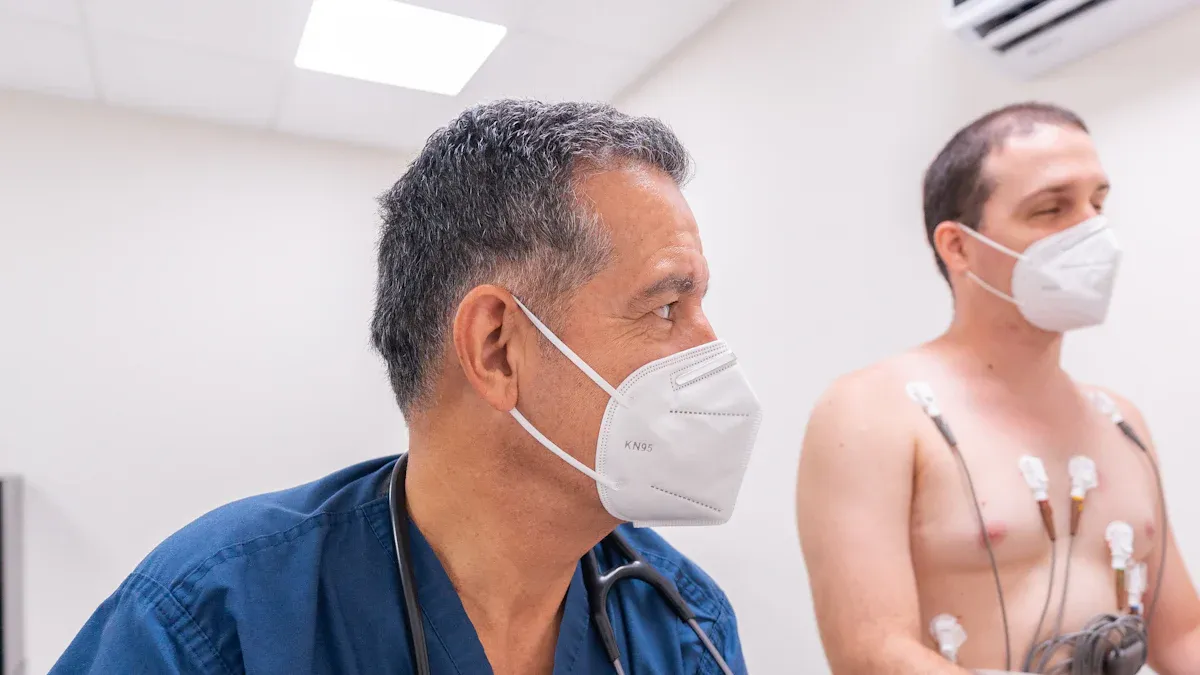
Electrode insulation is a layer that covers the electrode tip. This layer stops electrical signals from leaking out. It also protects your heart tissue during procedures. Insulation works like a shield. It keeps the energy in the right place. When you use a catheter for mapping, insulation blocks unwanted electrical noise. This helps you get clear signals. You need insulation to keep tissue contact safe. It helps you avoid burns or shocks.
Tip: Always look at the insulation before you use it. Make sure there are no cracks or damage. A clean and smooth surface gives you the best results.
Step | Action | Why It Matters |
|---|---|---|
Cleaning | Take off all organic debris | A clean surface makes it easy to check for problems |
Visual Check | Look at the shaft with a magnifier | You can spot flaws quickly |
Functional Test | Use an insulation tester | It finds hidden problems that could cause burns |
Role in catheter mapping
Electrophysiology catheter mapping electrode insulation is very important in heart procedures. You need insulation to stop electrical interference. This lets you get correct readings from the electrode tip. There is no extra noise. Insulation keeps the equipment separated. It makes sure current leakage stays safe. You also follow safety rules. These rules protect you from electrical shock.
High-density mapping lets you collect many signals at once. This makes your data better.
Smaller electrodes and closer spacing help you get clearer signals.
Multi-branch catheter designs give you more details.
Advanced mapping systems help you make fast and detailed heart maps.
Insulation design must handle sudden voltage spikes. You must follow strict rules to keep patients safe. When you check your equipment, look for cracks, holes, or color changes. Always change catheters with damaged insulation. This keeps your procedures safe and helps you avoid problems.
Evidence | Description |
|---|---|
Insulation Importance | Stops electrical interference and keeps patients safe |
Equipment Isolation | Keeps current leakage below 10 microamps for intracardiac use |
Compliance Standards | Follows IEC 60601-1 safety rules to lower shock risk |
Transient Overvoltages | Handles sudden voltage changes during procedures |
Electrophysiology catheter mapping electrode insulation helps you map the heart better. It also helps you understand heart rhythms. This technology makes heart procedures safer and more accurate.
Mapping performance impact
Signal quality improvement
You need strong signals to map your heart. Electrophysiology catheter mapping electrode insulation helps you get better results. Catheters with good insulation show stronger signals. The electrode tip collects more accurate data. You can find heart problems faster.
Researchers found thicker SU-8 insulation helps signal quality. You get less impedance and a better signal-to-noise ratio. This means you see real heart signals, not extra noise. 3D microelectrodes with better insulation show a peak-to-peak field potential of 3.2 mV. Traditional planar microelectrodes show less than 1 mV. You get over 300% better signal strength.
Tip: Always check your catheter before radiofrequency ablation. Good insulation helps you see the right signals and avoid mistakes.
Reduced electrical noise
You want to stop electrical noise during heart mapping. Noise can hide important signals. Electrophysiology catheter mapping electrode insulation blocks unwanted signals. You get a cleaner picture of your heart’s activity.
Insulation keeps signals from mixing.
You see the true heart rhythm.
You avoid false readings during radiofrequency ablation.
Catheters with strong insulation lower the risk of errors. You can trust the data you collect. This helps you plan safer radiofrequency ablation and catheter ablation procedures.
Electrode spacing and resolution
You need good spacing between electrodes for clear heart maps. Insulation lets you put electrodes closer together. You get higher resolution and more details. Catheters with advanced insulation show small changes in heart tissue contact.
Electrode Feature | Benefit for Mapping |
|---|---|
Closer spacing | Higher resolution heart maps |
Strong insulation | Less signal overlap |
Small electrode tip | More precise data |
Better spacing and insulation help you find the right spots for radiofrequency ablation. You can treat heart problems with more accuracy. You also lower the risk of hurting healthy tissue during catheter ablation.
Note: Good insulation and smart electrode spacing help you get the best results in every radiofrequency ablation procedure.
Safety in heart procedures
Preventing tissue damage
You want your heart tissue to stay safe. Electrophysiology catheter mapping electrode insulation helps protect your heart. Strong insulation lowers the chance of burns or shocks. The insulation keeps electrical energy in one spot. This helps stop damage to healthy tissue during radiofrequency ablation.
You can see how insulation helps by checking clinical data:
Evidence Description | Key Points |
|---|---|
Insulation stops implant failure | Insulation is needed to block leaks and failures that can hurt people. |
Charge-injection capacity (CIC) | CIC shows how much charge can be used safely without hurting tissue. |
How tissue gets damaged | Long-term stimulation below the electrolysis window can still hurt nerves, so insulation is important. |
You should check insulation before every radiofrequency ablation. Even tiny cracks let energy escape and hurt tissue. Good insulation keeps the charge-injection capacity safe. This lets you treat the right spot without hurting other parts of the heart. You also get better contact with tissue, so you can target problems more exactly.
Tip: Always look at your catheter before you start. A smooth and clean surface protects your patient best.
Minimizing complications
You want to stop problems during and after heart procedures. Bad insulation can cause big issues. If insulation breaks, you might see pacing impedance problems or a pacemaker exit block. Sometimes, insulation problems cause burns during radiofrequency ablation or catheter ablation.
Here are some problems linked to bad insulation:
Insulation breaks can cause pacing impedance problems
Pacemaker exit block
Burns from insulation defects
You can lower these risks by picking catheters with strong insulation. Rules like IEC 60601-1 say you need good insulation. These rules help keep patients and staff safe. The rules tell you to use the right materials and test every device. They also use Means of Patient Protection (MOPP) to keep anyone touching the device safe.
Note: Following these rules helps you avoid electrical dangers and keeps your procedures safe.
You use radiofrequency ablation to fix many heart rhythm problems. Each time you use it, insulation keeps energy in the right place. Good insulation helps you focus treatment and avoid hurting healthy tissue. You get better results and fewer problems. When you use strong insulation and careful technique, you make every radiofrequency ablation and catheter ablation safer for patients.
Real-world benefits and outcomes
Clinical evidence
You get better heart procedures with advanced insulation. Studies show insulated electrodes help during radiofrequency ablation. You can look at patient results before and after new insulation. The table below compares adjustable electrodes with improved insulation to fixed electrodes:
Parameter | Fixed Electrodes (FE) | Adjustable Electrodes (AE) | P-value |
|---|---|---|---|
Number of nodules with >1 RFA | 28 | 24 | 0.690 |
Mean age | 46.1 years | 48.1 years | 0.363 |
Female percentage | 92.4% | 90.0% | 0.758 |
Follow-up duration (days) | 858 | 581 | < 0.001 |
Initial symptoms (mild) | 65.2% | N/A | N/A |
Severe symptoms | 1 | N/A | 0.009 |
Cosmetic problems | Comparable | Comparable | 0.066 |
Median volume before RFA (cc) | 8.8 | 9.9 | 0.218 |
Anteroposterior dimensions (cm) | 1.9 | 2.0 | 0.045 |
Intranodular vascularity (%) | 15.2% | 38.9% | < 0.001 |
Adjustable electrodes with better insulation lower the risk of severe symptoms. You also get improved tissue contact and more accurate mapping.
Patient case examples
You can learn from real patient cases about insulated mapping electrodes. Patients who get radiofrequency ablation with insulated catheters have fewer problems. Here are some benefits:
Insulated mapping electrodes make nerve monitoring easier.
You get more accurate cranial nerve responses.
Insulation helps electric field spread, especially for facial and lower cranial nerves.
Advanced insulation materials cut down stray energy, so burns are less likely.
You see less energy going to healthy tissue during radiofrequency ablation.
You use the electrode tip with strong insulation to treat problem spots. This makes procedures safer and gives better results. Patients heal faster and have fewer side effects. You can trust insulated catheters for good results every time.
Tip: Always check insulation before radiofrequency ablation. Good insulation keeps tissue contact safe and helps patients do better.
You can see that electrode insulation helps make heart mapping safer and more accurate. Insulated electrodes help patients get better results. They also let doctors use the newest technology. Today, heart care uses advanced tools like:
radiofrequency ablation to treat tissue exactly
robotics to give doctors better control
pulsed field ablation to keep healthy tissue safe
Insulation is important for safe radiofrequency ablation. It helps make each procedure work better. Strong insulation helps patients heal faster. It also lowers the chance of problems after radiofrequency ablation.
FAQ
What does electrode insulation do in heart mapping?
Electrode insulation keeps signals in one place. This helps you see your heart better. It also keeps your heart tissue safe during the procedure.
How can you check if catheter insulation is safe?
You should look for cracks or changes in color. Use a magnifier to see small problems. Use an insulation tester to check for hidden damage. Clean the catheter before you use it.
Why does insulation help prevent burns during ablation?
Insulation keeps energy from leaking out. You only treat the area that needs help. This lowers the chance of burns or shocks.
Can better insulation improve patient outcomes?
Benefit | Result |
|---|---|
Strong signals | Faster diagnosis |
Fewer problems | Safer procedures |
Quick healing | Better recovery |
You get better results when you use advanced insulation.
See Also
Enhancing Neurosurgical Catheter Performance With FEP Shrink Tubing
Creating Multi-Layer Catheters Using Medical Grade FEP Tubing
Understanding FEP and Its Advantages for Medical Device Insulation
FEP vs. Polyolefins: A Comparison for Electrosurgical Applications
Latest Developments in FEP Heat Shrink Tubing for Healthcare

© Copyright 2024 My First Blog - All Rights Reserved.