What Is 0.5mm ID Heat Shrink Tubing Used For in 2026


You use 0.5mm id heat shrink to cover very thin wires. It helps protect and insulate these small wires. This tubing fits tightly over tiny connections. People use 0.5mm id heat shrink in electronics and electrical jobs. Many workers use it for wire harness connectors. Hobbyists also use it for small repairs. The table below shows how different jobs use this tubing:
Industry | Application |
|---|---|
Electronics | Insulating wire harness connectors |
Electrical | Protecting wire harness connectors |
You can trust 0.5mm id heat shrink to keep your wires safe and neat.
Key Takeaways
0.5mm ID heat shrink tubing keeps thin wires safe. It stops short circuits and damage from happening.
Pick the right material, such as polyolefin, for good insulation. This also makes the tubing bend easily in many places.
Heat shrink tubing helps keep cables neat and tidy. It keeps wires in order and stops them from getting tangled.
Follow the right steps to put on the tubing. This makes it fit well and keeps wires safe for longer.
In 2026, you will see this tubing in new electronics and wearables. It will also be in small devices to protect wires well.
What Is 0.5mm ID Heat Shrink Tubing
Size and Material Overview
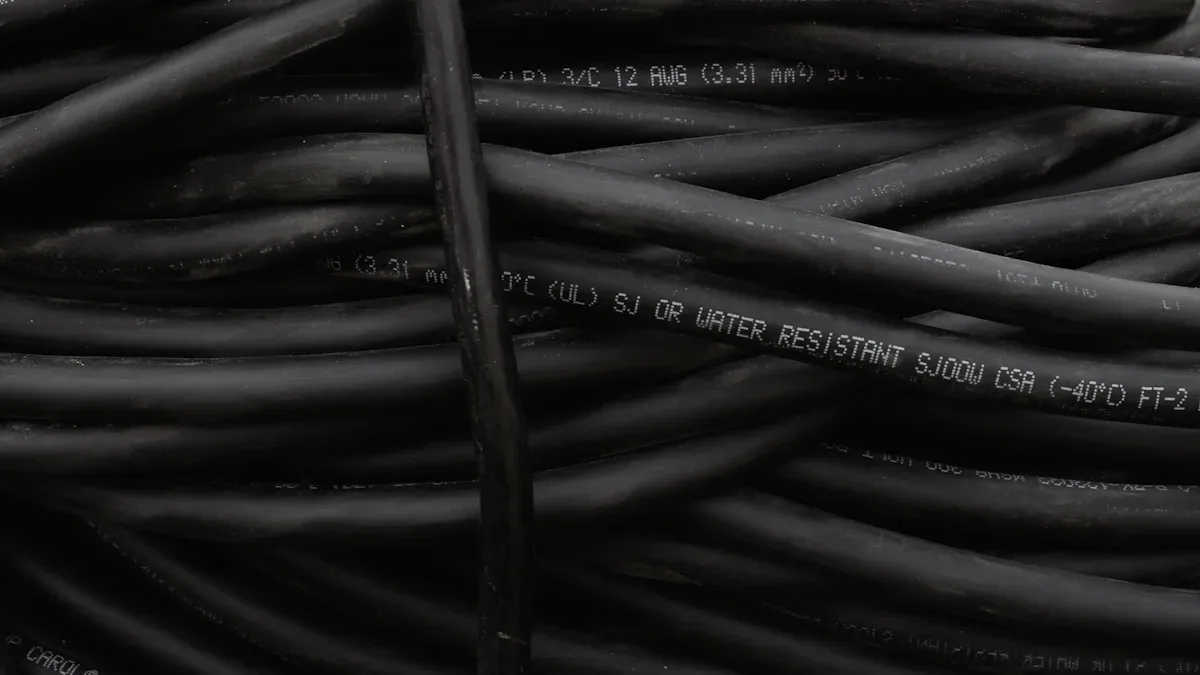
You use 0.5mm ID heat shrink tubing to cover thin wires. The "ID" means inner diameter, so the tubing has a 0.5mm opening before shrinking. This size fits small wires and tiny parts. You often see this tubing in electronics and wearables. It is also used in devices that need careful insulation and protection.
The material you pick for tubing is important. Most people use polyolefin heat shrink tubing. It gives strong insulation and resists heat well. Other materials are EVA, PVC, PTFE, FEP, and PVDF. Each material has its own good points. PTFE can handle very high heat. PVC is flexible and easy to use. The table below shows how the main materials compare:
Material | Shrink Ratio | Shrink Temperature | Operating Temperature | Dielectric Strength | Tensile Strength |
|---|---|---|---|---|---|
EVA | 2:1, 3:1 | 70-90°C | -40°C to 105°C | 14-18 kV/mm | ≥12.5 MPa |
Polyolefin | 2:1, 3:1, 4:1 | 90-120°C | -55°C to 125°C | 15-20 kV/mm | ≥10.4 MPa |
PVC | 2:1 | 70-100°C | -20°C to 85°C | 12-15 kV/mm | ≥8.5 MPa |
PTFE | 1.7:1, 2:1 | 327-343°C | -65°C to 260°C | 20-25 kV/mm | ≥27.6 MPa |
FEP | 1.6:1 | 175-205°C | -65°C to 200°C | 18-22 kV/mm | ≥20.7 MPa |
PVDF | 2:1 | 170-190°C | -55°C to 175°C | 16-20 kV/mm | ≥34.5 MPa |
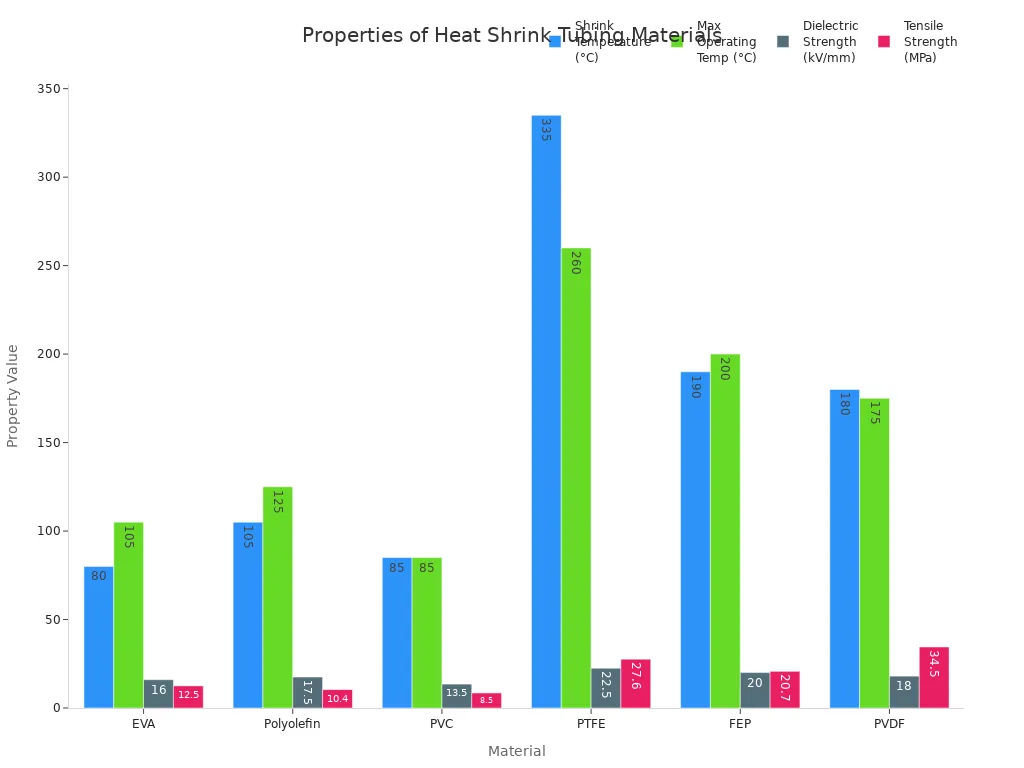
You can see how these materials compare in the chart below:
When you look at different diameters, 0.5mm tubing is best for small wires. Bigger sizes work for thick wires or large bundles. Here is a quick guide:
Diameter (mm) | Application Suitability |
|---|---|
0.5 | Ideal for small wires and delicate components |
1.29 | Suitable for general electrical insulation |
Larger sizes | Used for thicker wires and broader applications |
How Heat Shrink Tubing Works
You may wonder how heat shrink tubing works. The tubing starts at its original size. Manufacturers cross-link the material with radiation or chemicals. This step gives the tubing memory. After cross-linking, they expand the tubing at high heat and cool it fast. When you heat the tubing during installation, it shrinks back to its original size. It wraps tightly around the wire or part.
Here is a simple breakdown of the process:
The tubing is made at its original size.
It is cross-linked with radiation or chemicals.
After cross-linking, the tubing is expanded at high heat and cooled quickly.
When you use heat, the tubing shrinks and makes a tight seal. This seal gives strong insulation and protection. It keeps out dust, moisture, and chemicals. It also stops short circuits and damage to your connections. Heat shrink tubing is a smart choice for anyone who wants good insulation and lasting protection for their projects.
Tip: Always pick the right size and material for your tubing. This helps you get the best insulation and protection for your electrical work.
Polyolefin Heat Shrink Tubing Features
Electrical Insulation and Flame Retardance
You want your wires to be safe and work well. Polyolefin heat shrink tubing gives strong electrical insulation. It keeps electricity inside the wire. This stops electricity from leaking out. That helps stop short circuits. Your devices keep working without problems. You can use polyolefin tubing in places with big temperature changes. It works from –55 °C up to 135 °C. For a short time, it can handle up to 150 °C.
Here is a table that shows important ratings for polyolefin tubing:
Characteristic | Details |
|---|---|
Operating Temperature Range | –55 °C to +135 °C, up to +150 °C briefly |
Thermal & Electrical Insulation | Effective across wide temperature ranges |
Flame Retardance | Meets UL 224, VW-1; LOI ≈ 28 (self-extinguishing) |
Mechanical Strength | High abrasion resistance, tensile strength (~1500 psi) |
Polyolefin tubing also protects against fire. It meets tough safety rules like UL 224 and VW-1. If a flame touches the tubing, it can put itself out. This makes it a good choice for places where fire safety is important. People use it in elevator controls or crowded electronics.
Note: Polyolefin tubing bends better and handles more heat than PVC. You get more safety and longer-lasting protection.
Chemical Resistance and Flexibility
You need tubing that can handle strong chemicals and rough use. Polyolefin heat shrink tubing stands up to acids, oils, and solvents. This means you can use it in hard places like factories, cars, or airplanes. The tubing also does not wear out easily. It has high abrasion resistance.
Here is a table that shows how polyolefin tubing performs:
Property | Description |
|---|---|
Chemical Resistance | High resistance to chemicals, oils, and solvents |
Abrasion Resistance | Abrasion down to ISO 4649 < 0.5 mm |
Thermal Stability | Suitable for temperatures up to 125°C |
Flexibility | Elongation at break: 200–600% |
You will find polyolefin tubing easy to bend and put on wires. It stretches without breaking. It fits around wires of many shapes. This flexibility helps you make neat and safe connections. You can trust it to last a long time. It works well even in places with lots of movement or shaking.
Tip: Pick polyolefin heat shrink tubing when you need strong, flexible, and chemical-resistant protection for your wires.
0.5mm ID Heat Shrink Applications in 2026
Electrical and Wire Insulation
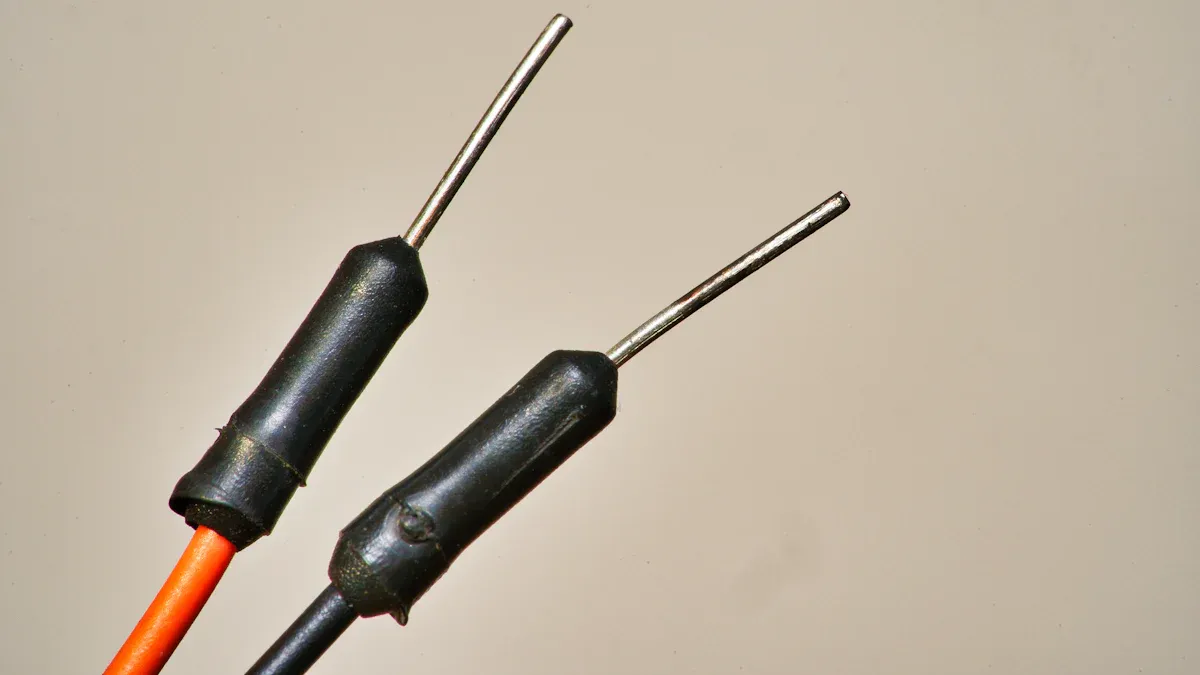
People use 0.5mm ID heat shrink tube for many electrical jobs. This tube fits very thin wires and small connections. You see it when you need strong insulation and good protection. When you put heat shrink tubing on a wire, it stops electricity from escaping. This helps stop short circuits and keeps devices safe.
Here are some ways people use heat shrink tube for electrical and wire insulation:
It covers bare wires so they do not touch by accident.
It keeps solder joints safe from water and dirt.
It protects small connections in tiny electronics.
It is used in cars to keep wires safe from water and dust.
It is found in airplanes, where it shields wires from chemicals and high or low temperatures.
You get strong wire protection every time you use it. The tubing helps wires last longer and saves you money on repairs.
Tip: Make sure your heat shrink tube fits tightly before you use heat. This gives you the best insulation and protection.
Cable Management and Bundling
You want your cables to look neat and stay in order. 0.5mm ID heat shrink tube helps you hold small wires together. This makes your work area cleaner and safer. You can use heat shrink tubing to group wires in control panels, computers, or other electronics.
Here are some ways people use heat shrink tube for cable management:
It holds signal wires together so they do not get tangled.
It keeps cables from rubbing on sharp edges.
It adds another layer to protect wires from getting scratched.
It keeps water away from wires that need to stay dry.
It makes it easier to install cables because the tubing shrinks around them.
When you use heat shrink tube, you lower the chance of electrical shorts. You also make repairs easier because your cables stay neat.
Note: Pick the right size of heat shrink tube for your wires. If the tube is too small, it will not go on. If it is too big, it will not shrink tight.
Use in Electronics and Wearables
You see 0.5mm ID heat shrink tube in many new electronics and wearables. As technology gets smaller, you need better ways to protect tiny wires and parts. Heat shrink tubing is an easy way to insulate and protect wires in these new products.
Some uses in 2026 are:
It covers sensor wires in smartwatches and fitness bands.
It protects micro-USB and charging cables in small devices.
It insulates connections in hearing aids and medical wearables.
It shields flexible circuits in foldable phones and tablets.
It is used in smart textiles to protect special threads that carry electricity.
New trends show more companies use heat shrink tube for flexible electronics and tiny gadgets. You get good insulation and wire protection even as devices get smaller and more advanced.
Callout: In 2026, you see heat shrink tube in robots, drones, and smart clothes. These new uses need strong insulation and flexible protection for small wires.
You can count on 0.5mm ID heat shrink tube for modern electronics. It gives you insulation, wire protection, and helps keep things organized for every project.
Choosing and Using 0.5mm ID Heat Shrink
Shrink Ratio and Sizing Tips
When you start choosing the right tubing, you need to check the shrink ratio. The shrink ratio tells you how much the tubing will shrink when you apply heat. Most 0.5mm ID tubing has a 2:1 or 3:1 ratio. If your wire is very thin, pick tubing that shrinks tightly around it. You should also look at wall thickness. Thicker tubing gives more protection but may be harder to bend.
You want to avoid common mistakes. If you pick tubing that is too large, it will not grip the wire well. This can cause weak insulation. If you use polyolefin tubing in places hotter than 135°C, it may soften. For high heat, use PVDF or PTFE tubing. In outdoor or marine jobs, dual-wall tubing stops moisture and corrosion. Always cut tubing longer than needed because it shrinks in length as well as diameter.
Here is a quick sizing guide:
Wire Diameter | Tubing ID Before Shrink | Shrink Ratio | Application |
|---|---|---|---|
0.3mm | 0.5mm | 2:1 | Fine wires |
0.4mm | 0.5mm | 3:1 | Small joints |
0.5mm | 0.8mm | 2:1 | Bundling |
Tip: Always measure your wire and tubing before cutting. Add extra length for overlap and coverage.
Installation and Safety Guidelines
You need to follow best practices for installing tubing. Start by measuring the wire and calculating the recovered diameter. Clean the wire and make sure it is dry. Cut the tubing cleanly and choose a size slightly larger than the wire. Slide the tubing over the connection and allow for overlap.
Use a heat gun with adjustable temperature. Move the heat gun in a steady motion and keep a safe distance. Do not apply heat unevenly. Uneven heating can cause bubbles and poor shrinkage. Let the tubing cool naturally. Inspect the tubing for tightness and adhesion.
Here are the steps for preparing and installing tubing:
Measure accurately and add extra length.
Clean the wire and surface.
Cut tubing cleanly.
Position tubing with overlap.
Apply heat evenly.
Let tubing cool and check for a tight fit.
Note: Wear safety glasses and gloves when using a heat gun. Always inspect your work to make sure the tubing covers the wire completely.
You can get reliable insulation and neat cable management by following these steps. Good preparation and careful installation help your tubing last longer and protect your wires.
You can use 0.5mm ID heat shrink tubing to cover and protect small wires. It also helps keep wires neat in electronics and wearables. Picking the right material and putting it on the right way keeps your projects safe. If you do not install it well, you can have problems like these:
Issue | Result |
|---|---|
Voids or contamination | Wires can fail or short circuit more easily |
Poor stress relief | Electric field stress gets higher |
Low installation temperature | More gaps form, and wires are less safe |
Use the tips in this guide to get the best results. For more help, look at datasheets or trusted electronics websites.
FAQ
What is the best way to heat 0.5mm ID heat shrink tubing?
You should use a heat gun for even heating. Move the gun slowly around the tubing. Avoid using open flames because they can damage the tubing or wires.
Can you use 0.5mm ID heat shrink tubing outdoors?
You can use it outdoors if you pick tubing with UV and moisture resistance. Polyolefin tubing works well for most outdoor jobs. Always check the material rating before you install.
How do you choose the right shrink ratio?
You need to match the tubing’s shrink ratio to your wire size. For tight fits, use 2:1 or 3:1 ratios. Measure your wire and tubing before you cut.
Is 0.5mm ID heat shrink tubing safe for wearable electronics?
You can use it safely in wearable electronics. It protects small wires and connections. Pick tubing with skin-safe materials and good flexibility for comfort.
See Also
Comparing Medical And Industrial Grade Heat Shrink Tubing
Applications Of Heat Shrink Tubing For Electrical Insulation
Exploring FEP Heat Shrink Tubing For Safe Industrial Applications
Evaluating FEP Heat Shrink Tubing Brands For Heat Resistance
The Importance Of Gamma Radiation Resistant Heat Shrink Tubing

© Copyright 2024 My First Blog - All Rights Reserved.